

Reviewed · HISTORICAL TOURS
Valletta: Self-Guided Historical Walking Tour (Audio Guide)
Stone walls tell Malta’s story. This $8 self-guided tour gives you a flexible way to explore Valletta’s forts, gardens, palaces, churches, and streets without joining a group. I like the offline access, which saves you from roaming charges, and the useful star points for restaurants, shopping, museums, and extra stops. The main drawback is the app: some users have struggled with downloads, map directions, and the take me there button.
The route takes about three to four hours, but you can use it over one to seven days. I also like the free Mdina audio tour, which adds real value if you plan to visit Malta’s old capital. Just bring a charged phone and headphones, and download everything before you set out.
In This Review
- Key points to know before you book
- Why Valletta works so well as an audio walk
- Starting at Tritons’ Fountain and the Valletta Waterfront
- Upper Barrakka Gardens and the city’s grand entrance
- Fort Saint Elmo and the two Barrakka Gardens
- Manoel Theatre, Marsamxett Harbour, and the conference center
- Merchants Street and Valletta’s civic center
- St. George’s Square and the Grand Master’s Palace
- St. John’s Co-Cathedral and the Caravaggio paintings
- St. Paul’s Pro-Cathedral, Strait Street, and Mount Carmel
- Victoria Gate and a final stop at The Bridge Bar
- How the free Mdina tour changes the value
- App setup, language choices, and common snags
- Who gets the most from this $8 tour
- Should you book the Valletta audio walk?
- FAQ
- How much does the Valletta audio tour cost?
- How long does the Valletta tour take?
- Is Mdina included?
- Does the tour work without internet?
- Which languages are available?
- Do I need to bring headphones?
- Are entry tickets included?
- Do I need a smartphone?
- Is the tour suitable for people with mobility impairments?
Key points to know before you book
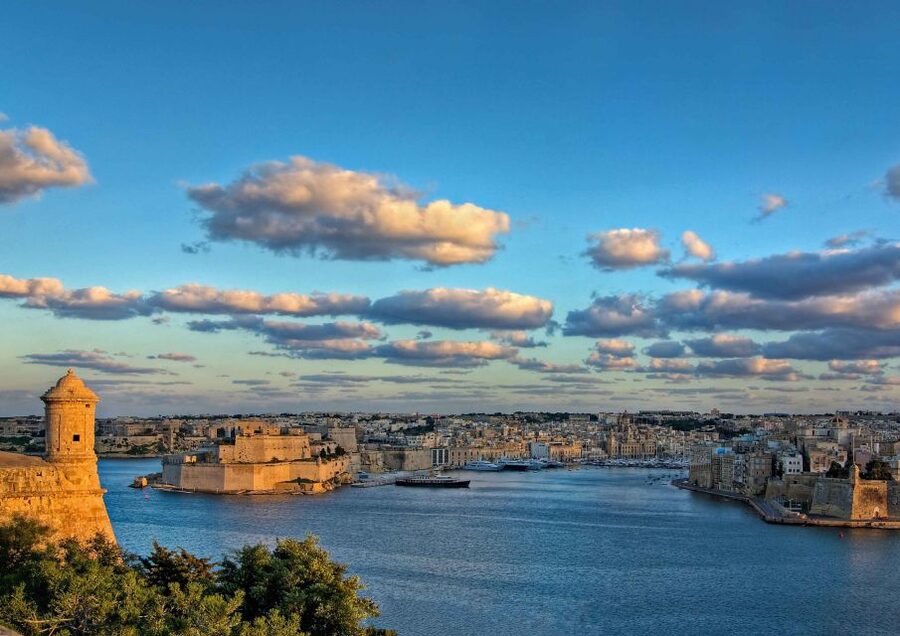
- A full Valletta route in about three to four hours: It covers the city’s main landmarks, from Tritons’ Fountain to Victoria Gate.
- Works offline after setup: Download the app, maps, and audio while you have internet, then listen without mobile data.
- Good written and audio explanations: Each stop includes commentary in English, French, German, Italian, or Polish.
- A free Mdina tour is included: This bonus makes the low price more attractive for anyone visiting both cities.
- Navigation needs your attention: The route is suggested rather than guided step by step, and the app has not worked perfectly for everyone.
- You pay for the guide, not entry: Admission to churches, museums, palaces, and other sites is extra.
Why Valletta works so well as an audio walk
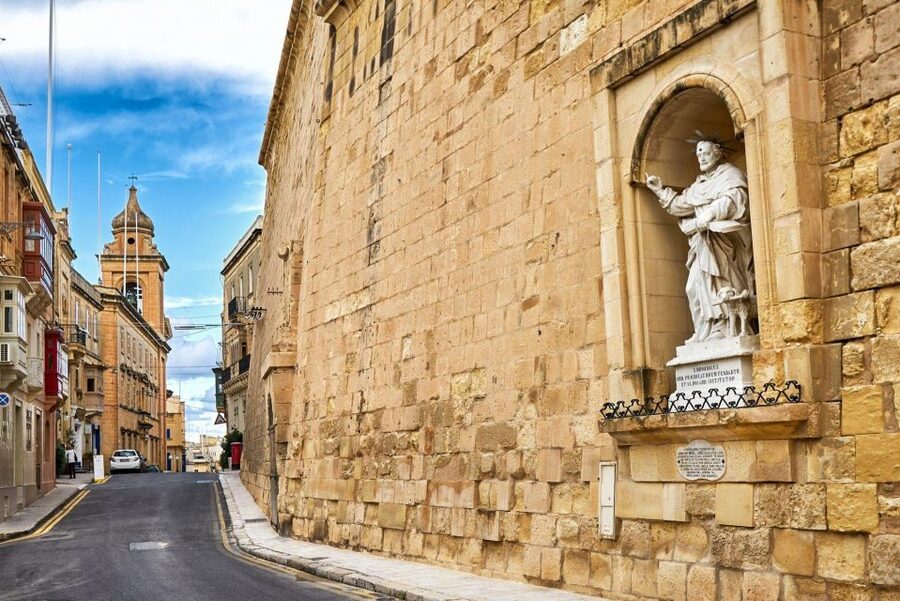
Valletta is unusually suited to exploring on foot. The whole city is a UNESCO World Heritage Site, and its compact streets bring together fortifications, Baroque buildings, churches, gardens, harbors, and public squares.
You are not simply ticking off isolated monuments. The route helps connect the city’s military, religious, political, and maritime stories. A bastion points toward a harbor. A palace recalls the Knights of St. John. A narrow street opens onto a grand square or a view across the water.
I like the independence of this format. You can pause the audio outside a church, continue when a street is quiet, or stop for lunch without holding up a group. You can also split the walk across several days, since access is valid for one to seven days.
The audio guide is available through the PopGuide app for Android and iOS. You need internet access for the initial app and map download. After that, the content works offline, which is especially helpful if you use a phone plan with costly international data.
There is one practical catch. This is not a live walking tour, and the app does not replace your own sense of direction. Some people found the information at each stop clear and interesting but the route between stops poorly explained. I recommend keeping Google Maps available as a backup, while downloading the tour content in advance.
More Walking Tours in Valletta
- The Original Valletta Walking Tour
★ 5.0 · 2,719 reviews - Valletta: 3-Hour Walking Tour
★ 4.7 · 1,605 reviews - Valletta: Guided City Walking Tour
★ 4.8 · 1,256 reviews
Starting at Tritons’ Fountain and the Valletta Waterfront
The programmed route begins at Tritons’ Fountain, a broad landmark near Valletta’s entrance. It is a sensible starting point because it puts you close to the city’s main approach and the waterfront connection.
From there, the route includes Valletta Waterfront. This gives you an early look at the city from the harbor side, where the relationship between Malta and the sea becomes clear. Valletta was planned as a fortified port city, so the water is not background scenery. It explains why the city was built here and why its walls are so imposing.
The audio commentary is most useful when it helps you read the setting around you. Look beyond the fountain and streets directly ahead. The waterfront, bastions, and elevated city center show how Valletta was designed for defense as well as ceremony.
Upper Barrakka Gardens and the city’s grand entrance

Upper Barrakka Gardens is one of the route’s major stops. The gardens offer broad views toward the harbor and the surrounding fortifications, making this a good place to pause before tackling the denser center.
The audio guide also takes you to Auberge de Castille, St. James Cavalier, and the Malta Stock Exchange. These stops show several sides of Valletta at once: the former headquarters of the Knights, a historic fortified building, and a modern financial institution using an older setting.
I would allow extra time here. Gardens and viewpoints reward a slower pace, while the nearby buildings are better understood when you stop to look up at their façades. Since admission is not included, you can decide which interiors deserve your money and which are best appreciated from outside.
Fort Saint Elmo and the two Barrakka Gardens

Fort Saint Elmo anchors the route at Valletta’s outer tip. Its position helps you understand the city’s defensive purpose, with water on more than one side and walls projecting into the harbor area.
The route then turns toward Hastings Gardens and St. Michael’s Bastion before reaching Lower Barrakka Gardens and the Siege Bell War Memorial. This part of the walk gives you a useful contrast with Upper Barrakka Gardens. The two gardens face different parts of the harbor and fortifications, so each offers a different view.
The Siege Bell War Memorial adds a more recent layer to Valletta’s story. Here, the audio format can be helpful because a short explanation gives meaning to a monument that might otherwise seem easy to pass.
You should expect some uphill and uneven walking around fortified areas. The activity is specifically not recommended for people with mobility impairments. Comfortable shoes matter, even though the route itself is not a strenuous hike.
More history on the ground:
- Heritage Pass in Malta
★ 3.5 · 14 reviews - Hagar Qim temple (UNESCO) and Limestone Heritage guided tour
★ 3.5 · 11 reviews - Hagar Qim temple (UNESCO), Limestone Heritage & Marsaxlokk Market guided tour
★ 4.0 · 10 reviews - The Taste and History of Valletta
★ 4.9 · 8 reviews
Manoel Theatre, Marsamxett Harbour, and the conference center
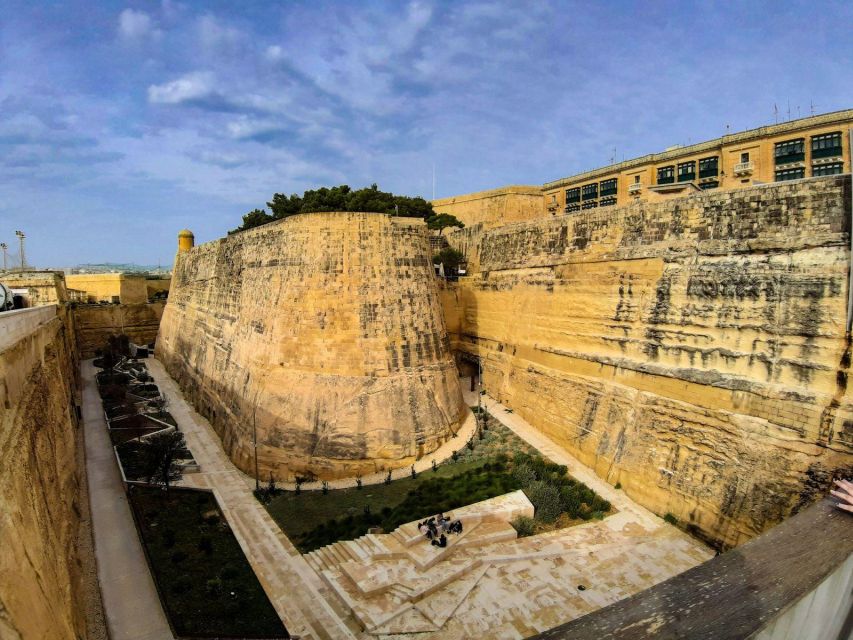
The next section shifts from military Valletta to its cultural and maritime life. Manoel Theatre is one of the city’s important historic performance spaces, and its inclusion adds variety after the fortifications and gardens.
The route then points toward Marsamxett Harbour, the old Marine Police Station, and the Mediterranean Conference Centre. The harbor stop is useful because it brings you back to Malta’s working seafaring identity. The old Marine Police Station gives you another small piece of the city’s waterfront story.
The Mediterranean Conference Centre occupies an important historic building, but the tour does not include entry tickets. If you want to go inside any listed site, check its opening arrangements separately and budget for admission.
This is also a point where route clarity may matter. The information at stops has been praised as good and interesting, but the connections between some points are not always obvious. Listen to the next instruction before walking away, and use the downloaded map rather than assuming the audio will guide every turn.
Merchants Street and Valletta’s civic center
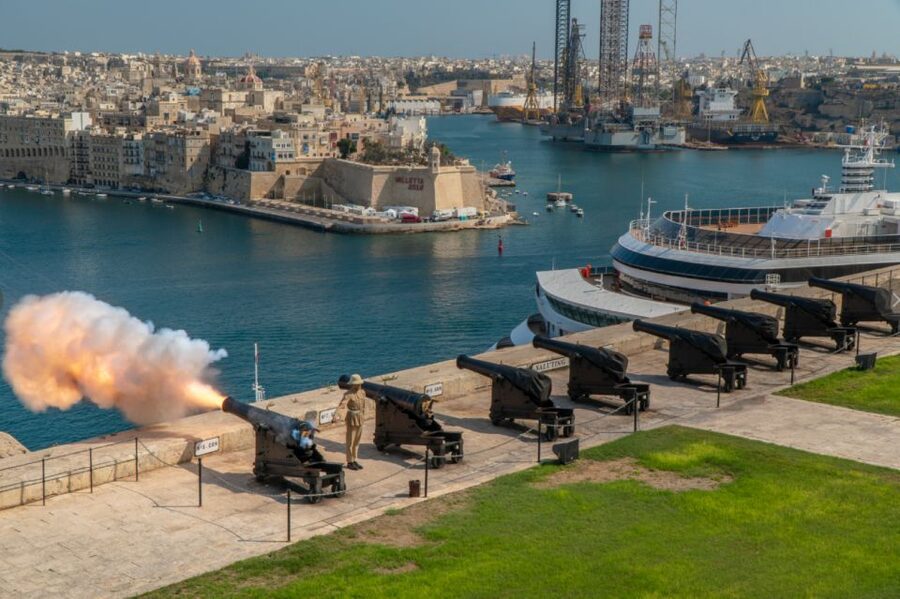
Merchants Street takes you through one of Valletta’s main central corridors. It is a practical place to combine sightseeing with a meal, coffee, or shopping stop, and the star points can help you notice options along the way.
The route continues through Republic Square, where you find the National Library of Malta, the new Parliament Building, the Royal Opera House, and Palazzo Ferreria. This cluster is valuable because it lets you compare different periods and uses in a small area.
The National Library represents Malta’s literary and institutional life. The Parliament Building and Royal Opera House show how Valletta continues to function as a modern capital rather than serving only as a preserved monument. Palazzo Ferreria adds another historic façade to the mix.
I like this part of the route because it avoids treating Valletta as a museum frozen in time. You see government, culture, commerce, and old architecture sharing the same streets.
St. George’s Square and the Grand Master’s Palace
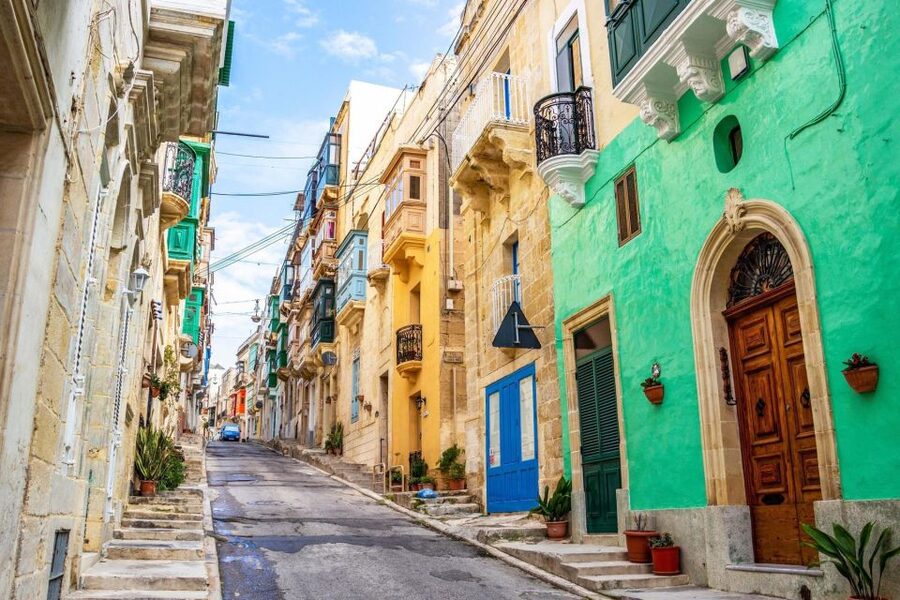
St. George’s Square leads to the Grand Master’s Palace, one of Valletta’s defining buildings. The square gives you space to appreciate the scale of the palace and the formal character of the city center.
This is a good stop for listening carefully, since the palace connects to Malta’s political and knightly past. Entry is not included, so you can choose between an exterior visit and a paid interior visit if available during your time in the city.
The self-guided format works well here if you want to linger. A live group might move on after a fixed amount of time. You can instead sit nearby, replay a section, or continue to the next church when it suits you.
St. John’s Co-Cathedral and the Caravaggio paintings
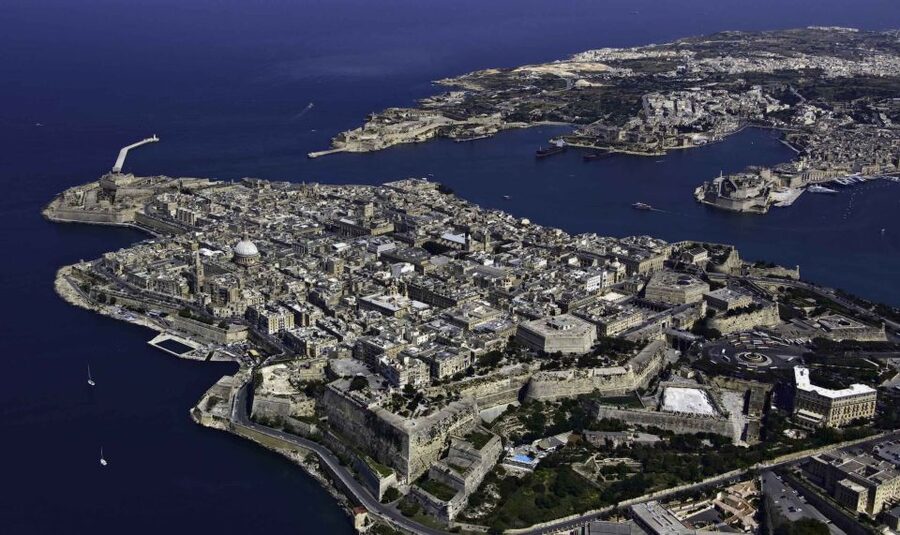
St. John’s Co-Cathedral is likely to be one of the most important stops on the walk. The route includes the cathedral, its Oratory, and the Caravaggio paintings.
This is a place where the audio commentary adds real value. The interior is famous for its decoration, and a guide can help you focus on the details rather than simply taking in a large amount of ornament. The Caravaggio connection gives the stop particular artistic weight.
Plan for a separate admission charge if you enter. The tour fee does not cover tickets, and you should not assume that audio access replaces the cathedral’s own entry requirements.
I would place this stop according to your energy and opening hours. If the cathedral is a priority, check its visiting arrangements before building your day around the audio route. The guide can explain the site, but it cannot guarantee access.
St. Paul’s Pro-Cathedral, Strait Street, and Mount Carmel
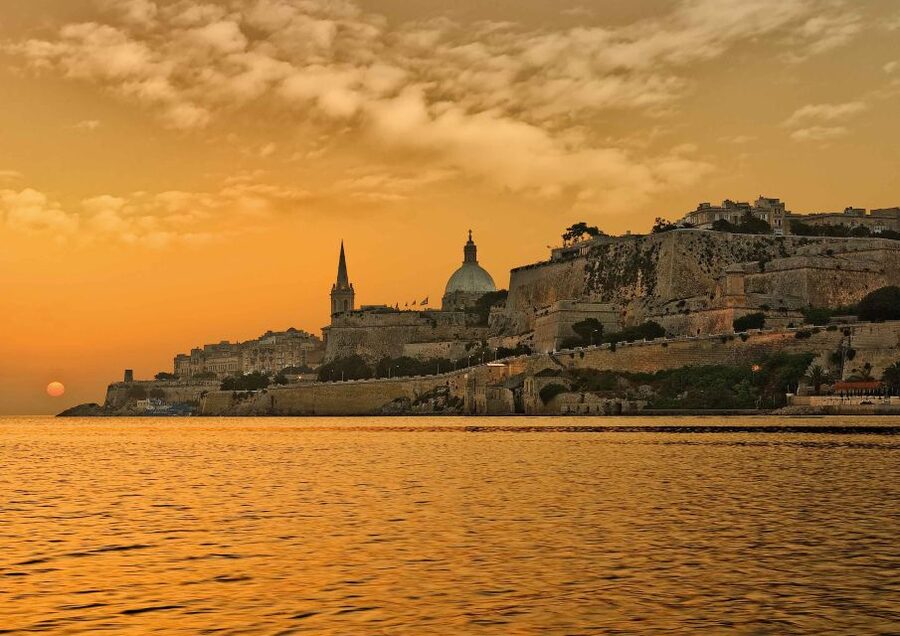
The route next includes St. Paul’s Pro-Cathedral, the Anglican church in Valletta. Its presence broadens the story beyond Malta’s Catholic identity and gives you a chance to compare two major religious buildings.
Strait Street provides a change of mood. This narrow historic street is associated with Valletta’s social and urban life, and it helps you move away from grand institutions toward a more intimate part of the city.
The Basilica of Our Lady of Mount Carmel is another prominent church stop. Its large dome is a familiar part of Valletta’s skyline, and the audio guide gives you context before you decide if you want to enter.
As with the other churches, access and entry costs are separate. You should also remember that religious sites may have rules about clothing, photography, and visiting times. The supplied information does not specify those rules, so check locally if a particular church is high on your list.
Victoria Gate and a final stop at The Bridge Bar
Victoria Gate brings the route back toward Valletta’s edge. It is a fitting final landmark because it connects the historic city with its harbor approaches and reinforces the role of gates in a fortified capital.
The final named stop is The Bridge Bar. This is one of the tour’s practical touches. Rather than ending at a monument with no place to pause, the route points you toward a possible drink or rest stop.
The star points are scattered through the route and may include shopping, restaurants, museums, churches, and other points of interest. They do not replace a full food guide, but they can help you make better choices while walking instead of searching from scratch.
How the free Mdina tour changes the value
The extra Mdina audio tour is a strong reason to consider this purchase. Valletta and Mdina offer different settings, so the bonus does not simply repeat the same experience in another location.
You receive audio access to Mdina with every purchase. The supplied details do not provide a stop-by-stop list for that second tour, so you should treat it as an added cultural guide rather than assume it follows a particular route or covers specific interiors.
At $8 per person, the Mdina addition makes the price appealing if you plan to visit both places. Even if you use the Valletta guide over a single afternoon, the cost is low compared with a private guide or a standard group tour.
The value depends on your expectations. You are paying for prepared commentary, maps, written explanations, and suggested points of interest. You are not paying for a person who can answer questions, adjust the route in real time, or lead you through ticket lines.
App setup, language choices, and common snags
Download the PopGuide app before you arrive. The Android version is available through Google Play, and the iOS version is available through Apple’s App Store.
For an advance booking, activation details are sent one day before the booked date. For a same-day booking, they are sent after purchase. Once you receive the username and password, you can use the app on any day of your choice.
Choose your language when downloading the maps. English, French, German, Italian, and Polish are available. The activation emails may arrive in English, so if you are not comfortable reading English, allow extra time and check that your preferred language is selected inside the app.
The setup process is the weakest part of the experience. Some people have been unable to finish the download, even after spending considerable time trying to get the app working. Others have found that the navigation button produced an error and relied on a separate map app instead.
My practical advice is simple:
- Charge your phone fully.
- Download the app, maps, and audio before leaving your accommodation.
- Test one audio point while still online.
- Bring headphones.
- Keep a backup map available.
- Do not wait until you reach Tritons’ Fountain to begin setup.
Once the content is stored on your phone, you do not need Wi-Fi or mobile data for the tour itself. That is one of the strongest practical benefits.
Who gets the most from this $8 tour
I recommend it most to independent sightseers who like choosing their own pace. It suits you if you want background information but do not want to follow a group, and if you enjoy stopping for food, photos, shopping, or extra church visits.
It is also a good fit for a short stay. The suggested route takes three to four hours, yet access lasts up to seven days. You can complete it in one go or use it as a framework for several shorter walks.
Families and small groups may appreciate the freedom, though everyone will need access to a charged phone and headphones. The low price also makes it less risky for someone who wants a basic introduction before deciding which sites deserve admission fees.
I would skip it if you want precise turn-by-turn directions, personal answers, or hands-on help with technology. I would also avoid relying on it if your phone storage, battery, or internet connection is unreliable.
The overall rating is 3.7 out of 5 from 251 ratings, which fits the experience neatly. The stop-by-stop information is often considered useful and interesting, but app setup and navigation can spoil the day if you are not prepared.
Should you book the Valletta audio walk?
Book it if you want an inexpensive, flexible introduction to Valletta and Mdina, especially when you are willing to handle navigation yourself. The $8 price, offline operation, written notes, five language choices, and free Mdina tour give it solid value.
Do not book it expecting a live guide or a flawless navigation tool. Download the content early, use your own map as backup, and treat the audio as a helpful companion rather than the entire sightseeing plan.
FAQ
How much does the Valletta audio tour cost?
The tour costs $8 per person.
How long does the Valletta tour take?
The suggested walking route takes around three to four hours. Access is valid for one to seven days, depending on availability and the option booked.
Is Mdina included?
Yes. A complimentary audio-guided tour of Mdina is included with every purchase.
Does the tour work without internet?
Yes, but you first need an internet connection to download the PopGuide app, maps, and tour content. After the download is complete, you can use the audio guide offline.
Which languages are available?
The audio commentary and written text are available in English, French, German, Italian, and Polish.
Do I need to bring headphones?
Yes. Headphones are not included, so you should bring your own.
Are entry tickets included?
No. Admission to sites such as churches, museums, palaces, and other attractions is not included.
Do I need a smartphone?
Yes. You use your own Android or iOS smartphone to access the PopGuide app. A charged phone is required.
Is the tour suitable for people with mobility impairments?
No. The experience is listed as unsuitable for people with mobility impairments.
More Self-Guided Tours
- Valletta: “The Malta Experience” Audio-Visual Show Ticket
★ 4.4 · 468 reviews - Valletta: Malta 5D Audio-Visual Show
★ 4.0 · 91 reviews - Valletta: Self-Guided Audio Tour, Map and Directions
★ 4.5 · 26 reviews - Malta 5D Audio-Visual Show Ticket
★ 3.5 · 17 reviews
More Walking Tours
- Valletta: Street Food and Culture Walking Tour
★ 4.8 · 1,251 reviews - Valletta: City Walking Tour in a Small Group
★ 4.9 · 957 reviews - Valletta: Maltese Food and Drink Guided Walking Tour
★ 4.7 · 601 reviews - Valletta City Walking Tour
★ 5.0 · 395 reviews
Just added around Valletta
- Tour of Malta (Private Driver) Including Lunch Platter & Wine in the countryside★ 4.5 · 3 reviews
- Valletta Private Historical and Cultural Walking Tour★ 5.0 · 4 reviews
- Shore Excursion: Private Full-Day Tour of Valletta & Mdina★ 5.0 · 4 reviews
- Private Tour in Malta Prehistoric Temples & Mdina★ 5.0 · 4 reviews
- Private Tour of the Maltese Island (Private Driver)★ 5.0 · 4 reviews
- Leisure Pass in Malta★ 4.0 · 4 reviews
- Valletta: Express Walk with a Local in 60 minutes★ 4.9 · 4 reviews
- Malta tour 3Cities , Marsaxlok ,Blue grotto Hagar qim★ 4.9 · 4 reviews
Historical Tours, compared.

Prehistoric Temples, Limestone Heritage & Blue Grotto
Read our review →
Maltese Islands History Audio-Visual Show and La Sacra Infermeria Tour
Read our review →
Wonderful Valletta, gastronomy, art, and history in the Mediterranean
Read our review →


Mdina: Private Historical City Walking Tour with Rabat Town
Read our review →
The Limestone Heritage Park and Gardens (Entry Ticket)
Read our review →
Browse the lists this tour appears in