

Reviewed · HISTORICAL TOURS
The Limestone Heritage Park and Gardens (Entry Ticket)
Stone tells Malta’s story. At the Limestone Heritage Park and Gardens in Siġġiewi, you get a compact, family-friendly look at 7,000 years of Maltese history through films, displays, gardens, animals, and live stonework. It is not a grand museum or a full-day guided excursion. Instead, it is an easygoing outdoor attraction where you can set your own pace.
I especially like the multilingual audio presentation, which gives useful context before you walk through the site, and the chance to see stone sculpting in action. The citrus garden and animal farm add variety, particularly for children. The main thing to consider is size: one recent booking described the park as smaller than expected, so you should come for a focused cultural stop rather than a huge theme park-style attraction.
The ticket costs about $11 per person and is valid for one entry on the booked day. That is fair value if you take time with the audio tour, museum, geology section, Punic tomb, gardens, farm, and demonstrations. If you simply walk through quickly, it may feel less rewarding.
In This Review
- Key things to know before you go
- Why Maltese limestone matters
- Start with the audio-visual presentation
- Follow the 17-language audio-guided walk
- The museum hall and geology section
- See the Punic tomb from about 400 B.C.
- Watch stonework and try the optional activity
- Take a slower turn through the citrus garden
- Meet the animals at the farm area
- How much time should you allow?
- Is the $11 ticket good value?
- Who will enjoy this park most?
- Should you book the Limestone Heritage Park?
- FAQ
- Where is the Limestone Heritage Park and Gardens?
- How much does entry cost?
- How long is the ticket valid?
- Can I enter at any time during the day?
- Is re-entry allowed?
- What languages are available for the audio content?
- Is a personal guide included?
- What are the opening hours?
- Is the attraction wheelchair accessible?
- Are food and drinks included?
Key things to know before you go
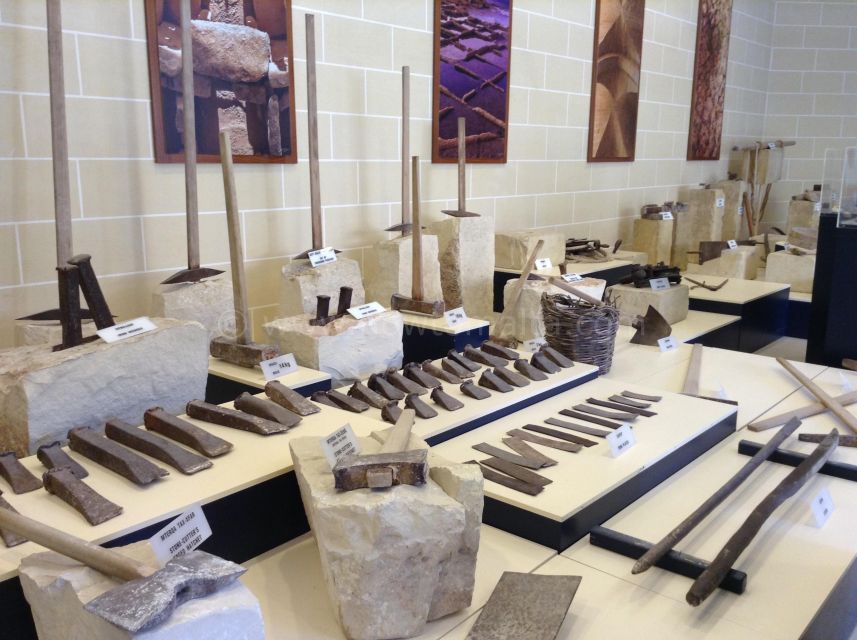
- A 7,000-year story begins with Malta’s limestone: The displays explain why this local stone matters so much to the islands.
- Audio content comes in 17 languages: Maltese, English, French, German, Italian, Dutch, Russian, Spanish, Greek, Portuguese, Swedish, Danish, Finnish, Norwegian, Polish, Chinese, and Japanese are available.
- The site includes a Punic tomb from about 400 B.C.: This gives the visit an archaeological point of interest beyond stone cutting.
- You can watch live stonework demonstrations: The practical work helps make Malta’s building tradition easier to understand.
- The park mixes culture with gardens and animals: The citrus garden and farm animal area give children a welcome change of pace.
- You can make your own limestone piece for €5: This optional activity lets you leave with something you worked on yourself.
Why Maltese limestone matters
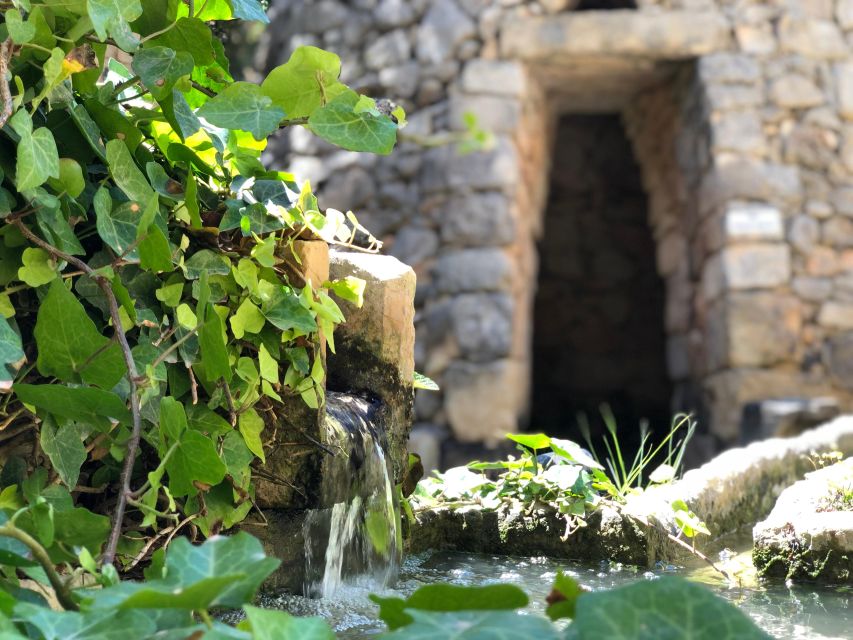
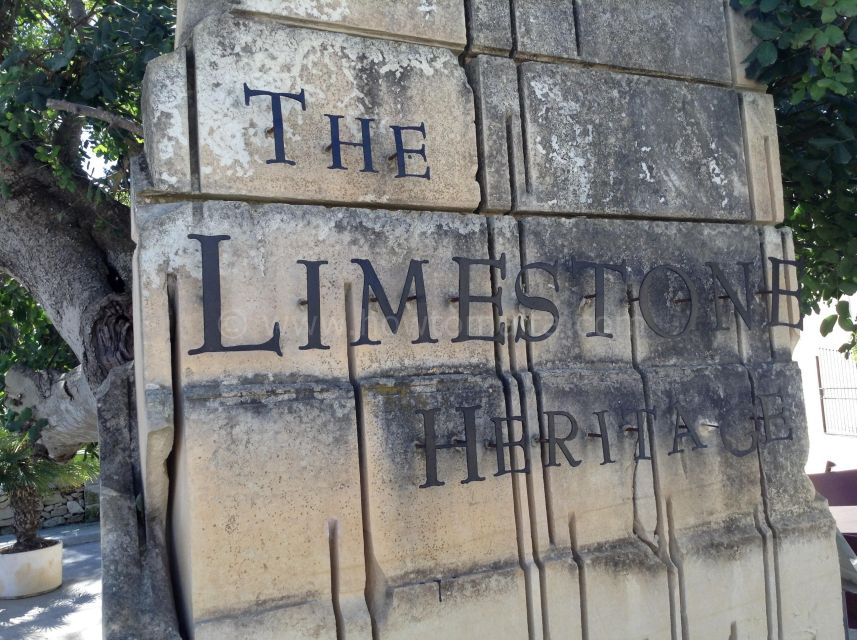
Malta is closely tied to limestone. The stone appears in the island’s buildings, churches, walls, monuments, and traditional crafts. At this park, limestone is not just a material behind glass. It is the subject of the whole visit.
The attraction connects geology with daily life. You begin to see Malta’s pale stone differently after learning how it was formed, worked, and used. A church facade, village house, or old wall becomes part of a much longer story.
I find this approach more useful than a display of isolated dates. The park shows how natural material shaped Maltese culture and architecture. You are not only looking at stone samples. You are learning why stone became so important here.
The geology section is a good starting point if you want basic context. It helps explain the island’s physical makeup before you move on to the human side of the story. Younger children may not spend long here, but adults and older children should find it worthwhile.
More history on the ground:
- Malta: Prehistoric Temples, Limestone Heritage & Blue Grotto
★ 4.2 · 412 reviews - Maltese Islands History Audio-Visual Show and La Sacra Infermeria Tour
★ 4.0 · 344 reviews - Valletta: Self-Guided Historical Walking Tour (Audio Guide)
★ 3.7 · 251 reviews
Start with the audio-visual presentation
Your visit begins with an audio-visual presentation about Malta’s past and traditions. It is available in 17 languages, so you can listen in the language that suits you best rather than trying to follow a fast spoken tour in English.
This presentation gives the park a useful framework. Malta has a long sequence of cultures and historical periods, and it can be hard to place everything when you are sightseeing around the island. A short introduction helps you understand the setting before you reach the individual displays.
The presentation is particularly helpful if this is your first day or two in Malta. It gives you background that can make later visits to villages, churches, archaeological sites, and old stone buildings more meaningful.
The attraction does not include a personal guide. An English-speaking host or greeter is available, while the main interpretation comes through the audio-visual program and the handheld audio guide. That arrangement gives you freedom, but you will need to pay attention and move through the information at your own pace.
Follow the 17-language audio-guided walk

The audio-guided walkthrough is the core of the experience. It lets you explore without being tied to a group schedule or a guide’s pace. You can pause, listen closely, and take your time with the sections that interest you most.
The guide is offered in the same 17 languages as the presentation. That is a real advantage for families or groups who do not all speak English. You can also focus on the displays rather than trying to read every sign as you go.
Expect a mixture of historical, cultural, and practical information. The route connects Malta’s stone industry with the wider story of the islands. The best way to use it is not to rush. Give yourself enough time to listen to the full commentary, then look carefully at the related objects and exhibits.
The park is open for a full day ticket, but that does not mean you need to spend an entire day there. Most people will likely treat it as a half-day stop, with extra time added for food, the gardens, the animals, or the optional stone activity.
A useful tip is to avoid arriving close to closing time. Last entry is 30 minutes before closing, and the audio sections, museum, outdoor areas, and demonstrations are easier to enjoy earlier in the day.
The museum hall and geology section
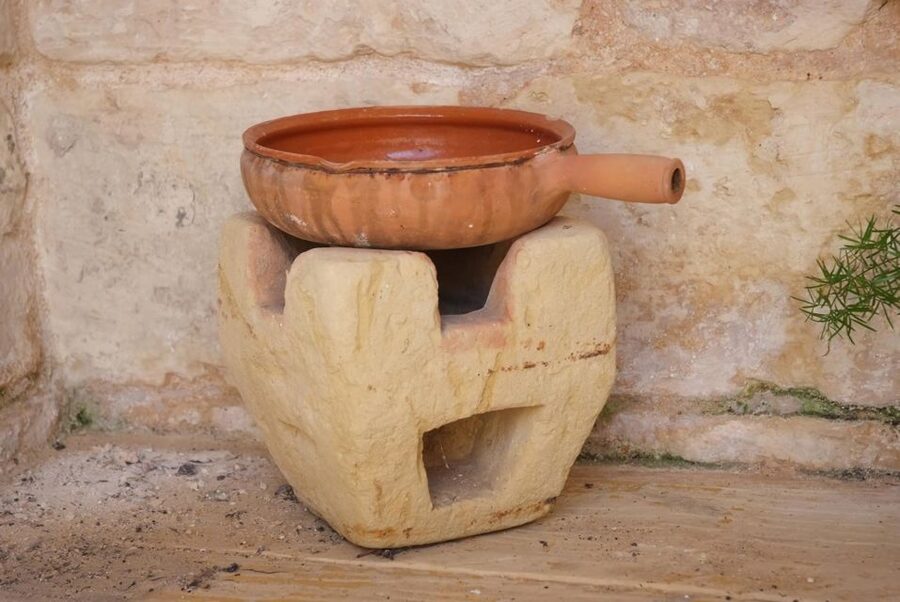
The museum hall provides a more traditional indoor portion of the visit. It gives you a break from the outdoor areas and adds physical objects to the audio explanations.
This section is useful for travelers who want more than a quick photo stop. You can connect what you hear in the presentation with examples connected to Maltese life and stonework. The museum also helps keep the visit interesting if the weather is too warm for a long outdoor walk.
The geology section focuses on the natural side of Malta’s limestone. I like that the park does not treat geology as a separate school lesson. It links the stone beneath your feet to the buildings and crafts you see throughout Malta.
Do not expect a major national museum. The attraction is deliberately small and focused. One booking described it as smaller than expected but very pleasant, which is a fair way to set your expectations. The value comes from the combination of sections rather than from the size of any single display.
More tickets and passes:
- St Paul’s Bay: Malta National Aquarium Entry Ticket
★ 4.4 · 2,532 reviews - Mellieha: Popeye Village Entry Ticket
★ 4.6 · 2,070 reviews - Mellieha: Popeye Village Malta Filmset Entry Ticket
★ 4.6 · 1,802 reviews - Malta National Aquarium Entrance Ticket
★ 4.0 · 643 reviews
See the Punic tomb from about 400 B.C.
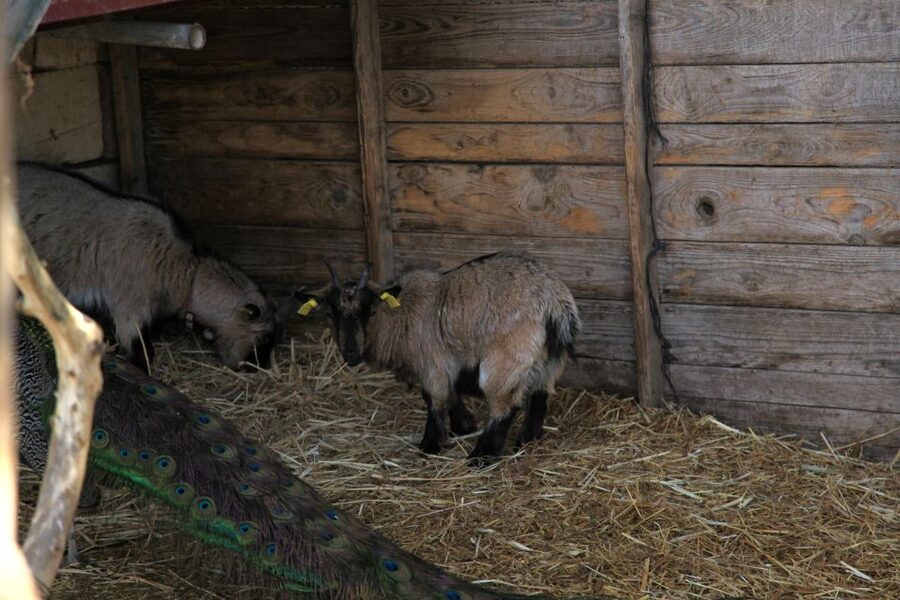
The Punic tomb is one of the site’s most distinctive stops. Dating to about 400 B.C., it adds an archaeological layer to a visit otherwise centered on limestone, craft, and local life.
A tomb like this helps show that Malta’s stone has served practical, religious, and architectural purposes for centuries. It also gives the audio tour a clear connection to the ancient past.
This is not presented as a large archaeological complex. It is one feature within a broader park, so keep your expectations in proportion. Still, it is an unusual inclusion and gives the visit more depth than a simple demonstration of stone cutting.
If you are interested in Malta’s ancient past, listen carefully at this stop. The tomb is likely to be more memorable when you understand its age and place in the island’s story.
Watch stonework and try the optional activity
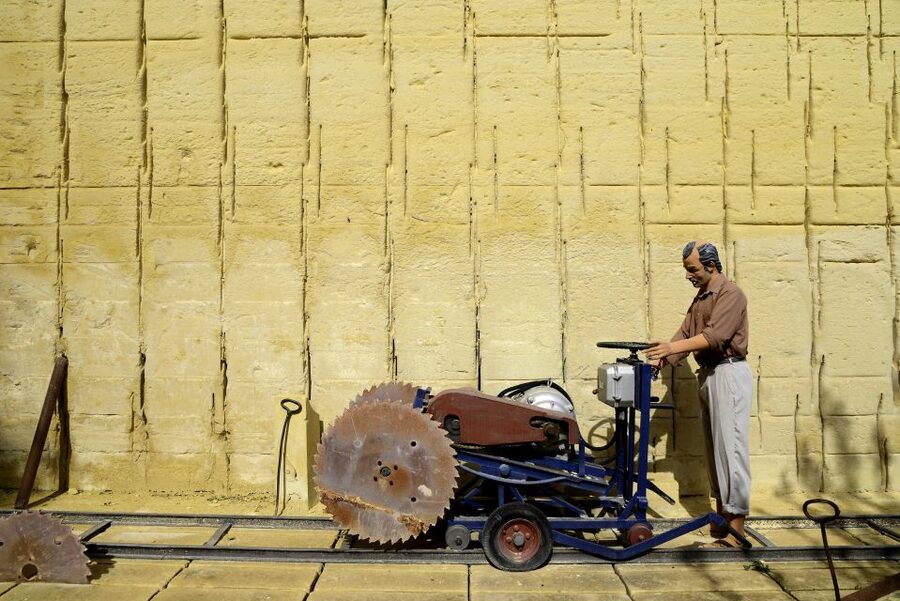
The live stonework demonstration is one of the strongest parts of the attraction. You can watch a craftsperson shape limestone and see the material handled as a working substance rather than an old building product.
This makes the visit more immediate. A display can explain how stone was cut, but a live demonstration shows the pressure, control, and patience involved. It also gives children something active to watch after the indoor presentation and museum sections.
You can also create your own limestone piece for an additional €5. This is optional, and it may be especially appealing to families or anyone who wants a hands-on souvenir. The activity can take time because you can keep working until you are happy with the result.
That detail matters. You are not simply buying a ready-made trinket. You get the chance to shape something yourself, although the final cost is not included in the entry ticket. If you want to try it, bring a little extra cash and allow time for the project.
The shop also sells genuine Maltese goods and stone souvenirs. There is no obligation to buy, which keeps the shopping portion easy to ignore if you are not looking for a keepsake.
Take a slower turn through the citrus garden
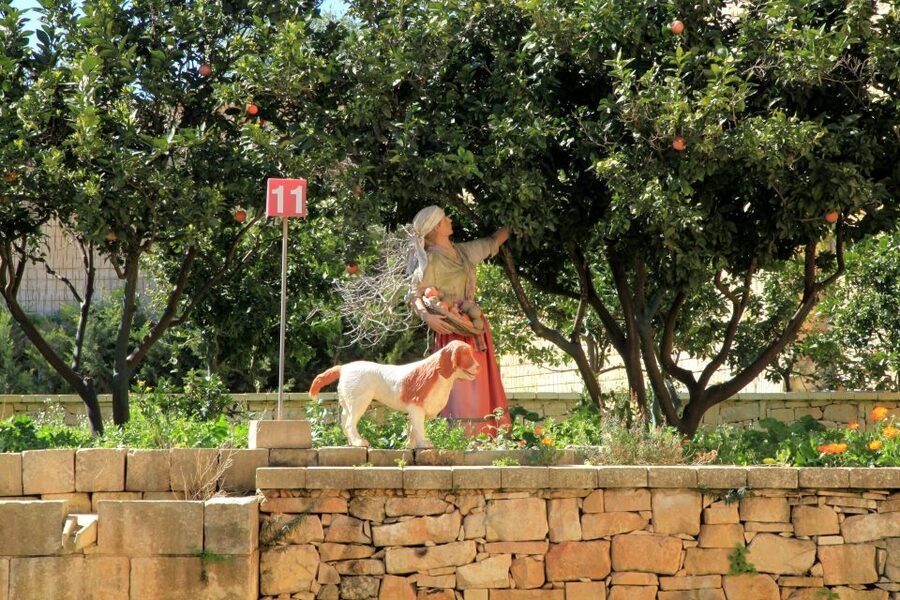
The citrus garden changes the mood of the visit. After the audio tour and indoor displays, you can wander among greenery and enjoy a quieter outdoor setting.
This is not a formal garden tour. Its value is that it gives you room to slow down. If you are traveling with children, it also breaks up the historical material with an open-air section.
The garden works best as part of a relaxed visit. If you arrive only for the museum and audio content, you might pass through quickly. If you have time, it is worth lingering here with a drink or snack.
The park serves tea, coffee, a Maltese platter, Maltese tuna ftira, and other snacks. Food and drinks cost extra, but they let you extend the stop without searching for another café immediately after the visit.
Meet the animals at the farm area
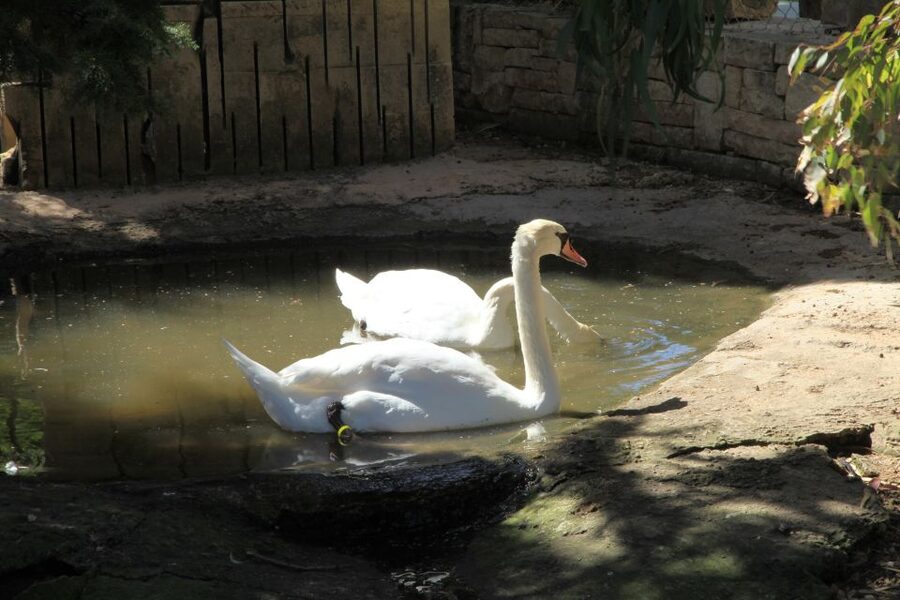
The farm animal park is another reason this attraction suits families. Children who may lose interest in geology or ancient history can spend time with the animals, while adults get a more relaxed outdoor section.
The farm is not the main purpose of the park, and you should not expect a large zoo. Think of it as a small companion attraction that adds warmth and variety to the cultural visit.
I would use it as a reward after the audio-guided walk. Start with the presentation and exhibits while everyone is fresh, then head outdoors to the animals and garden. That order gives the historic material a better chance of holding your attention.
The combination is one of the park’s practical strengths. It gives different age groups something to enjoy without forcing you to choose between a museum and a family outing.
How much time should you allow?
The ticket is valid for one day, and you may enter at any time during the opening hours on your booked date. There is no need to arrive at a fixed tour departure, which makes the park easy to fit around other plans.
The posted hours are:
- Monday to Friday, 9:00 a.m. to 4:00 p.m.
- Saturday, 9:00 a.m. to 12:00 p.m.
- Closed Sunday and on public holidays
Last entry is 30 minutes before closing. Opening hours can change, so confirm them with the activity provider during your stay.
A short visit could cover the presentation, audio walk, museum, geology section, and tomb. A more comfortable visit adds the stonework demonstration, garden, farm, snack stop, and optional limestone activity.
Because Saturday ends at noon, Saturday visitors should arrive early. Do not assume you can use the same leisurely schedule as a weekday visitor. The ticket allows one entry only, with no re-entry, so plan to finish everything before leaving.
Is the $11 ticket good value?
At about $11 per person, the ticket is reasonably priced for a cultural attraction that includes several different elements. You receive the audio-visual presentation, audio-guided walk, museum hall, geology section, Punic tomb, citrus garden, farm area, and live stonework demonstrations.
The value is strongest for families and curious first-time visitors to Malta. You get history, craft, nature, and animals in one stop. That mix can save you from paying for several separate small activities.
The price feels less attractive if you want a large-scale museum or a long guided tour. The park is compact, and some parts may take only a short time. The optional €5 limestone activity and food are also extra, so your final spending may rise above the entry price.
Still, I think the ticket works well as a flexible half-day outing. You control the pace, and the audio options mean you do not need to pay for a private guide to understand what you are seeing.
Who will enjoy this park most?
I would recommend the Limestone Heritage Park and Gardens to:
- Families who need both educational and hands-on activities
- First-time visitors who want an introduction to Maltese culture
- Anyone interested in architecture, geology, archaeology, or traditional crafts
- People who prefer self-guided sightseeing
- Visitors looking for a quieter stop outside Malta’s busiest sights
- Anyone who wants a practical, locally themed souvenir
It may be less suitable if you want a large archaeological site, a full-day organized excursion, or constant live entertainment. The attraction asks you to listen, look, and take your time.
The site is wheelchair accessible, which makes it a practical choice for many visitors. Hotel pickup and drop-off are not included, so you will need to arrange your own transport to Siġġiewi.
Should you book the Limestone Heritage Park?
Book it if you want a relaxed and focused introduction to Malta’s limestone tradition, especially if you are traveling with children or enjoy self-guided attractions. The 17-language audio system, Punic tomb, live craft work, garden, and farm give the $11 ticket a useful range.
Skip it if you are expecting a huge museum or an all-day tour packed with major monuments. The park is smaller than some people may picture, but its compact size is also part of its appeal. You can learn something, watch a craft demonstration, have a snack, and leave without spending an exhausting day indoors.
For the best value, arrive well before closing, listen to the full audio content, allow time for the outdoor areas, and consider the €5 limestone-making activity if you want a personal souvenir.
FAQ
Where is the Limestone Heritage Park and Gardens?
The park is in Siġġiewi, a traditional Maltese village in Malta.
How much does entry cost?
The entry ticket costs about $11 per person.
How long is the ticket valid?
The ticket is valid for one day, on the booked date.
Can I enter at any time during the day?
Yes. You can use the ticket at any time during the venue’s opening hours on your booked date.
Is re-entry allowed?
No. The ticket is valid for one entry only, so plan to see the areas you want before leaving.
What languages are available for the audio content?
The audio-visual presentation and audio-guided walkthrough are available in Maltese, English, French, German, Italian, Dutch, Russian, Spanish, Greek, Portuguese, Swedish, Danish, Finnish, Norwegian, Polish, Chinese, and Japanese.
Is a personal guide included?
No personal guide is included. An English-speaking host or greeter is available, and the audio guide provides the main commentary.
What are the opening hours?
The park is open Monday through Friday from 9:00 a.m. to 4:00 p.m. and Saturday from 9:00 a.m. to noon. It is closed Sundays and public holidays.
Is the attraction wheelchair accessible?
Yes. The Limestone Heritage Park and Gardens are wheelchair accessible.
Are food and drinks included?
No. Food and drinks cost extra. Tea, coffee, a Maltese platter, Maltese tuna ftira, and other snacks are available at the venue.
Just added around Malta
- Gozo Unveiled: Guided Hiking in Gozo – The West★ 5.0 · 3 reviews
- Half Day Tour in Marsaxlokk Village, Market, Blue Grotto & Qrendi★ 4.5 · 3 reviews
- Tour of Malta (Private Driver) Including Lunch Platter & Wine in the countryside★ 4.5 · 3 reviews
- Valletta City of Gentlemen guided walking tour★ 3.5 · 3 reviews
- Sunday: Ghajn Tuffieha (Riviera) Beach Yoga Class★ 5.0 · 3 reviews
- Pastizzi Making Experience in Malta★ 5.0 · 3 reviews
- Malta: Around Comino Cruise With Blue Lagoon stop★ 5.0 · 3 reviews
- Half Day Private Tour around the Island in Malta★ 4.7 · 3 reviews
Historical Tours, compared.

Prehistoric Temples, Limestone Heritage & Blue Grotto
Read our review →
Maltese Islands History Audio-Visual Show and La Sacra Infermeria Tour
Read our review →
Self-Guided Historical Walking Tour (Audio Guide)
Read our review →
Wonderful Valletta, gastronomy, art, and history in the Mediterranean
Read our review →


Mdina: Private Historical City Walking Tour with Rabat Town
Read our review →
Browse the lists this tour appears in