
Reviewed · WALKING TOURS
The Original Valletta Walking Tour
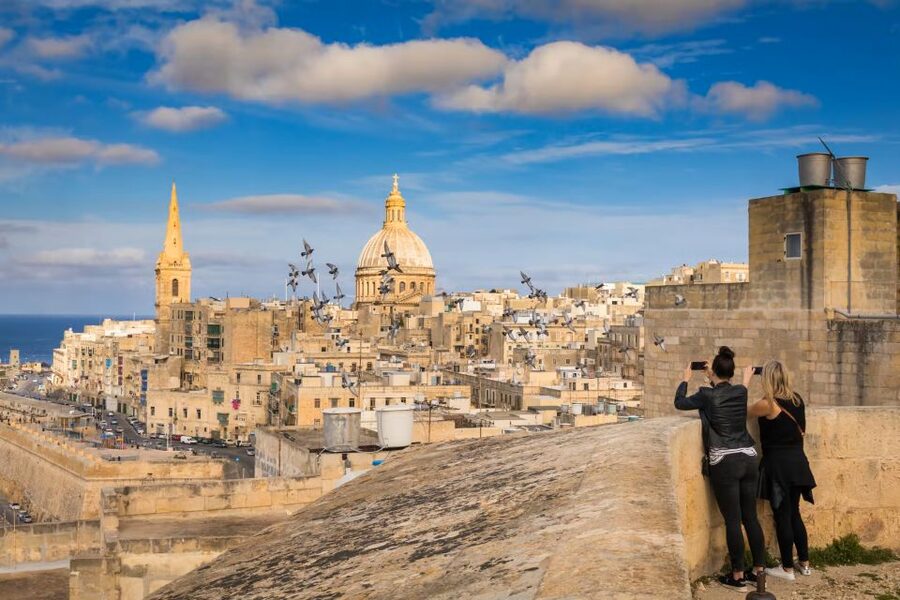
Valletta rewards a closer look. This three-hour walk gives you a clear introduction to Malta’s compact capital, from the modern City Gate to the Knights of St John, grand churches, memorials, and harbour views. At $26.60 per person, it is a fair way to get your bearings before exploring on your own.
I like the route’s sensible mix of famous buildings and less obvious historical corners. I also like the small-group limit of 25 people, which makes it easier to hear guides such as Mario, Matthew, Carmel, and Giulia as they explain Malta’s story. The main drawback is that several important interiors, including St. John’s Co-Cathedral and the Grand Master’s Palace, cost extra.
The tour is especially useful if you have only one morning in Valletta, or if the city’s layers of Knights, churches, wartime memorials, and modern architecture feel like a lot to sort out. Arrive early at the New Parliament Building, though. The meeting point can be confusing, and two groups may use similar yellow clothing and umbrellas.
In This Review
- Key points to know before booking
- Why three hours is a good length for Valletta
- Starting at the New Parliament Building
- The early churches and auberges
- Upper Barrakka Gardens and the Grand Harbour
- From Palazzo Parisio to St. John’s Co-Cathedral
- St. George’s Square and the Grand Master’s Palace
- The guides make the biggest difference
- Group size, weather, and walking comfort
- Is $26.60 good value?
- Who should book this Valletta walk?
- Final verdict: a smart first morning in Malta
- FAQ
- How long does The Original Valletta Walking Tour last?
- Where does the tour begin?
- Where does the tour end?
- Is admission to St. John’s Co-Cathedral included?
- Are the Grand Master’s Palace and Museum of Fine Arts included?
- What is the cancellation policy?
Key points to know before booking
- Three hours covers Valletta’s essential sights: You visit the City Gate, Upper Barrakka Gardens, St. John’s Co-Cathedral, St. George’s Square, and the Grand Master’s Palace area.
- The harbour views are a major payoff: Upper Barrakka Gardens provides 30 minutes for wide views over the Grand Harbour.
- Guides are the heart of the experience: Mario, Matthew, Carmel, and Giulia are praised for clear English, strong historical detail, humour, and patience.
- The group can include up to 25 people: That is smaller than a large coach excursion, but not an intimate private tour.
- Budget for admission fees: Entry to St. John’s Co-Cathedral, the Grand Master’s Palace, and the museum at Auberge d’Italie is not included.
- The start requires care: Meet outside the New Parliament Building on Republic Street, before the bridge. WhatsApp may be useful if you are delayed or cannot find the group.
Why three hours is a good length for Valletta
Valletta is not a huge city, so this is not a strenuous march from one distant sight to another. The walk uses the city’s central streets and includes frequent stops for stories, architecture, and questions. That pace suits a first morning in Malta because you get a framework for the city without spending the whole day on your feet.
The three-hour length also gives the guide time to explain why Valletta looks the way it does. The city was built by the Knights of St John in 1565 and is now protected as a UNESCO World Heritage Site. The buildings are impressive, but the useful part of the tour is learning how churches, auberges, palaces, fortifications, and public squares fit into Malta’s past.
You should expect plenty of standing while the guide speaks. One guide, Mario, is described as going into very fine detail about people, places, art, and dates. That will delight history fans, but anyone who prefers a quick overview may find parts of the tour talk-heavy.
The walk is generally gentle, with a pause in the middle reported by several people. One break lasted about 15 minutes, giving the group time for coffee and a rest. This is welcome in warm weather, although Malta’s conditions can change, so bring water and protection from the sun.
More Walking Tours in Valletta
- Valletta: 3-Hour Walking Tour
★ 4.7 · 1,605 reviews - Valletta: Guided City Walking Tour
★ 4.8 · 1,256 reviews - Valletta: Street Food and Culture Walking Tour
★ 4.8 · 1,251 reviews
Starting at the New Parliament Building
The tour begins at Valletta City Gate, beside the New Parliament Building on Republic Street. This is a smart place to start because the entrance shows Valletta’s old and new faces side by side.
The modern Parliament building and the nearby Pjazza Teatru Rjal, or Royal Opera House ruins, introduce a useful question: how should a historic city handle modern design? The Royal Opera House was damaged during the Second World War and its remains now form part of the city’s public space. Your guide explains the story behind the ruins rather than treating them as just a photo stop.
This opening section takes about 15 minutes in total. It is short, but it sets up the rest of the morning by showing that Valletta is not a preserved museum. It is a working capital where old stone, modern architecture, and daily life share the same streets.
The meeting instructions deserve attention. Stand in front of the modern building before the bridge, not beyond it. If you are coming from the cruise port, the Upper Barrakka lift is a useful route into the city. The lift costs 1 euro for a return trip, and the walk from the port area to the meeting point can take about 15 minutes using that route. A phone map may sometimes send you to the wrong place, so use the building and bridge as your visual markers.
The early churches and auberges
The next stops bring you into the world created by the Knights of St John. Our Lady of Victories Church is a small but important stop, with a story tied to one of Malta’s famous historical heroes. The guide uses the church to connect Valletta’s religious buildings with the people who shaped the island.
At Il-Berga ta’ Kastilja, you pause for about 10 minutes to admire the facade of the Auberge de Castille. The auberges were residences for the different language groups, or langues, within the Order of St John. Castille was one of the most powerful of those groups, and its building later took on an important role in Malta’s government.
The guide’s commentary is particularly useful here because a facade alone does not explain the building’s place in Malta’s story. You learn why it mattered to the Knights and why it remains one of the city’s most important public buildings.
The tour then points out Auberge d’Italie, now associated with the new Museum of Fine Arts. This is a brief five-minute stop, and museum admission is not included. If art is a priority for you, note the name and return later with enough time for a proper visit. The walking tour gives you context, not a museum tour.
Upper Barrakka Gardens and the Grand Harbour
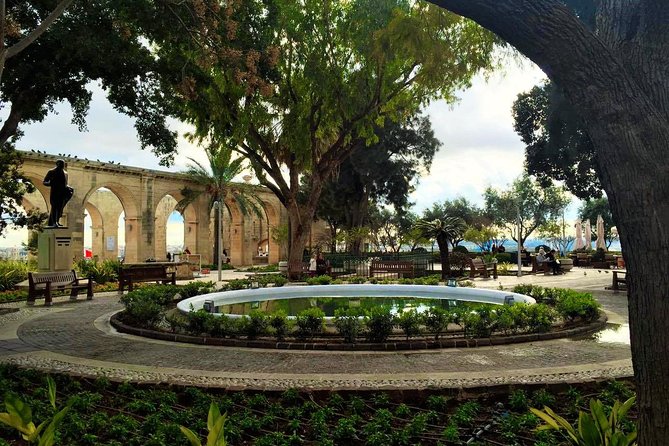
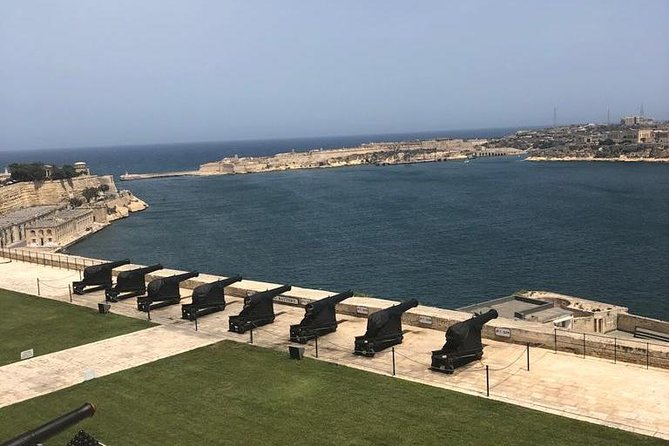
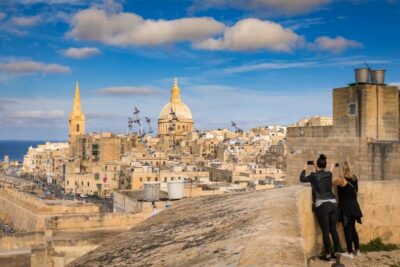
Upper Barrakka Gardens is the scenic centrepiece of the walk. The group spends about 30 minutes here, longer than at any other stop. That extra time makes sense. You can look over the Grand Harbour while the guide explains Valletta’s military and maritime importance.
The gardens are also a useful pause in the route. After several architectural stops, you get open space, fresh air, and time for photographs. The views help you understand why the Knights chose and fortified this part of Malta. Instead of seeing Valletta as a collection of grand streets, you begin to see its position in relation to the harbour and defensive sites such as Fort St. Elmo.
The tour also touches on Valletta’s role as European Capital of Culture in 2018. That detail adds a modern layer to the older story. Valletta is presented not only as a city of fortresses and churches, but as a place that continues to host art, public events, and civic life.
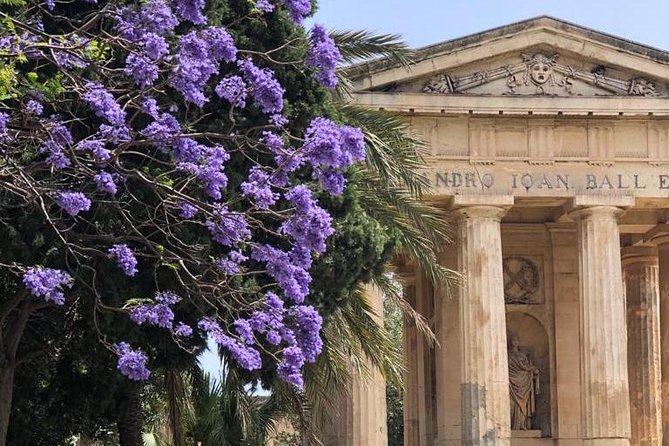
Lower Barrakka Gardens is included in the broader walk, along with memorial sites such as the Great Siege Monument and the Siege Bell Memorial. These stops bring the city’s wartime memory into focus. The memorials are brief encounters rather than formal visits, but the guide’s explanation gives them meaning.
More walking tours on foot:
- Valletta: City Walking Tour in a Small Group
★ 4.9 · 957 reviews - Valletta: Maltese Food and Drink Guided Walking Tour
★ 4.7 · 601 reviews - Valletta City Walking Tour
★ 5.0 · 395 reviews - Valletta Walking Tour, In a Small Group
★ 5.0 · 370 reviews
From Palazzo Parisio to St. John’s Co-Cathedral
Palazzo Parisio is another short stop, with a story connected to a world-famous historical figure who once lived there. The building gives the guide a chance to move beyond military history and talk about the people who occupied Valletta’s grand residences.
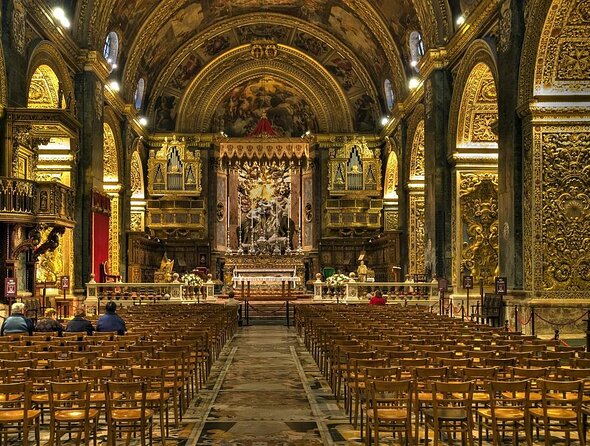
St. John’s Co-Cathedral is one of the most important stops on the route, even though admission is extra. Inside, you can see the lavish Baroque decoration and works connected with major artists, including Caravaggio. The guide explains the artists and the stories behind the works, so the exterior visit has real value even if you do not go inside during the tour.
I would strongly consider paying for entry if you have not already visited. One guide, Mario, urged a group to see the church, and when it unexpectedly opened for a service after being closed for a holiday, the group was able to see the interior. That kind of opportunity cannot be guaranteed, but the advice is sound: do not judge St. John’s by its plain exterior. The inside is the part you are most likely to remember.
Because entry is not included, the tour remains affordable for people who want only an outdoor introduction. You can decide later if the cathedral deserves extra time and money. That flexibility is useful, particularly if you are watching your budget.
St. George’s Square and the Grand Master’s Palace
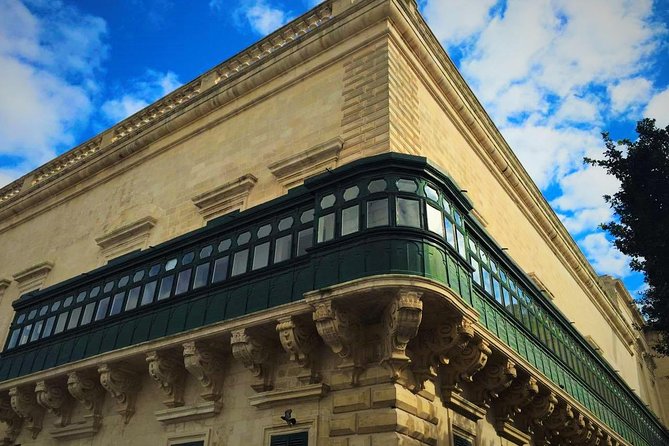
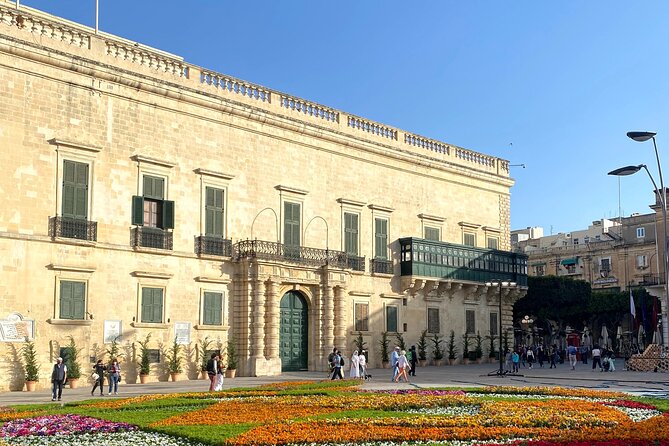
The walk continues to St. George’s Square, Valletta’s main ceremonial square. Here you see the Grand Master’s Palace and hear why the building mattered under the Knights and through later periods of Maltese government.
The palace is another optional paid interior. The tour explains its importance from outside, which is enough for a first orientation. If you want a closer look at state rooms, historic objects, or the building’s interior design, plan a separate visit and check the admission arrangements on the day.
This section works well because the guide can connect the palace to the streets you have already walked. Valletta’s grand buildings were not placed at random. Their positions, facades, and relationships to squares and streets reflect the city’s political and religious structure.
The tour ends in central Valletta at St. George’s Square. That is convenient for continuing your day. You can stay in the centre, return to a building you want to visit, or walk back toward the City Gate and public transport. Since there is no hotel pickup or drop-off, you are responsible for reaching and leaving the tour on your own.
The guides make the biggest difference
The strongest part of this experience is the guide. Several guides receive praise for making complicated material easy to follow, including Mario, Matthew, Carmel, and Giulia. Their styles differ, but the common thread is clear English, strong preparation, and a willingness to answer questions.
Mario is suited to people who want a serious history lesson. His background as a professor comes through in the way he explains geography, art, architecture, and Malta’s political past. He may spend longer on small details than you expect, but that depth is a major benefit if you enjoy historical connections.
Matthew is praised for being attentive, relaxed, and generous with extra advice. He also offers useful suggestions about booking attractions in Valletta. Carmel is described as striking a good balance between facts and personal stories, while Giulia brings energy and a clear sense of affection for Malta.
The precise guide matters because three hours is a long time to listen to someone who is hard to understand or overly rigid. The available feedback suggests that English is generally clear and that guides make room for questions. Still, every walking tour depends on the individual guide assigned that day, so expect a range of presentation styles.
Group size, weather, and walking comfort
The maximum group size is 25 people. That is small enough to feel more personal than a large city tour, and several people value the chance to ask questions. It is not the same as having a private guide, however. At the maximum size, you may need to stand near the edge of the group to hear clearly.
The walking itself is described as reasonable and not physically demanding. The route includes streets, squares, gardens, and stops, rather than a long continuous hike. You should still wear comfortable shoes because the tour lasts about three hours and includes repeated periods of standing.
Weather matters. A late January tour enjoyed sunshine despite a forecast for rain, but that is a reminder to prepare for changing conditions rather than a promise of good weather. Bring water, sun protection, and a light layer. Rain could make the outdoor stops less comfortable, and much of the experience takes place outside.
Service animals are allowed, public transportation is nearby, and most people can participate. There is no hotel transportation, so cruise passengers and people staying outside central Valletta need to allow time to reach the meeting point.
Is $26.60 good value?
At $26.60, this is a strong value if you want a guided introduction rather than a series of unconnected photo stops. The fee pays for about three hours of explanation, route planning, local interpretation, and the chance to ask questions. Walking Valletta on your own costs less, but you will miss much of the context that makes the buildings meaningful.
The price is especially fair for first-time visitors and people on a short schedule. You see the major public sights, get the layout of the city, and learn which interiors deserve a return visit. The 4.9 rating from 2,719 reviews and recommendation from 98 percent of customers also suggest a consistently positive experience, though no guide-led tour suits every personality.
Remember to add admission costs if you want to enter St. John’s Co-Cathedral, the Grand Master’s Palace, or Auberge d’Italie’s Museum of Fine Arts. The tour’s low price is partly attractive because those tickets are left to your choice.
Free cancellation is available up to 24 hours before the start time. Cancellations or changes within 24 hours are not refunded, and the tour requires a minimum number of participants. If that minimum is not met and the operator cancels, you are offered another date or experience, or a full refund.
Who should book this Valletta walk?
I would choose this tour for a first visit, a cruise stop, or a morning when you want a useful overview before sightseeing independently. It is also a good match for anyone who enjoys history, architecture, art, and personal stories more than a rapid checklist of attractions.
It may be less suitable if you dislike long explanations or want to spend most of your time inside museums and churches. The guide may cover many names, dates, and artistic details, and some stops involve standing while the presentation continues.
Families and older visitors who are comfortable with a gentle three-hour walk should find the pace manageable, but every participant should be prepared for outdoor exposure. If you have already visited the Grand Master’s Palace or Fort St. Elmo, the commentary can still add value by connecting those places to the rest of Valletta.
Final verdict: a smart first morning in Malta
Book The Original Valletta Walking Tour if you want the city to make sense before you explore it alone. The best features are the well-planned route, the Upper Barrakka Gardens views, and guides who explain Malta with real care and personality.
The main cautions are the confusing meeting point, possible standing, and extra charges for key interiors. Arrive early at the New Parliament Building, confirm the correct group, and consider having WhatsApp available in case the guide needs to contact you.
For $26.60, this is a practical and worthwhile introduction to Valletta. History fans may want even more time with the guides, while casual sightseers will appreciate the manageable pace and clear route.
FAQ
How long does The Original Valletta Walking Tour last?
The tour lasts approximately three hours, including guided stops around central Valletta and time at the Upper Barrakka Gardens.
Where does the tour begin?
It begins at the New Parliament Building on Republic Street in Valletta, near the City Gate. The meeting point is in front of the modern building before the bridge.
Where does the tour end?
The tour ends in St. George’s Square in central Valletta.
Is admission to St. John’s Co-Cathedral included?
No. Admission to St. John’s Co-Cathedral is not included in the tour price.
Are the Grand Master’s Palace and Museum of Fine Arts included?
No. Admission to the Grand Master’s Palace and Auberge d’Italie, home to the Museum of Fine Arts, is not included.
What is the cancellation policy?
You can cancel up to 24 hours before the experience for a full refund. Cancellations or changes made less than 24 hours before the start time are not refunded.
Just added around Valletta
- Tour of Malta (Private Driver) Including Lunch Platter & Wine in the countryside★ 4.5 · 3 reviews
- Valletta Private Historical and Cultural Walking Tour★ 5.0 · 4 reviews
- Shore Excursion: Private Full-Day Tour of Valletta & Mdina★ 5.0 · 4 reviews
- Private Tour in Malta Prehistoric Temples & Mdina★ 5.0 · 4 reviews
- Private Tour of the Maltese Island (Private Driver)★ 5.0 · 4 reviews
- Leisure Pass in Malta★ 4.0 · 4 reviews
- Valletta: Express Walk with a Local in 60 minutes★ 4.9 · 4 reviews
- Malta tour 3Cities , Marsaxlok ,Blue grotto Hagar qim★ 4.9 · 4 reviews
Walking Tours, compared.

Guided Walking Tour with Optional Cathedral Tour
Read our review →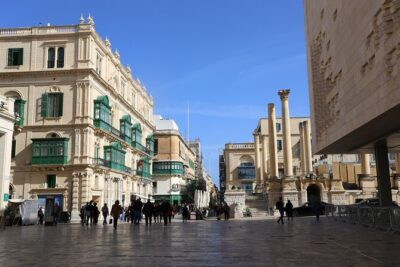
The Valletta Street Food and Culture Walking Tour
Read our review →
Browse the lists this tour appears in