
Reviewed · HISTORICAL TOURS
Wonderful Valletta, gastronomy, art, and history in the Mediterranean
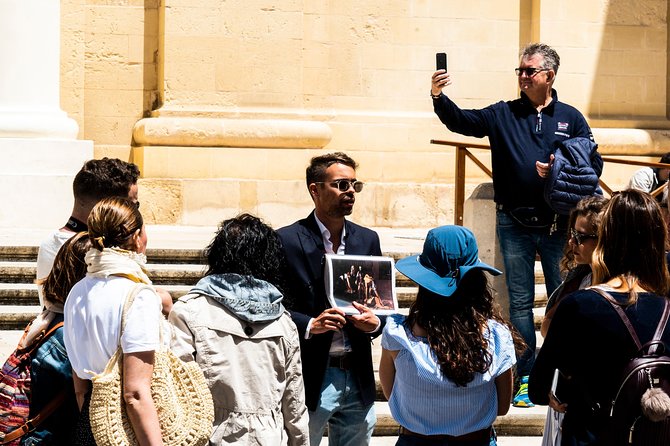
Valletta rewards curious walkers. This small-group tour brings together Maltese history, Caravaggio, and local food, giving you a useful first look at the capital in about two hours. I like the mix of major sights and everyday Valletta, plus the practical advice on where to eat, drink, and continue exploring.
I also like the personal touch from guides such as Luis, Moises, and Julia, who are praised for their warmth and local perspective. The main consideration is that the gastronomy portion may be lighter than the title suggests, with one experience described as a local liquor tasting rather than a full food tour.
In This Review
- Key things to know before you book
- Why Valletta works so well on foot
- Starting at Victoria Gate
- Knights, empires, and Valletta’s contested past
- The lanes linked with Caravaggio
- Historic buildings from the early sixteenth century
- Pastizzi and the Maltese food angle
- Finishing at St. John’s Co-Cathedral
- What the guide can change
- Group size, timing, and price
- Who should book this Valletta walk
- Should you book it?
- FAQ
- Where does the Valletta tour start?
- Where does the tour end?
- How long does the tour last?
- What language is the tour offered in?
- How many people can join the tour?
- Does the experience include food?
- Is St. John’s Co-Cathedral admission included?
- Can I cancel for a full refund?
Key things to know before you book
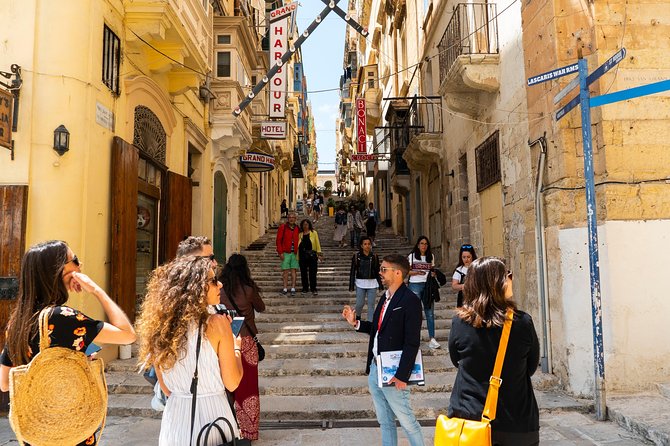
- A compact Valletta route: Begin at Victoria Gate and finish near St. John’s Co-Cathedral, with the old city’s lanes and historic buildings in between.
- A small group of up to 10 people: This is a more personal format than a large coach or crowded city walk.
- Caravaggio and the Knights: The tour connects Valletta’s streets with the city’s dramatic religious, military, and artistic past.
- Food advice, not just sightseeing: You are introduced to pastizzi and receive suggestions for pizza, cocktails, jazz, and Maltese dishes.
- Guides praised for warmth: Luis, Moises, and Julia are singled out for friendly conversation, energy, and care.
- A few cautions: One poor experience involved a late confirmation, a confusing meeting point, political discussion, and a cancelled tour.
Why Valletta works so well on foot
Valletta is unusually easy to cover in a short walk. It is the European Union’s smallest capital city by population, with fewer than 6,000 residents, and its central streets hold a remarkable concentration of churches, palaces, fortifications, and narrow lanes.
That compact scale is the main strength of this experience. In two hours, you can get your bearings without spending half the day crossing town. The walk starts at Victoria Gate, a practical entrance into Valletta, and ends at St. John’s Co-Cathedral, one of the city’s most important landmarks.
I would treat this as an orientation walk rather than a complete tour of every major interior. The value comes from seeing how Valletta fits together and learning what deserves a longer visit later.
The route also promises more than postcard scenery. Valletta has been shaped by the Knights, the Ottoman threat, Napoleon, British rule, the Second World War, and its role as European Capital of Culture in 2018. Those layers give the streets plenty to talk about, even when the buildings themselves are close together.
More history on the ground:
- Malta: Prehistoric Temples, Limestone Heritage & Blue Grotto
★ 4.2 · 412 reviews - Maltese Islands History Audio-Visual Show and La Sacra Infermeria Tour
★ 4.0 · 344 reviews - Valletta: Self-Guided Historical Walking Tour (Audio Guide)
★ 3.7 · 251 reviews
Starting at Victoria Gate
Your meeting point is Victoria Gate, listed at Liesse in Valletta. It is a useful place to begin because the gate leads directly into the historic core and helps frame Valletta as a fortified city rather than simply a pretty collection of old streets.
The practical issue is identification. One booking had a confusing meeting location, so I would check the final meeting instructions carefully and confirm the exact spot with the operator if anything looks unclear. The published operating window runs daily from 11:00 a.m. to 5:00 p.m., but the precise start time should be confirmed before the day of the tour.
From Victoria Gate, expect the guide to lead you through the historic center on foot. This is not a vehicle-based sightseeing trip, so comfortable shoes matter more than elaborate planning. Valletta’s short distances can be deceptive because the route uses lanes, steps, and uneven historic streets.
Knights, empires, and Valletta’s contested past
The central story is why Valletta became such a coveted place. The Knights of St. John built and shaped the city, while its position in the Mediterranean made it important to larger powers, including the Ottoman Empire, France, Britain, and Germany during the Second World War.
That broad historical frame is useful because Valletta can otherwise feel like a series of disconnected monuments. A good guide helps you see the military logic behind the walls, the religious influence of the Knights, and the way later rulers left their own marks on the city.
The strongest comments about this experience praise the guides for making the past accessible. Luis is described as friendly, chatty, and especially good at combining the essential sights with suggestions for the rest of a stay. Moises is praised for his warmth and energy, while Julia receives high marks for making people feel comfortable and cared for.
Guide quality matters a great deal here. The city has no shortage of dramatic stories, but the difference between a useful explanation and a string of legends is whether the guide clearly separates established fact from local tradition. One dissatisfied participant felt that some legends were presented too confidently and that current Maltese politics received too much attention.
That is the main intellectual caution. If you prefer a tightly sourced historical lecture, ask questions when a story sounds uncertain. If you enjoy connecting the past with modern Malta, the local political discussion may add interest, provided it does not replace the historical focus.
The lanes linked with Caravaggio
Art enters the walk through Caravaggio, the Italian painter whose turbulent life brought him to Malta. The route includes lanes connected with his escape from justice, along with discussion of his time in the city.
This is an intriguing angle because Caravaggio adds drama to the usual Knights-and-fortifications story. His presence links Valletta to the wider European world of religious art, patronage, crime, and exile.
You should keep your expectations measured. The available details point to discussion of Caravaggio rather than a dedicated museum visit or an in-depth art seminar. The artwork most closely associated with him in Valletta is inside St. John’s Co-Cathedral, but the tour information does not promise admission or a guided interior visit.
The walk ends at the cathedral, which makes it easy to continue on your own if you want more Caravaggio and religious art. Check the cathedral’s own admission and opening arrangements separately, since they are not included in the details for this experience.
A completely different sort of day out from Malta:
- Malta: Gozo & Comino Islands, Blue Lagoon & Seacaves Tour
★ 4.5 · 15,672 reviews - Comino: Blue Lagoon, Crystal Lagoon, and Seacaves Tour
★ 4.6 · 5,673 reviews - Malta: Blue Lagoon, Beaches & Bays Trip by Catamaran
★ 4.7 · 5,496 reviews - Malta: Gozo, Comino, Blue & Crystal Lagoon, & Caves Cruise
★ 4.6 · 5,092 reviews
Historic buildings from the early sixteenth century
The route highlights buildings dating from the beginning of the sixteenth century and the city’s early development. Valletta’s appeal is not limited to grand façades. Its narrow alleys, heavy stone walls, balconies, gates, and modest side streets help show how daily life developed inside a fortified capital.
I like this part of the experience because it prevents the walk from becoming a checklist of famous buildings. You get a sense of the city as a lived-in place, not only a monument preserved for sightseeing.
Several high ratings praise the balance between well-known areas and streets used more by local residents. That balance is particularly helpful on a first visit. You see the sights you would probably seek out anyway, then receive a little guidance on how Valletta functions beyond its main attractions.
Do not expect every building to receive a long architectural explanation. With only two hours, the guide has to choose. The strength is breadth and context, not a specialist study of every stone carving or façade.
Pastizzi and the Maltese food angle
Food is an important promise of this tour. You are introduced to pastizzi, the inexpensive Maltese pastry that is central to local snack culture, and the guide points you toward places for Maltese dishes, pizza, cocktails, and jazz.
That advice can be valuable even if you only receive a short tasting. Food suggestions are most useful when they help you decide what to do after the walk, and the tour specifically aims to leave you with ideas for eating and drinking in Valletta.
Still, I would not book this expecting a full gastronomy tour. One account describes a single local liquor tasting and says there was no substantial food component. The title suggests a stronger culinary focus than the confirmed details support.
The fairest way to view it is as a history walk with a food introduction. You may learn where to look for pastizzi, where to try pizza with friends, and where a cocktail with jazz fits into Valletta’s modern social life. You should not assume a meal, several tastings, or a market visit are included.
The Maltese food discussion also reflects the city’s mixed identity. Malta retains visible British influences, including red telephone boxes and English as an official co-language, while its cuisine has long been shaped by nearby Italy. That combination gives the food advice a useful cultural setting.
Finishing at St. John’s Co-Cathedral

The endpoint is St. John’s Co-Cathedral on Triq San Gwann. Ending here makes sense. The cathedral is one of Valletta’s defining buildings and a natural place to continue exploring after the guide says goodbye.
The tour itself does not state that admission is included, so plan on treating the cathedral visit as separate unless your booking confirmation says otherwise. The endpoint is still useful because you finish near one of the capital’s major cultural attractions rather than being left at a random street corner.
This is also a good moment to ask the guide for final food and drink suggestions. The guides are repeatedly praised for giving practical recommendations about what to see, eat, and do next. Luis, in particular, is credited with helping people make the most of the full two-hour route and offering advice beyond it.
What the guide can change
This experience depends heavily on who leads it. The strongest accounts describe a friendly guide who talks naturally, explains the city with enthusiasm, and treats people more like friends visiting Malta than customers being moved through a script.
That personal approach suits Valletta. The city is small, and the best stories often come from connecting a street corner with a local habit, a building with a past ruler, or a food recommendation with Malta’s mixed cultural background.
At the same time, the guide’s style can shape the balance of the tour. One low rating found too much discussion of current Maltese politics and not enough documented history. That does not erase the many positive descriptions of the guides, but it is a fair warning for anyone who wants a strictly historical walk.
The named guides associated with especially positive feedback are Luis, Moises, and Julia. Guide assignments can change, so you should not book on the assumption that one particular person will lead your departure unless the operator confirms it.
Group size, timing, and price
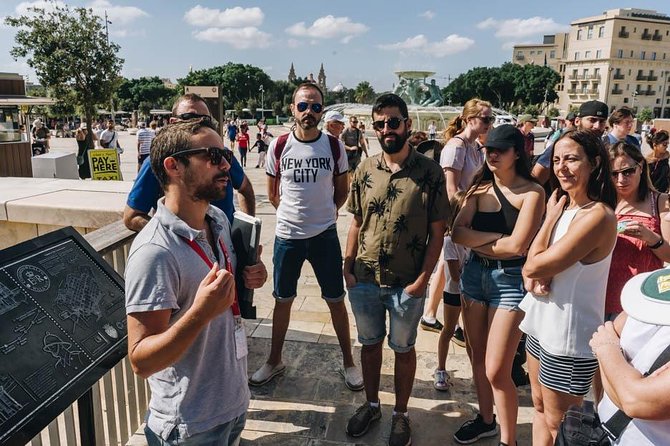
The maximum group size is 10 people, which is a strong feature for a walking tour. A small group makes it easier to hear in narrow streets and easier to ask about restaurants, local customs, or the next stop on your own itinerary.
The walk lasts about two hours. That is long enough to cover the historic core without making the experience exhausting, but short enough to fit around a cathedral visit, lunch, or an afternoon in the Three Cities.
The listed price is $54.31 per person. For that amount, the value rests mainly on the guide’s interpretation and practical advice, not on included food or attraction tickets. If you want a compact introduction to Valletta with a small group and personal recommendations, the price can make sense. If you are expecting multiple tastings or paid entries, it may feel expensive.
The experience is called a free tour in its description, but the listed booking price is not zero. I would rely on the displayed price and confirmation details when judging the cost.
It is typically booked around 44 days ahead, suggesting that popular dates may fill early. That is especially relevant if you have a fixed cruise, flight, or hotel schedule. Confirmation is normally issued at booking, though bookings made within eight hours of departure may be confirmed later, subject to availability.
Free cancellation is available up to 24 hours before the start time. Poor weather or failure to reach the minimum number of participants can lead to a new date, another experience, or a full refund. One booking was cancelled on the morning itself, so if this walk is central to your day, keep a backup plan.
Who should book this Valletta walk
I would recommend it most to first-time visitors who want a clear introduction before exploring independently. It suits people who enjoy history with a conversational local angle and want food suggestions woven into a sightseeing walk.
It is also a good fit if you prefer a small group. A maximum of 10 people feels more manageable than a large city tour, and the two-hour length works well for a short stay.
You may want something else if your priority is a serious food tour, a formal art lecture, or guaranteed admission to St. John’s Co-Cathedral. You may also be disappointed if you dislike political discussion or prefer every historical claim to be carefully documented.
Most people can participate, service animals are allowed, and the meeting point is near public transportation. Since this is a walking experience through an old fortified city, I would still plan for ordinary walking demands and wear sensible shoes.
Should you book it?
Book this tour if you want a friendly introduction to Valletta’s streets, major stories, Caravaggio connection, and food scene in a group of no more than 10. The strongest value comes from the guides, especially the warm, practical style associated with Luis, Moises, and Julia.
Skip it if you are paying $54.31 mainly for a substantial tasting menu, extensive art coverage, or guaranteed historical precision. Before booking, confirm the meeting time, exact meeting point, and what food or drink is included. With those expectations set correctly, this can be a useful and enjoyable first walk through Malta’s compact capital.
FAQ
Where does the Valletta tour start?
The tour starts at Victoria Gate, listed at Liesse in Il-Belt Valletta, Malta.
Where does the tour end?
The experience ends at St. John’s Co-Cathedral on Triq San Gwann in Valletta.
How long does the tour last?
The walking tour lasts approximately two hours.
What language is the tour offered in?
The tour is offered in English.
How many people can join the tour?
The maximum group size is 10 people.
Does the experience include food?
The tour includes an introduction to Maltese gastronomy, including pastizzi and food recommendations. One account describes a tasting of local liquor, but the available details do not confirm a full meal or several food tastings.
Is St. John’s Co-Cathedral admission included?
The tour ends at St. John’s Co-Cathedral, but the provided details do not state that admission is included.
Can I cancel for a full refund?
Yes. You can cancel at least 24 hours before the start time for a full refund. Changes or cancellations made less than 24 hours before the start time are not accepted for a refund.
Just added around Malta
- Gozo Unveiled: Guided Hiking in Gozo – The West★ 5.0 · 3 reviews
- Half Day Tour in Marsaxlokk Village, Market, Blue Grotto & Qrendi★ 4.5 · 3 reviews
- Tour of Malta (Private Driver) Including Lunch Platter & Wine in the countryside★ 4.5 · 3 reviews
- Valletta City of Gentlemen guided walking tour★ 3.5 · 3 reviews
- Sunday: Ghajn Tuffieha (Riviera) Beach Yoga Class★ 5.0 · 3 reviews
- Pastizzi Making Experience in Malta★ 5.0 · 3 reviews
- Malta: Around Comino Cruise With Blue Lagoon stop★ 5.0 · 3 reviews
- Half Day Private Tour around the Island in Malta★ 4.7 · 3 reviews
Historical Tours, compared.
Prehistoric Temples, Limestone Heritage & Blue Grotto
Read our review →
Maltese Islands History Audio-Visual Show and La Sacra Infermeria Tour
Read our review →
Self-Guided Historical Walking Tour (Audio Guide)
Read our review →
Mdina: Private Historical City Walking Tour with Rabat Town
Read our review →
The Limestone Heritage Park and Gardens (Entry Ticket)
Read our review →
Browse the lists this tour appears in