
Reviewed · MDINA & RABAT TOURS
Medina, Rabat and the pastizzi experience
Malta’s old stones lead to a tasty finish. This 2.5-hour walk connects Mdina’s major historic sights with the quieter streets of Rabat, then ends with pastizzi at the well-known Is-Serkin Crystal Palace Bar. I like the compact route and the way food is used to explain daily Maltese life, not just as a quick snack.
I also like the small maximum of six people, which should make it easier to hear your guide and ask questions. Julia receives especially warm praise for her friendly, funny, patient approach, while Silvia is noted for bringing genuine passion to Maltese history. The main consideration is weather: the tour depends on good conditions, and much of the experience takes place outdoors.
In This Review
- Five details that shape the experience
- Starting at Mdina Gate
- The Cathedral of Saint Paul and Mdina’s religious past
- The old courts of the Universitas
- A historic house turned fine-art museum
- Malta’s only Roman museum
- Forty-five minutes in Rabat
- The Christian catacombs of Rabat
- Pastizzi at Is-Serkin Crystal Palace Bar
- Julia, Silvia, and the guide’s role
- What $65 gets you
- Who will enjoy this walk most
- Timing, cancellation, and practical planning
- Should you book Medina, Rabat and the Pastizzi Experience?
- FAQ
- Where does the tour begin?
- What time does the tour start?
- How long does the experience last?
- Where does the tour end?
- How many people can join the tour?
- Is food included?
- How long is the Rabat portion?
- How long is the pastizzi stop?
- What happens if the weather is poor?
Five details that shape the experience
- A small group capped at six: You get a more personal walk than on a large city tour.
- Mdina Gate meeting point: The tour begins at VCM3+V9W in Mdina at 2:30 pm.
- Several historic stops in a short walk: You see a cathedral, old courts, a fine-art museum, a Roman museum, and Christian catacombs.
- Rabat receives about 45 minutes: This gives the suburb more attention than a quick pass-through.
- Pastizzi and a drink are included: The final stop lasts about 20 minutes at Is-Serkin Crystal Palace Bar.
- A strong overall rating: The experience is rated 4.7 out of 5, with 95 percent recommending it.
Starting at Mdina Gate

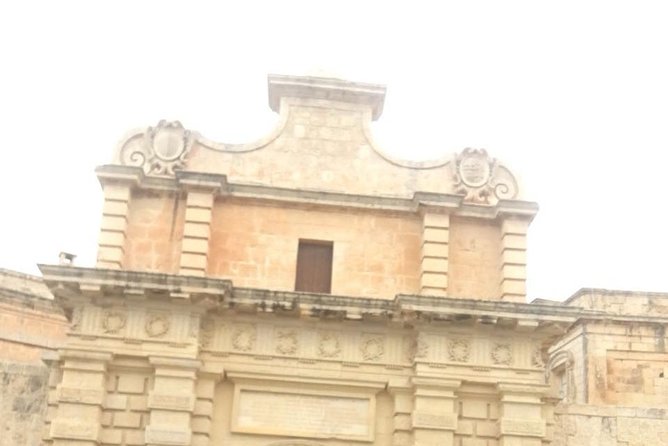
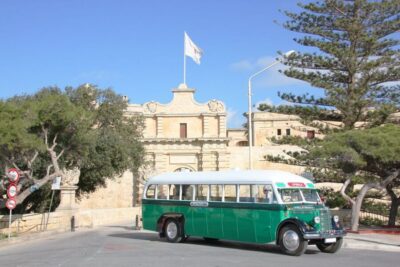
Your meeting point is Mdina Gate, the natural entrance to Malta’s old capital area. The start time is 2:30 pm, so you have the morning and early afternoon free for another part of the island. Arrive ready to walk, since the tour links several sights on foot and ends back at the meeting point.
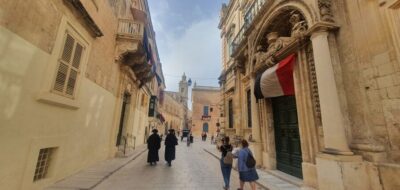
The group limit matters here. Mdina is the kind of place where a guide’s explanation can get lost in a crowd, especially around narrow streets and busy viewpoints. With no more than six people, you should have a better chance to hear the story, stop for questions, and keep a steady pace.
This is not a long-distance hike. Still, you should expect roughly two and a half hours on foot, with outdoor time in sun, wind, or rain. One tour member enjoyed the route despite weather around 104 degrees Fahrenheit, while another found strong wind and cold made conditions less comfortable. That tells you what to plan for: bring water, use sun protection in hot weather, and carry a light layer outside the warmer months.
More of Mdina and Rabat on foot:
- Malta: Highlights of Malta & Mdina Full Day Tour with Lunch
★ 4.4 · 2,688 reviews - Malta: Mdina and Rabat Walking Tour with Catacombs
★ 4.8 · 1,126 reviews - Malta: Mdina, Dingli Cliffs and San Anton Botanical Gardens
★ 4.3 · 991 reviews
The Cathedral of Saint Paul and Mdina’s religious past
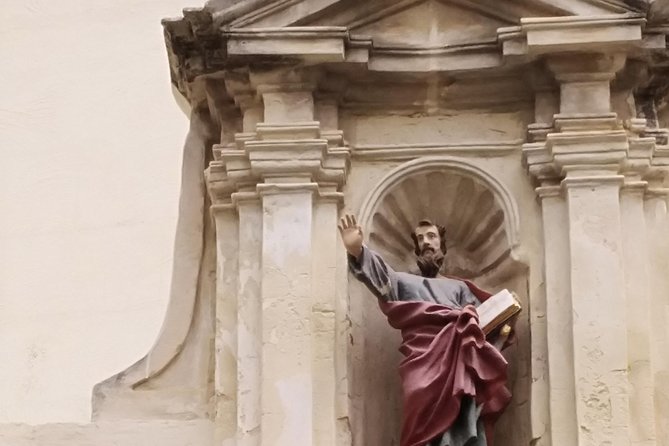
The first major stop is the Cathedral of Saint Paul, described as the most important church among Malta’s 365 churches. It is also the seat of the Diocese, and the same site has been occupied since the ninth century BC.
That last detail gives the stop unusual depth. You are not simply looking at a church building. You are being introduced to a place where religious and civic life have occupied the same ground for thousands of years. A guide can help you connect the visible church with the much older layers beneath Malta’s story.
The tour’s value here comes from explanation. On your own, you might admire the building and move on. With Julia or another guide, you can expect more context about why the cathedral matters to Malta and how it fits into the island’s long religious tradition.
The exact admission arrangements for the cathedral are not stated, so you should treat this as a guided exterior or area visit unless your booking details say otherwise. The same practical caution applies to the other named sights. The tour is designed around seeing and interpreting several places, not around spending a long time inside each one.
The old courts of the Universitas
The next stop introduces the old law courts of the Universitas, the feudal government in medieval times. This is a useful change of subject after the cathedral. You move from religious authority to the machinery of medieval administration and law.
The word Universitas refers here to the old governing body, not a modern university. That distinction is worth hearing from a guide because the name can easily confuse you. The stop helps show that Mdina was not only a place of churches and grand homes. It was also a center where local government and legal matters were handled.
I like this part of the route because it gives the walk a broader frame. Instead of collecting pretty buildings, you get several pieces of how Malta was organized. If you enjoy political history, old courts may interest you more than another church facade.
There is a tradeoff. The tour moves through multiple sites in a limited time, so the explanation here is likely concise. If law, government, or medieval architecture is your main interest, you may want to return later for a slower look.
A historic house turned fine-art museum
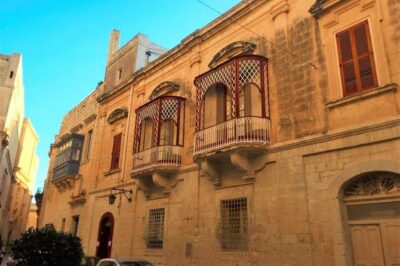
One of Mdina’s oldest houses now serves as a museum of fine art collections. This stop links private domestic life with public culture. Old houses can tell you how people lived, while art collections show what later generations chose to preserve and display.
The provided details do not list the artists, periods, or admission arrangements, so I would not book this walk expecting a full museum visit with a detailed gallery tour. Think of it as one part of a carefully packed historical route. Your guide provides the setting and significance, while the short format keeps the group moving.
That balance works well if you want an introduction to Mdina. You see several kinds of place without spending your whole afternoon in one building. It is less suitable if you prefer to read every label, study individual paintings, or spend an hour inside a museum.
A completely different sort of day out from Malta:
- Malta: Gozo & Comino Islands, Blue Lagoon & Seacaves Tour
★ 4.5 · 15,672 reviews - Comino: Blue Lagoon, Crystal Lagoon, and Seacaves Tour
★ 4.6 · 5,673 reviews - Malta: Blue Lagoon, Beaches & Bays Trip by Catamaran
★ 4.7 · 5,496 reviews - Malta: Gozo, Comino, Blue & Crystal Lagoon, & Caves Cruise
★ 4.6 · 5,092 reviews
Malta’s only Roman museum
The Roman museum is another strong stop because it adds a much older chapter to the tour. It is described as the only Roman museum in Malta, giving it a special place in the island’s archaeological story.
This is where the route reaches beyond medieval and Christian Malta. The Roman connection also prepares you for Rabat, since Mdina and Rabat were once part of the Roman city of Melita. The tour is therefore not just a walk between two modern communities. It traces one urban area through several periods.
Again, the short duration shapes what you can expect. You will gain a clear sense of why the museum matters, but the available information does not promise a long, independent museum session or a specific collection. If Roman archaeology is a priority, check the day’s exact visiting arrangements before booking.
Forty-five minutes in Rabat
Rabat is presented as the suburb of Mdina, and both places were part of the Roman city of Melita. It is also called the cradle of Christianity in Malta. The tour allows about 45 minutes here, which is enough to give Rabat real attention rather than treating it as a corridor between Mdina and the snack stop.
I like the contrast. Mdina is associated with its old-city setting and major monuments, while Rabat offers a calmer feel. The tour description specifically emphasizes finding tranquility in Malta’s city setting. That makes this route a good choice if you want history without spending the entire time in grand ceremonial spaces.
The Christian connection is especially important. Rabat’s catacombs form part of the island’s many burial sites, and the town contains the largest concentration of these places. Your guide can help you understand why Rabat became so closely tied to early Christianity.
Do not expect the same kind of polished monument at every stop. Rabat’s appeal is in the connection between streets, religious history, archaeology, and ordinary town life. You may find the experience more atmospheric than spectacular, which is exactly why the quieter section works as a counterweight to Mdina.
The Christian catacombs of Rabat
The catacomb stop adds a more serious note to the walk. These underground burial places form part of the Christian catacombs of Rabat, an area where a large share of Malta’s catacombs are found.
The important point is context. Catacombs are not simply another old attraction to tick off. They show how communities buried their dead and practiced faith in earlier periods. A guide’s role is useful here because the meaning of the spaces can be easy to miss if you only see stone chambers without explanation.
The details provided do not confirm a separate admission ticket or guarantee entry into a particular catacomb site. The tour includes the stop, but you should confirm the exact access arrangements if going inside is essential to you. In a 2.5-hour route, the stop may be an introduction rather than an extended archaeological visit.
The subject also deserves a respectful pace. This is not a light photo stop. The catacombs bring a sense of age and mortality that deepens the story of Rabat and Malta’s Christian past.
Pastizzi at Is-Serkin Crystal Palace Bar
The final stop is the most delicious part of the plan. At Is-Serkin Crystal Palace Bar, you taste pastizzi, Malta’s famous low-cost pastry snack, with tea, coffee, or beer.
Pastizzi are an everyday food rather than a formal restaurant dish. That makes them a smart ending for this tour. After churches, courts, art, Roman history, and catacombs, you finish with something tied to ordinary Maltese eating habits. The snack gives the historical walk a practical link to present-day life.
The stop lasts about 20 minutes, and admission is included. The supplied information does not specify whether you choose the drink or which filling is served, so ask your guide about the available options and tell the provider about any food allergies when booking.
The suggested pairings depend on the season. Hot tea or coffee fits a cold winter day, while beer is suggested for summer. You do not need a grand meal to understand why pastizzi matter. Their appeal is that they are simple, inexpensive, and part of the island’s food culture.
This is also where the tour feels most relaxed. Several comments praise the guide’s humor, friendliness, and ability to connect Maltese food with local culture. That personal touch may be the difference between merely eating a pastry and understanding why it is such a familiar part of life in Malta.
Julia, Silvia, and the guide’s role
The strongest praise centers on the guiding. Julia is repeatedly described as friendly, attentive, informative, entertaining, and genuinely enthusiastic. One person found her especially helpful in cold, windy weather, while another appreciated her calm pace in extreme heat.
That range matters. A good walking tour is not only about facts. It is also about adjusting the pace, keeping the group comfortable, and making old places feel relevant. The comments about Julia suggest a guide who mixes formal history with personal experience and humor.
Silvia is also praised in Spanish for knowing the city’s history and conveying her passion for it. The provider is listed as Silvia, Excursiones en Malta, so your exact guide may vary. If you specifically want Julia, ask when booking rather than assuming she will lead every departure.
The guide-led format is the main reason to choose this experience over a self-guided walk. You can find Mdina, Rabat, the museums, and Is-Serkin on your own, but you would have to build the links between them yourself. Here, the church, courts, art, Roman past, Christianity, and food are presented as parts of one Maltese story.
What $65 gets you
At $65, this is not the cheapest way to spend an afternoon in Mdina and Rabat. You are paying for a 2.5-hour guided walk, a small group, several historic points, and an included pastizzi experience with a drink.
The value is strongest if you want a clear introduction without planning every stop yourself. A group capped at six can feel closer to a private walk than a standard coach excursion, although it is not described as a private tour. The included snack also gives the price a little more substance than a sightseeing walk with no food.
The value is weaker if you only want independent exploration or extended museum time. The tour covers many places, which means each one receives limited attention. You may still want to return to the cathedral, Roman museum, fine-art museum, or catacombs afterward, depending on opening hours and your interests.
I would judge the price by the guide rather than by the pastry. Pastizzi are known as an inexpensive way to eat, so the food alone does not justify $65. The real purchase is the route, the interpretation, the small group, and the cultural link between Malta’s monuments and its daily food.
Who will enjoy this walk most
I would recommend it to first-time visitors who want Mdina and Rabat explained in one manageable outing. It suits you if you enjoy history, prefer walking to a bus tour, and like having a local snack built into the day.
It is also a good fit for couples, families, and small groups who value questions and conversation. Service animals are allowed, most people can participate, and the meeting point is near public transportation.
You should think twice if you dislike outdoor walking in uncertain weather or need long, quiet visits inside museums. The tour requires good weather, and its broad route means you will sample several sites rather than study one in detail.
The age and mobility information is general. Most people can participate, but the supplied details do not describe the surfaces, steps, or catacomb access. If you have specific mobility needs, ask the provider before booking.
Timing, cancellation, and practical planning
The start time is 2:30 pm, and the activity ends back at the meeting point. A mobile ticket is provided, and booking confirmation arrives at the time of booking.
You can cancel for a full refund up to 24 hours before the local start time. Cancellations or changes made within 24 hours are not refunded or accepted. If poor weather cancels the tour, you are offered another date or a full refund. The same applies if the minimum number of people is not reached.
Food allergies should be reported when you book. That is especially important because the pastizzi stop is part of the experience, not an optional extra.
Should you book Medina, Rabat and the Pastizzi Experience?
Book this tour if you want a friendly, compact introduction to Mdina and Rabat, with history explained by a personal guide and a simple Maltese food stop at the end. The 4.7 rating, 95 percent recommendation rate, and strong praise for Julia point to a consistently well-received experience.
I would choose it early in your Malta visit, when you want the basic story of the island’s religious, Roman, medieval, and Christian past. I would skip it only if you prefer to explore at your own pace, need guaranteed long museum visits, or are uncomfortable committing to an outdoor walk in changeable weather.
FAQ
Where does the tour begin?
The tour begins at Mdina Gate, listed at map reference VCM3+V9W in Mdina, Malta.
What time does the tour start?
The scheduled start time is 2:30 pm.
How long does the experience last?
The walking tour lasts approximately 2 hours and 30 minutes.
Where does the tour end?
The activity ends back at the meeting point.
How many people can join the tour?
The tour has a maximum of six people.
Is food included?
Yes. Pastizzi are included at Is-Serkin Crystal Palace Bar, along with a seasonal choice of tea, coffee, or beer.
How long is the Rabat portion?
The Rabat stop lasts about 45 minutes, and admission is listed as free.
How long is the pastizzi stop?
The stop at Is-Serkin Crystal Palace Bar lasts about 20 minutes, with admission included.
What happens if the weather is poor?
The experience requires good weather. If it is canceled because of poor conditions, you are offered a different date or a full refund.
Just added around Malta
- Gozo Unveiled: Guided Hiking in Gozo – The West★ 5.0 · 3 reviews
- Valletta City of Gentlemen guided walking tour★ 3.5 · 3 reviews
- Half Day Tour in Marsaxlokk Village, Market, Blue Grotto & Qrendi★ 4.5 · 3 reviews
- Tour of Malta (Private Driver) Including Lunch Platter & Wine in the countryside★ 4.5 · 3 reviews
- Sunday: Ghajn Tuffieha (Riviera) Beach Yoga Class★ 5.0 · 3 reviews
- Pastizzi Making Experience in Malta★ 5.0 · 3 reviews
- Malta: Around Comino Cruise With Blue Lagoon stop★ 5.0 · 3 reviews
- Half Day Private Tour around the Island in Malta★ 4.7 · 3 reviews
Mdina & Rabat Tours, compared.
Highlights of Malta & Mdina Full Day Tour with Lunch
Read our review →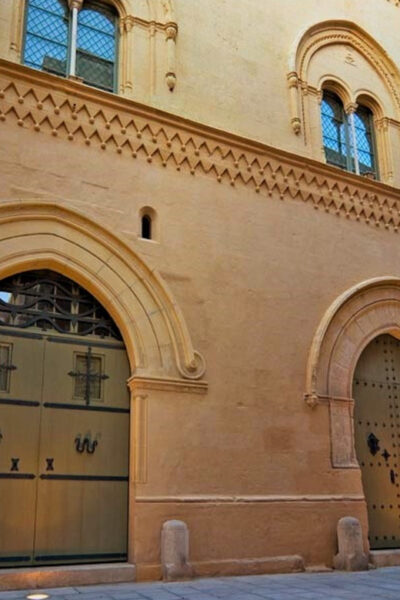

Mdina, Dingli Cliffs and San Anton Botanical Gardens
Read our review →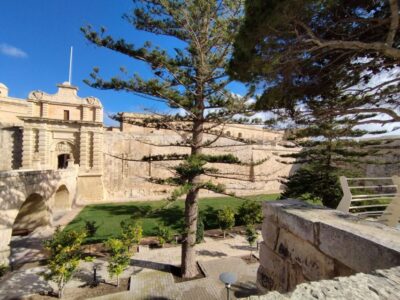

Mdina and Rabat Walking Tour inc. Catacombs and St. Paul’s Grotto
Read our review →Browse the lists this tour appears in