
Reviewed · WALKING TOURS
From Cospicua: Senglea, Bormla, and Birgu Walking Tour
Malta’s past is packed into three small cities. This $24 walking tour links Senglea, Bormla, and Birgu through waterfront views, massive fortifications, Knights-era palaces, and stories of wartime survival. I especially like the route’s mix of grand military sights and quiet old lanes, and the guides, including Karl, Chris, Lorraine, and Christian, are praised for turning dates and battles into easy stories. The main consideration is that the tour gives Birgu the most attention, while Senglea and Bormla receive a shorter introduction.
I also like the practical length: 2.5 hours is enough to see a lot without turning the morning into a march. You meet at the Cospicua ferry landing, not at a hotel, and finish in Birgu, with the dghajsa boat back to Valletta available at your own expense.
In This Review
- Key points at a glance
- Why these three cities matter
- Starting beside the Cospicua ferry landing
- Senglea waterfront views and harbor defenses
- Entering Birgu, also called Vittoriosa
- World War II and Birgu’s hard years
- The British Navy, drydocks, and working Malta
- The Birgu waterfront and the optional dghajsa ride
- Guide style and group atmosphere
- Is $24 a fair price?
- Walking demands and practical advice
- Should you book it?
- FAQ
- Where does the tour meet?
- How long does the walking tour last?
- What language is the tour conducted in?
- Which cities are included?
- Does the tour include the boat back to Valletta?
- Is hotel pickup included?
- What should I bring?
Key points at a glance
- Birgu gets the fullest treatment: Allow most of your attention for the Collacchio quarter, its winding lanes, old palaces, and waterfront.
- The meeting point is simple: Meet at the unloading place of the Valletta to Three Cities ferry in Cospicua as you step off the boat.
- The stories go beyond the Knights: The walk covers British naval activity, drydocks, the Royal Navy headquarters, and the heavy bombing of Birgu during World War II.
- Guides are the star of the experience: Karl, Chris, Lorraine, and Christian are repeatedly praised for humor, clear English, local stories, and an easy pace.
- The boat ride is optional and extra: The tour ends near St. Laurence Church in Birgu, where you can catch a dghajsa to Valletta if you pay separately.
- Bring proper walking shoes: The route includes waterfronts, fortification areas, narrow streets, and regular walking stops.
Why these three cities matter
Across the Grand Harbour from Valletta, Malta’s Three Cities tell a different part of the island’s story. Senglea, Bormla, and Birgu grew around military defenses, harbor work, religious institutions, shipyards, and daily life tied to the sea.
Their names can be confusing at first. Bormla is also called Cospicua, and Birgu is also known as Vittoriosa. During the tour, those names become easier to place because you move through the area rather than studying it from a map.
I like this setting for a guided walk because the important facts are not always obvious. A fortified wall may look like a photogenic block of stone, but your guide can explain its purpose and place it within Malta’s larger story. A quiet lane in Birgu may seem ordinary until you learn who built the nearby palace or how the neighborhood endured wartime attacks.
The three cities also offer a calmer counterpoint to Valletta. You still see Malta’s honey-colored stone and military architecture, but the streets can feel less crowded and more local in character. The contrast helps you understand that Malta is not only its capital.
More of the Three Cities:
- From Sliema: Valletta and the Three Cities Scenic Cruise
★ 4.3 · 763 reviews - Valletta & Three Cities Harbour Cruise
★ 4.0 · 239 reviews - Malta: Vintage Bus Ride through the Three Cities
★ 4.1 · 112 reviews
Starting beside the Cospicua ferry landing
The walk begins at the Valletta Ferry Service landing in Cospicua. The meeting instruction is precise: meet at the place where passengers get off the ferry from Valletta. This makes the tour especially handy if you are already using the ferry rather than arriving by taxi or bus.
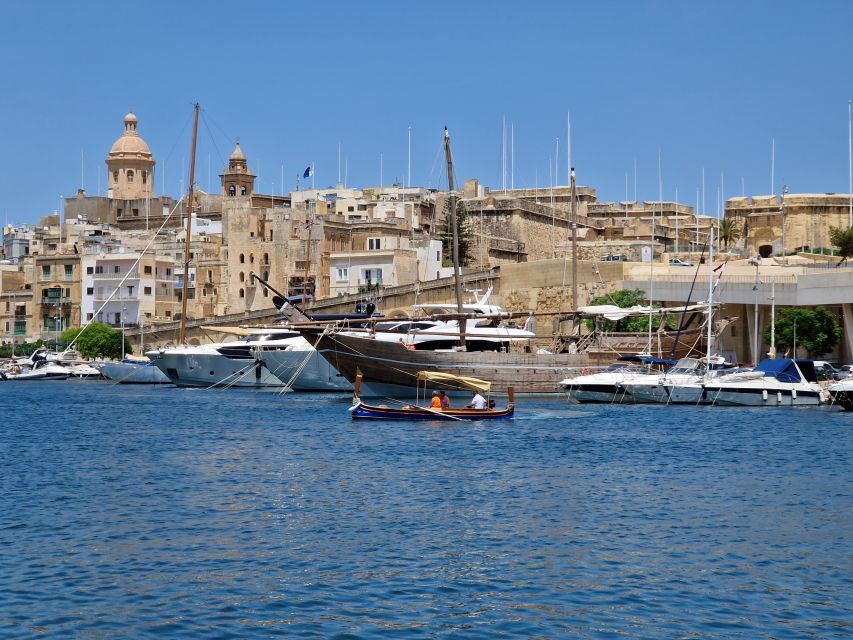
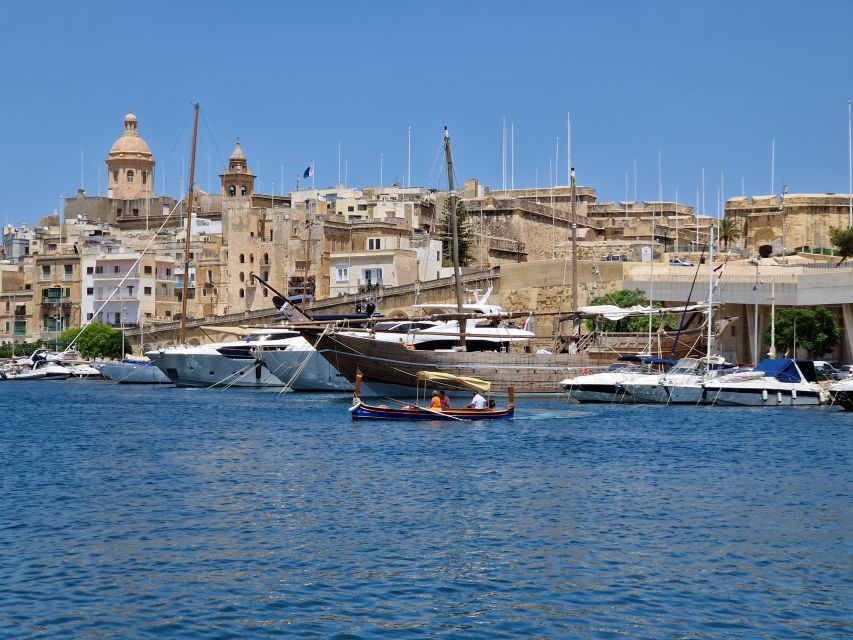
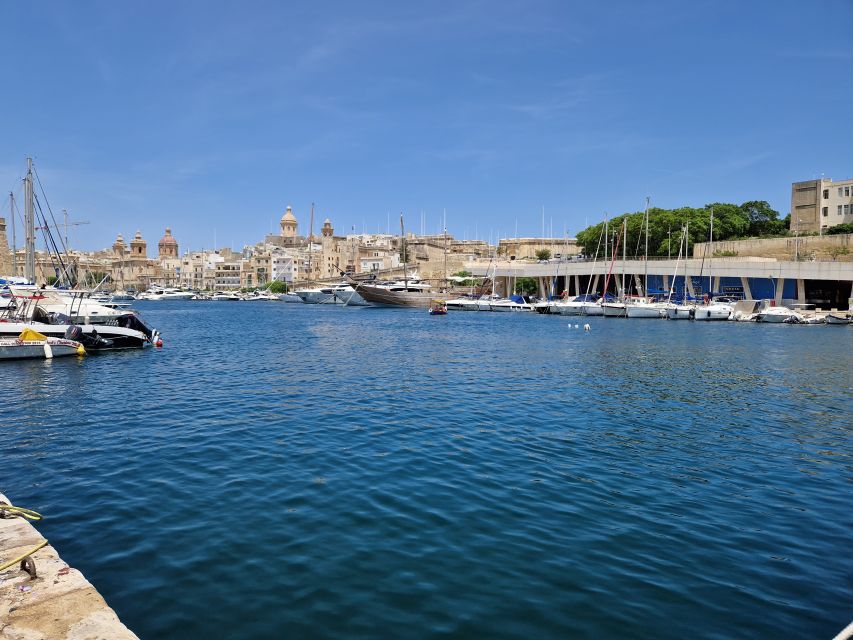
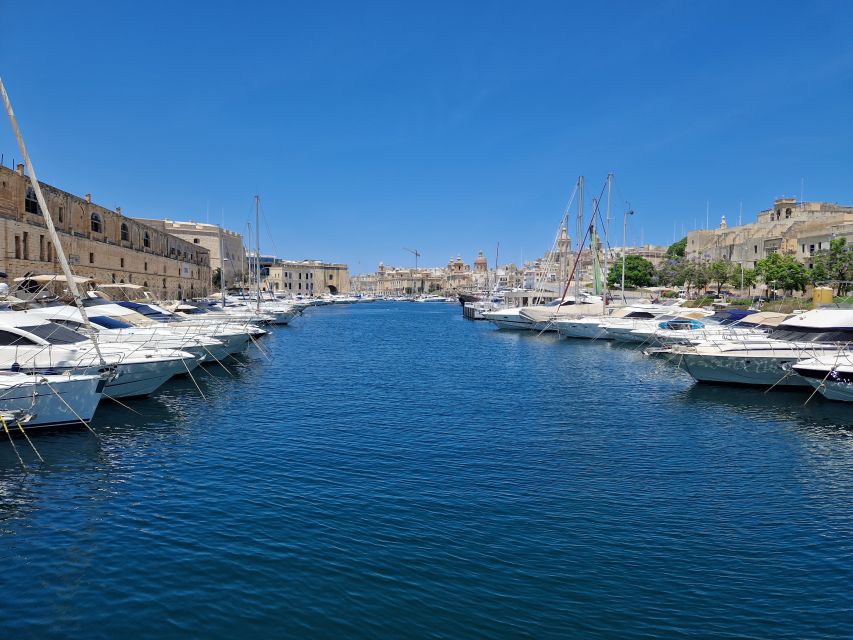
Cospicua, or Bormla, receives a guided introduction lasting about 30 minutes. The waterfront is your first visual cue that these cities have always depended on the harbor. Yachts line parts of the shoreline, while fortifications and old stone buildings remind you that this was never simply a pretty seaside district.
The opening section helps you get your bearings. Your guide connects Cospicua and Senglea to the other two cities and explains how the waterfront, defenses, and naval activity shaped local life. It is a useful start because the Three Cities can look like one continuous built-up area when viewed from Valletta.
You should not expect a long museum visit here. This is an outdoor walking tour, and the value comes from seeing the setting while hearing the explanation. If you prefer formal interiors and extended time at individual monuments, this may feel too brisk. If you want an overview before exploring on your own, the 30-minute introduction works well.
Senglea waterfront views and harbor defenses
Senglea forms part of the opening waterfront section. The route gives you views across the harbor and toward the fortifications, with yachts adding a modern layer to a very old scene.
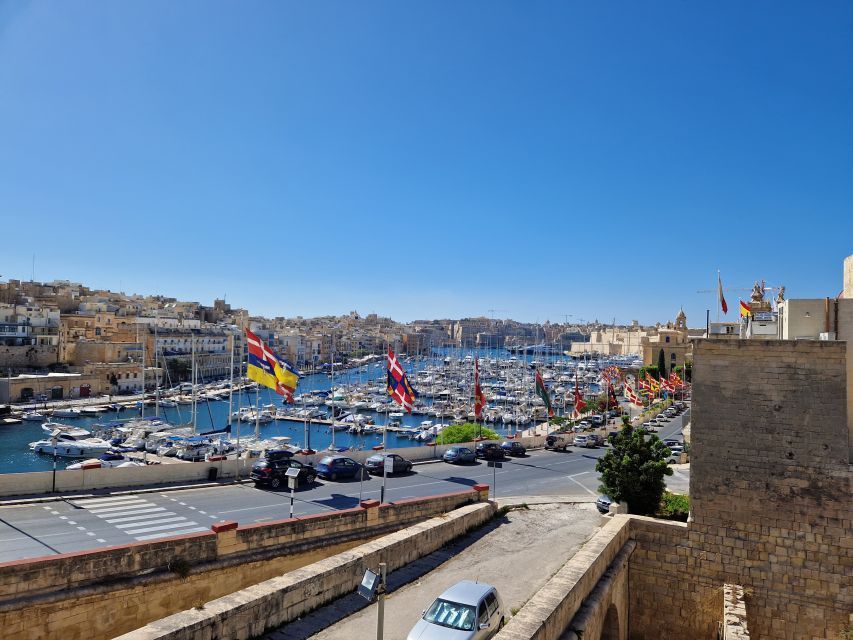
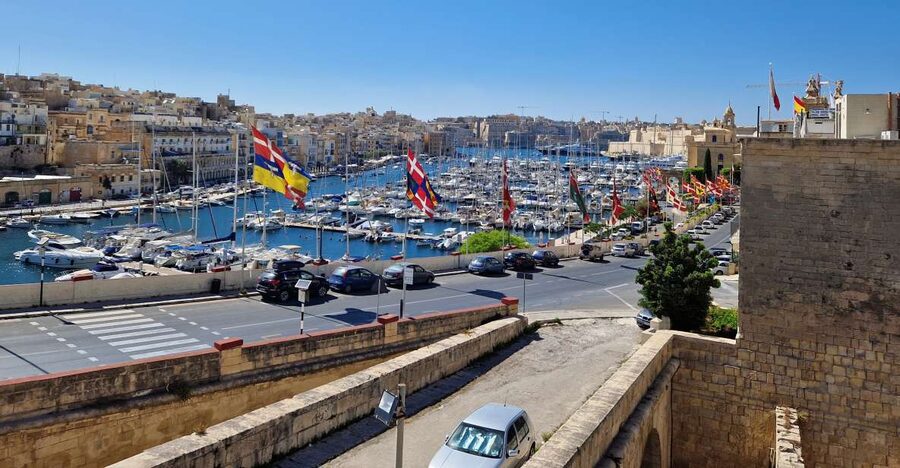
The harbor crossing and fortified walls are among the strongest visual parts of the experience. Malta’s defenses are not background decoration here. They dominate the view and show why this corner of the island mattered so much to the Knights of Malta and later to the British Navy.
This is also a good place to take photographs, though the tour is not designed as a dedicated photography outing. Your guide keeps the group moving, stopping to explain features and answer questions. That balance matters. You get enough time to look and take pictures, but you do not lose the thread of the story.
The Senglea section is shorter than the Birgu portion. One guide has been praised for explaining that the main historical focus would be Vittoriosa, or Birgu, rather than giving equal time to all three cities. That is worth knowing before you book. The name suggests a balanced tour of three urban centers, but the experience is better understood as an introduction to the Three Cities with a detailed walk through Birgu.
Entering Birgu, also called Vittoriosa
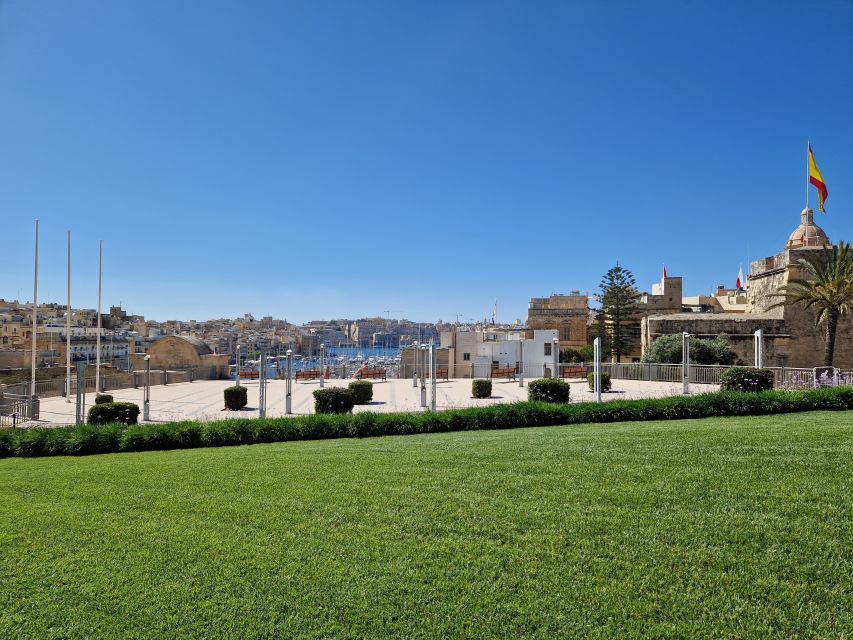
Birgu is where the tour slows down and gains depth. The guided section here lasts about 75 minutes, making it the heart of the route.
As you approach Birgu, the fortresses and walls give the city a powerful entrance. The scale is striking, especially after walking along the harbor. These defenses helped shape the city’s identity and explain its importance in Malta’s military story.
Your guide points out the relationship between the fortifications, the waterfront, and the old urban center. That connection is one reason I would not rush through this area on your own. Without context, you see walls, gates, and stone streets. With a guide, those parts begin to fit together.
The route then heads toward the Collacchio area, one of Birgu’s most appealing sections. Here, narrow winding streets create a sharp change from the broad waterfront views. The lanes are atmospheric, but they can also make orientation difficult. A guide keeps you from spending your limited time circling the same corners.
The Collacchio walk includes palaces built by the Knights after their arrival in Malta in 1530. The emphasis is not only on grand buildings. You also hear how the district worked as an urban center, with streets and residences shaped by the presence of the Order.
I particularly like this section for visitors who want more than postcard views. Birgu’s character comes from the mix of military walls, religious buildings, palaces, and ordinary streets. The route helps you see the city as a place where people lived, worked, worshipped, and defended the harbor.
More walking tours on foot:
- The Original Valletta Walking Tour
★ 5.0 · 2,719 reviews - Valletta: 3-Hour Walking Tour
★ 4.7 · 1,605 reviews - Valletta: Guided City Walking Tour
★ 4.8 · 1,256 reviews - Valletta: Street Food and Culture Walking Tour
★ 4.8 · 1,251 reviews
World War II and Birgu’s hard years
The tour does not stop with the Knights. It also explains Birgu’s experience during the Second World War, when the area was the most heavily bombed part of the Maltese Islands.
That detail changes the way you look at the streets. The old stone buildings and fortifications are not just survivors from a distant military age. The city also endured a much more recent period of danger and destruction.
The strongest guides use this part of the walk to connect major events with local communities. Chris is often praised for linking local stories to events beyond Malta, while Karl is known for adding anecdotes and personal energy to the historical explanation. Lorraine has also been praised for bringing Malta’s wider past into the walk in a clear, engaging way.
Guide quality matters a great deal on this tour because the route itself is compact. You are not moving through a large museum filled with labels. The guide supplies the links between what you see and what happened there.
You can expect regular stops rather than one long speech. This keeps the pace manageable and gives you chances to ask questions. Several groups have described the pace as relaxed, with a good balance between walking and talking.
The British Navy, drydocks, and working Malta
Another useful part of the tour covers the British Navy’s role in the Three Cities. The harbor was not only a medieval stronghold. It later became a major naval center, with drydocks and the headquarters of the British Royal Navy in the Mediterranean.
This section adds an important layer to Malta’s story. The cities continued to change as political powers shifted and military technology developed. The harbor remained useful because of its position and its protected waters.
I appreciate this focus because it keeps the tour from presenting Malta as a place frozen in the age of the Knights. The British period affected jobs, buildings, transport, and the daily rhythm of the harbor. Even if you are not a naval-history fan, the explanation helps make sense of the industrial and military features around Cospicua and Birgu.
The walk also shows how closely local life was tied to international events. Malta’s position made it important to larger powers, but the people living beside the harbor had to deal with the practical consequences. That human angle is where a good guide can make the subject feel immediate rather than remote.
The Birgu waterfront and the optional dghajsa ride
The tour finishes on the Birgu waterfront, in front of St. Laurence Church. This is a pleasant ending because you return to open harbor views after the tighter streets of the Collacchio quarter.
From here, you can board a dghajsa, a traditional Maltese boat often compared with a gondola, to return to Valletta. The boat is not included in the tour price, so budget separately if you want to make it part of your day.
The optional ride is more than a way to get back. After walking through walls and narrow lanes, seeing the Three Cities from the water gives you another view of their scale. You can appreciate how the fortifications meet the harbor and how the three areas relate to Valletta.
Still, do not book this tour assuming the boat transfer is included. The guide finishes the walking portion in Birgu, and the dghajsa is an additional choice. That flexibility is useful if you prefer to stay in Birgu for lunch or continue exploring on foot.
Guide style and group atmosphere
The clearest strength of this experience is the guiding. Karl and Chris receive especially strong praise for humor, storytelling, local knowledge, and enthusiasm. Lorraine is praised for her clear explanations and passion for Malta, while Christian is noted for combining historical detail with personal stories and a good sense of humor.
The exact guide depends on the date, so you should not assume one named person will lead every departure. What does seem consistent is the friendly, conversational style. The guide is not simply listing rulers and dates. You hear anecdotes, local traditions, and small details that help the streets feel lived in.
Small groups are another advantage when they occur. One group had five people, and another guide handled a group of about ten. A smaller party makes it easier to ask questions and hear the guide in narrow streets.
Group size can vary, so I would not count on a private-feeling walk every time. Even so, the format allows regular questions, and the guides are repeatedly praised for answering them clearly.
English is the tour language. You should be comfortable listening to spoken English for the full 2.5 hours, especially during the historical explanations.
Is $24 a fair price?
At $24 per person, I consider this a good-value introduction to the Three Cities. You get a live guide, a 2.5-hour route, and access to a part of Malta that is easy to misunderstand when seen only from Valletta.
The value comes from interpretation rather than admission tickets. No attraction entry is included, and the dghajsa costs extra. You are paying for the route planning, the local context, and the guide’s ability to connect the fortifications, palaces, naval sites, and wartime story.
That makes the tour most worthwhile early in your Malta visit. You gain a map in your head and can return later to the places that interest you most. It is also useful after a Valletta tour because the Three Cities help explain the capital’s harbor and defensive position.
Free cancellation up to 24 hours before the start and reserve-now, pay-later booking make the timing less risky. Still, you should plan around the fixed meeting place and remember that hotel pickup and drop-off are not included.
Walking demands and practical advice
Bring comfortable shoes. The route includes waterfront promenades, fortification areas, narrow lanes, and a fair amount of standing during explanations.
The 2.5-hour duration is manageable for most people who are comfortable with a city walk, but it is not a sightseeing bus tour. You will be outdoors and on your feet for nearly the entire experience.
I would also leave room in your schedule afterward. The tour ends in Birgu, not back in Valletta, and you may want to take the dghajsa, continue looking around Birgu, or stop for food. Treat the endpoint as part of the plan rather than an inconvenience.
This tour suits first-time Malta visitors, history fans, cruise passengers using the Valletta ferry, and anyone who wants a quieter counterpoint to Valletta. It is less suited to you if you need hotel transportation, want long interior visits, or expect equal time in Senglea, Bormla, and Birgu.
Should you book it?
I would book this walk if you want the Three Cities to make sense rather than simply appear as a scenic view across the harbor. The best reason to go is the guiding, particularly if you enjoy stories, local customs, military history, and questions answered along the way.
Go in with the right expectation: Birgu is the main event, while Senglea and Bormla receive shorter coverage. At $24, that is still a strong deal, especially when the guide brings the fortifications, Knights’ palaces, British naval era, and World War II into one clear route.
If you plan to return to Valletta by dghajsa, carry extra money and allow a little time at the Birgu waterfront. For a compact, human-scale introduction to Malta’s harbor cities, this is an easy tour to recommend.
FAQ
Where does the tour meet?
You meet at the unloading place of the Valletta to Three Cities ferry in Cospicua, also called Bormla, as you get off the boat.
How long does the walking tour last?
The tour lasts 2.5 hours.
What language is the tour conducted in?
The live guided tour is conducted in English.
Which cities are included?
The tour covers Senglea, Bormla, also known as Cospicua, and Birgu, also known as Vittoriosa.
Does the tour include the boat back to Valletta?
No. The dghajsa ride to Valletta is optional and not included in the tour price.
Is hotel pickup included?
No. You make your own way to the Cospicua ferry landing, and hotel pickup and drop-off are not included.
What should I bring?
Bring comfortable shoes suitable for a 2.5-hour city walk.
Just added around Malta
- Gozo Unveiled: Guided Hiking in Gozo – The West★ 5.0 · 3 reviews
- Half Day Tour in Marsaxlokk Village, Market, Blue Grotto & Qrendi★ 4.5 · 3 reviews
- Tour of Malta (Private Driver) Including Lunch Platter & Wine in the countryside★ 4.5 · 3 reviews
- Valletta City of Gentlemen guided walking tour★ 3.5 · 3 reviews
- Sunday: Ghajn Tuffieha (Riviera) Beach Yoga Class★ 5.0 · 3 reviews
- Pastizzi Making Experience in Malta★ 5.0 · 3 reviews
- Malta: Around Comino Cruise With Blue Lagoon stop★ 5.0 · 3 reviews
- Half Day Private Tour around the Island in Malta★ 4.7 · 3 reviews
Walking Tours, compared.

Guided Walking Tour with Optional Cathedral Tour
Read our review →
The Valletta Street Food and Culture Walking Tour
Read our review →Browse the lists this tour appears in