
Reviewed · WALKING TOURS
Valletta World War II Private Walking Tour
Malta’s wartime story is written into its streets. I like that this private three-hour walk connects familiar Valletta sights with the Siege of Malta, rather than treating WWII as a collection of dates. I also like the personal attention, especially with guides such as Matthew Camilleri and Mario, who bring local background and family stories to the subject.
The guided visit to the National War Museum is another strong point. You do not simply get sent into the museum alone. The guide can point out the important exhibits, including Malta’s 1942 George Cross. The main caution is simple: this is a real walking tour over stone streets, with hills and stairs, and the museum ticket costs extra.
In This Review
- Key points at a glance
- Why Valletta’s WWII story matters
- Starting near Valletta City Gate
- The Siege Bell Memorial and the Grand Harbour
- Tunnels, shelters, and the Victory Kitchens
- The ruined Royal Opera House
- The Illustrious Blitz and Malta’s naval role
- Fort St. Elmo and the National War Museum
- What the three hours feel like
- The value of a private group price
- Who should book this walk?
- Practical details before you reserve
- Should you book the Valletta WWII tour?
- FAQ
- How long is the Valletta World War II Private Walking Tour?
- What language is the tour offered in?
- How many people can join the private tour?
- Where does the tour start?
- Where does the tour end?
- Is the National War Museum ticket included?
- How long is the museum visit?
- Does the tour include hotel pickup and drop-off?
- What level of fitness is needed?
- Is this a private activity?
Key points at a glance
- A private experience for up to four people: The flat group price makes the tour more appealing for a small family or group than a per-person tour.
- WWII sites beyond ordinary sightseeing: You see the Siege Bell Memorial, Victory Kitchens, the ruined Royal Opera House, and locations tied to the Illustrious Blitz.
- A guided hour at Fort St. Elmo: The National War Museum visit gives the war story a useful physical setting and includes the 1942 George Cross.
- Strong local guides: Matthew Camilleri and Mario are praised for clear storytelling, Maltese history, and personal attention.
- A walking tour that requires sensible preparation: Wear firm, comfortable shoes and carry water and sun protection.
- A good fit for cruise passengers: The three-hour length and central Valletta route can work well during a short port visit, provided your timing is firm.
Why Valletta’s WWII story matters
Malta was not a distant observer during World War II. Its position in the Mediterranean made it valuable to both sides. In 1940, after Italy declared war, Malta became an important stepping stone in the Axis effort to control supply routes and support operations in North Africa.
That strategic location came at a heavy cost. From 1940 to 1943, Axis aircraft attacked the island again and again. The siege was not only a military contest. It was also an attempt to starve the population into submission by cutting off food, fuel, and other supplies.
The tour focuses especially on the Siege of Malta from 1940 to 1942. You learn how civilians lived through bombardment, how shelters were built beneath the city, and how ordinary routines continued under extraordinary pressure.
I find this approach more useful than a standard military tour. The subject is not only ships and aircraft. It is also food, shelter, crowded tunnels, damaged buildings, and the choices people made to keep a city functioning.
More walking tours on foot:
- The Original Valletta Walking Tour
★ 5.0 · 2,719 reviews - Valletta: 3-Hour Walking Tour
★ 4.7 · 1,605 reviews - Valletta: Guided City Walking Tour
★ 4.8 · 1,256 reviews
Starting near Valletta City Gate
The stated starting point is Victoria Gate in central Valletta, listed at Liesse. The tour begins with a short orientation before moving into Valletta’s honey-colored streets and wartime sites.
It is worth paying close attention to the meeting instructions. One booking account describes starting near the Upper Barrakka Gardens, while the formal meeting information gives Victoria Gate. Both are central Valletta locations, but they are not the same spot. Confirm the exact meeting point and look for your guide, especially if you are arriving from a cruise ship or visiting Valletta for the first time.
The City Gate area is a practical place to begin because it puts you at the edge of Valletta’s historic core. From there, the guide can link the city’s grand architecture with the damage and disruption caused by the war.
This opening portion is not designed as a long museum stop. It is more about getting your bearings and setting the story in place. You will then spend most of the tour outdoors, so bring water, sunscreen, and shoes that can handle hard stone paving.
The Siege Bell Memorial and the Grand Harbour
The Siege Bell Memorial overlooks the Grand Harbour and is one of the clearest places to grasp Malta’s wartime position. The water below was both a lifeline and a target. Ships had to reach Malta with food and military supplies, while Axis forces tried to stop them.
Here, your guide can explain the pressure created by the blockade and the struggle to keep the island supplied. The San Marija Convoy is one of the key events covered, a reminder that Malta’s survival depended on ships making it through hostile waters.
The harbor views also help you understand why Valletta mattered. This is not a story detached from geography. The fortifications, harbor entrances, and views toward the water all shaped the fighting.
The memorial itself is also a place for reflection. The tour does not rush from one photo stop to another. The guides praised most strongly, especially Matthew and Mario, are described as patient storytellers who pause to explain what happened and answer questions.
Tunnels, shelters, and the Victory Kitchens
Some of the most human parts of the walk concern the systems created for civilian survival. Valletta’s wartime tunnels sheltered residents during air raids. They were not simply a backdrop to the military campaign. They were places where families tried to stay alive while bombs fell above them.
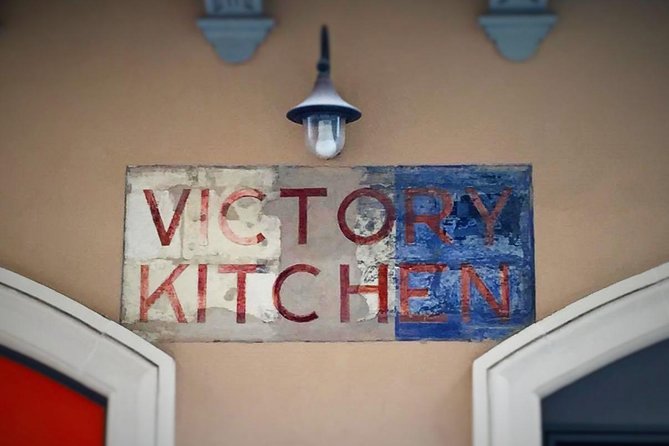
The tour also explains the Victory Kitchens, which were set up to feed people during shortages. This detail gives the siege a practical, immediate quality. You begin to think about how a city handles food when normal supply lines are broken.
These subjects are valuable because they show how Malta’s war was experienced at street level. You hear about the military campaign, but you also learn how people tried to maintain daily life. That balance is one of the best reasons to choose a private tour instead of relying only on a general city walk.
The tour does not list a full visit inside every tunnel system. If you specifically want to explore wartime underground complexes, ask your guide about the Lascaris and War Headquarters tunnels. One past participant particularly recommended them as a separate stop. Do not assume they are included in this three-hour route.
A few more Malta trips worth weighing up
- Private Boat Tour: Crystal Lagoon, Blue Lagoon, Comino and Gozo
★ 5.0 · 1,077 reviews - Gozo Full-Day Jeep Tour with Private Boat to Gozo & return
★ 4.5 · 1,048 reviews - Private Day Sailing Boat Charter
★ 5.0 · 662 reviews - Gozo Full-Day Quad Tour with Private Boat to Gozo & return
★ 4.5 · 627 reviews
The ruined Royal Opera House
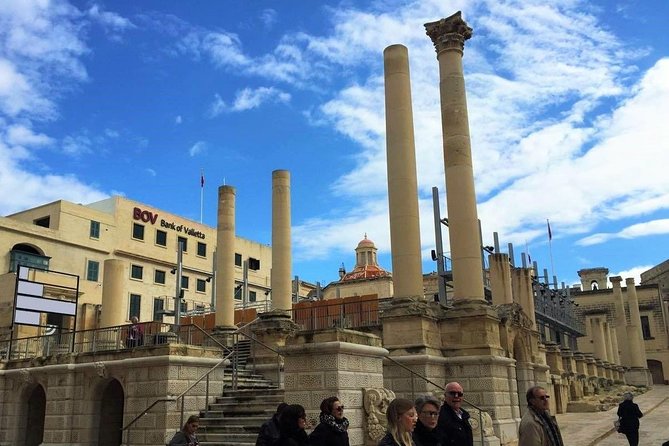
The Royal Opera House is one of Valletta’s most striking wartime reminders. A German bombing raid in 1942 destroyed it, leaving a gutted shell rather than a functioning theater.
The site shows how the bombing changed the city’s buildings, not just its military facilities. A theater is a symbol of normal civic life, and its destruction makes the damage feel personal and public at the same time.
You will not spend the whole tour among preserved wartime structures. Valletta has been rebuilt and altered over the decades, so some locations are memorials, ruins, or ordinary streets with an important past. That can be a drawback if you expect a large number of intact WWII displays.
For me, the value lies in the explanation. A ruined building means more when you know when it was hit, why the attack mattered, and how the city responded afterward. This is where a strong guide makes a real difference.
The Illustrious Blitz and Malta’s naval role
The Illustrious Blitz is another major episode covered on the walk. In 1941, Axis forces repeatedly bombed HMS Illustrious while the aircraft carrier was in Valletta.
This story shows why Malta was so important to the war in North Africa. The island was not merely defending itself. It was also a base from which the Allies could watch and disrupt Axis supply routes.
A good guide can connect the attack on HMS Illustrious to the wider Battle of Grand Harbour and the difficulties of keeping ships operational under bombardment. You also hear about the effort to bring supplies to Malta and the risks involved in the convoys.
The subject suits visitors who want more than a general outline. Matthew is repeatedly praised for his command of dates and events, while Mario is described as a retired Maltese history teacher with family connections to wartime life. Guide assignments can vary, but the experience appears strongest when you get a guide who enjoys questions and does not stick rigidly to a script.
Fort St. Elmo and the National War Museum
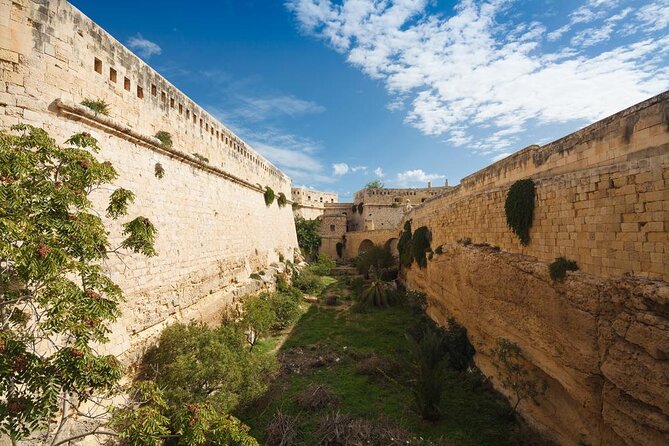
The tour finishes at Fort St. Elmo, where you have a guided visit to the National War Museum. The museum ticket is not included, so budget for that separately.
The visit lasts about an hour and gives you a chance to see objects and audio-visual material linked to Malta’s ordeal. The 1942 George Cross is a major highlight. King George VI awarded the medal to the people of Malta for their courage during the siege, and seeing the actual medal gives a concrete focus to the island’s wartime story.
The museum also covers the struggle to bring supplies to Malta. That helps tie together several themes from the outdoor walk: the harbor, convoys, shortages, bombardment, and civilian endurance.
The guide’s role here matters. Several accounts describe Matthew or Mario walking through the museum with the group and focusing on the most important events. That is a better use of limited time than trying to read every display on your own.
Allow extra time if Fort St. Elmo interests you beyond the scheduled tour. One account specifically recommends leaving enough of the day to see it properly. The tour ends at the fort and museum, so you are well placed to continue exploring if your schedule allows.
What the three hours feel like
The experience is mostly outdoors, with the museum taking roughly one hour. The remaining time is spent walking between sites, hearing explanations, looking across the harbor, and stopping at memorials and wartime locations.
The pace appears gentle rather than hurried. One detailed account praised the guide for taking plenty of breaks and allowing time to discuss interesting places. That is helpful in Valletta, where hard paving, slopes, and stairs can make a short distance feel longer.
Still, do not mistake a gentle pace for an easy stroll. Several descriptions stress the amount of walking, and one specifically warns about hard stones, uphill sections, and stairs. Moderate physical fitness is advised.
You should wear supportive shoes, carry water, and use sun protection. There is no hotel pickup or drop-off, so you must reach central Valletta on your own and arrange your own way onward from Fort St. Elmo.
The value of a private group price
The listed price is $373.48 per group of up to four people. That works out to about $93 per person for four people, before the National War Museum admission. For two people, the effective price is much higher per person.
The value depends on how much you want personal attention. A private guide can adjust the pace, answer family questions, explain a particular relative’s connection to Malta, and spend more time on the subjects that matter to you. That flexibility is especially useful for people with a strong WWII interest or a family connection to Malta.
Several accounts describe the tour as especially meaningful for visitors whose parents or grandparents lived in Malta or served in the Royal Navy. Mario’s family stories and Matthew’s detailed command of events can add a personal layer that a general group tour may not provide.
If you are mainly looking for a quick introduction to Valletta, the price may feel high. You are paying for a private guide, not a long list of included admissions. For a small group of four, though, the cost is easier to justify.
Who should book this walk?
I would choose this tour if WWII is a main reason you are visiting Malta. It is also a good match if you want to understand how the war affected civilians, not just learn about battles.
Families can benefit from the private format because the guide can adjust explanations and answer questions. It also suits cruise passengers with an eight-hour stop, provided you leave enough time to reach the meeting point and return to the ship.
The tour can work well for people with Maltese family connections. One family used the walk to better understand a parent born in Sliema in 1941, and the guide helped connect wartime events with Malta’s wider past.
I would be more cautious if you dislike walking on stone streets, struggle with hills or stairs, or want a tour packed with preserved interiors. The central city has important sites, but some are ruins, memorials, or places viewed from outside.
Practical details before you reserve
The tour is offered in English and uses a mobile ticket. Confirmation is sent within 48 hours of booking, subject to availability.
It is a private activity, with only your own group participating. The advertised capacity is up to four people, which makes the flat rate most attractive for a full small group.
The experience is non-refundable and cannot be changed after booking. Check your timing carefully before paying, especially if you are coordinating it with a cruise call or another scheduled activity.
The tour is near public transportation, but hotel pickup and drop-off are not included. Plan to reach central Valletta independently and remember that the final stop is Fort St. Elmo, not the original meeting point.
Should you book the Valletta WWII tour?
Book it if you want Malta’s World War II story explained by a local guide, with time for questions and a proper visit to the National War Museum. Matthew Camilleri and Mario have both received especially strong praise for their storytelling, local background, and ability to connect WWII with Malta’s longer history.
I would choose it over a generic Valletta walk for a serious history interest, a family connection to Malta, or a short cruise stop when you want one focused experience. I would skip it if your priority is shopping, grand interiors, or a relaxed route with little walking.
The best preparation is simple: confirm the meeting point, wear good shoes, bring water and sun protection, and budget separately for the museum. If those conditions suit you, this private walk offers a clear and personal way to understand why Malta’s wartime survival mattered.
FAQ
How long is the Valletta World War II Private Walking Tour?
The tour lasts approximately three hours.
What language is the tour offered in?
The tour is offered in English.
How many people can join the private tour?
The price covers one private group of up to four people.
Where does the tour start?
The stated meeting point is Victoria Gate, VGW7+9FV, Liesse, Valletta, Malta.
Where does the tour end?
The tour ends at Fort St. Elmo and the National War Museum on Mediterranean Street in Valletta.
Is the National War Museum ticket included?
No. Admission to the National War Museum is not included in the tour price.
How long is the museum visit?
The guided visit to the National War Museum lasts about one hour.
Does the tour include hotel pickup and drop-off?
No. Hotel pickup and drop-off are not included.
What level of fitness is needed?
A moderate level of physical fitness is recommended. The tour includes walking on hard stone streets, uphill sections, and some stairs.
Is this a private activity?
Yes. Only your own group participates in the tour.
Just added around Malta
- Gozo Unveiled: Guided Hiking in Gozo – The West★ 5.0 · 3 reviews
- Valletta City of Gentlemen guided walking tour★ 3.5 · 3 reviews
- Half Day Tour in Marsaxlokk Village, Market, Blue Grotto & Qrendi★ 4.5 · 3 reviews
- Tour of Malta (Private Driver) Including Lunch Platter & Wine in the countryside★ 4.5 · 3 reviews
- Sunday: Ghajn Tuffieha (Riviera) Beach Yoga Class★ 5.0 · 3 reviews
- Pastizzi Making Experience in Malta★ 5.0 · 3 reviews
- Malta: Around Comino Cruise With Blue Lagoon stop★ 5.0 · 3 reviews
- Half Day Private Tour around the Island in Malta★ 4.7 · 3 reviews
Walking Tours, compared.


Guided Walking Tour with Optional Cathedral Tour
Read our review →
The Valletta Street Food and Culture Walking Tour
Read our review →Browse the lists this tour appears in