
Reviewed · BLUE GROTTO TOURS
Temples, Blue Grotto, Marsaxlokk
Malta packs ancient temples and sea views into a small space. This private half-day outing links Hagar Qim and Mnajdra, the Blue Grotto, and Marsaxlokk Harbour, giving you a quick look at Malta’s prehistoric sites, coastal scenery, and fishing culture. I like the private format, which keeps the pace more personal, and I like that a licensed guide leads the visit rather than leaving you to piece the story together alone. The main drawback is the short schedule: four hours is enough for a taste, but not for a leisurely archaeological visit or a long lunch in Marsaxlokk.
I also like the simple start at Grand Harbour, especially if you want an easy meeting point, and the chance to visit several very different places in one morning. Guide Stanley received especially warm praise for his cultural and historical explanations, so the quality of guiding may add real value here. Just note that admission tickets and snacks are not included, and the published group-size information is inconsistent, with one detail saying up to three people and another saying up to twelve.
In This Review
- Key points at a glance
- Why this compact Malta tour works
- Hagar Qim: Malta’s prehistoric first chapter
- Mnajdra: a second temple with its own pause
- Blue Grotto Il-Hnejja: Malta’s coastal change of pace
- Marsaxlokk Harbour: the tour’s most relaxed stop
- What the private guide adds
- Is the $538.29 group price good value?
- Timing, fitness, and weather
- Who should book this Malta experience?
- Should you book it?
- FAQ
- How long does the tour last?
- Where does the tour start and end?
- What time does the tour start?
- Is this a private tour?
- Are admission tickets and snacks included?
- What happens if the weather is poor?
Key points at a glance
- Three very different sides of Malta: Ancient temples, dramatic coastal rock, and a working harbour all fit into one short outing.
- Hagar Qim and Mnajdra are the cultural core: You spend about 45 minutes at each temple stop, with admission paid separately.
- The Blue Grotto is a scenic pause: You get about 45 minutes at Il-Hnejja, with no admission charge listed.
- Marsaxlokk gets the most time: A two-hour stop gives you the best chance to absorb the harbour and fishing culture without rushing.
- Private guiding changes the feel: Only your group participates, creating a more intimate visit than a large coach tour.
- Check the group limit before paying: The supplied details list both a maximum of three and a maximum of twelve people.
Why this compact Malta tour works
Malta is small, but its sights do not all tell the same story. The prehistoric temples belong to an ancient period often called the Ggantija period. The Blue Grotto brings you to the coast, where natural rock formations take center stage. Marsaxlokk then shifts the focus to everyday maritime life.
I like this mix because it avoids a one-note morning. You are not spending four hours only among ruins or only on scenic viewpoints. Instead, you move from archaeology to nature to a living harbour. That makes the experience a useful first look at southern Malta, especially if you have limited time.
The private setup is another strong point. You are not sharing the guide with a large busload, and the tour is designed for your own group. That can make questions easier and may let the guide adjust explanations to your interests. If you are fascinated by prehistoric Malta, you can use temple time well. If your group prefers scenery and local life, the Blue Grotto and Marsaxlokk offer a different balance.
There is a practical catch. The tour lasts about four hours, while the listed visits add up to roughly three hours and fifteen minutes. The remaining time allows for movement between places, but it does not leave much room for delays, long stops, or an unhurried meal. Think of this as a focused highlights tour, not a slow day in the south.
More Blue Grotto boat trips:
- Blue Grotto & Sunday Market at Marsaxlokk Fishing Village
★ 3.6 · 803 reviews - Malta: Marsaxlokk, Blue Grotto, and Qrendi Guided Tour
★ 4.1 · 547 reviews - Malta: Prehistoric Temples, Limestone Heritage & Blue Grotto
★ 4.2 · 412 reviews
Hagar Qim: Malta’s prehistoric first chapter
The first stop is the Hagar Qim and Mnajdra Archaeological Park, with about 45 minutes assigned to Hagar Qim. Admission is not included, so you should plan for that extra cost when judging the total value.
Hagar Qim gives the tour its oldest and most unusual character. The site connects you with Malta’s prehistoric past and the Ggantija period, a major part of the island’s archaeological identity. A licensed guide can help turn weathered stone into a story about the people who built and used the temples.
I would pay close attention to the setting as well as the stones. The park is valued not only for its ancient structures but also for its views over the sea. That combination gives the stop a strong sense of place. You are looking at something made by human hands while also seeing the open coast that has shaped Malta’s history and daily life.
Forty-five minutes is enough for an introduction, especially with a guide keeping the visit focused. It may feel short if you want to study every feature or read everything at your own pace. Since the admission fee is separate, this stop works best for you if ancient sites are a genuine priority rather than a box to tick.
Mnajdra: a second temple with its own pause
The itinerary gives Mnajdra another 45 minutes. Although Hagar Qim and Mnajdra are part of the same archaeological park, treating them as separate stops helps you understand that this is more than one quick photo stop.
The value of having a guide becomes clearer here. Without context, prehistoric temple ruins can be difficult to read. With a good explanation, the stones become evidence of a society that organized labor, ritual, and construction long before the better-known civilizations of classical antiquity.
The supplied details specifically connect the visit with Malta’s Ggantija period. That historical frame is useful because it places the temples within a long human story rather than presenting them as isolated ruins. Guide Stanley was singled out for his explanations of Maltese culture and history, so if he leads your outing, you can reasonably expect the historical side to be one of its stronger features.
The same admission note applies here: your entry ticket is not included. Ask how the ticketing works for the archaeological park before the visit, since Hagar Qim and Mnajdra are presented as connected stops. The tour information does not specify the ticket price, so I would not assume the total cost ends with the booking fee.
Blue Grotto Il-Hnejja: Malta’s coastal change of pace
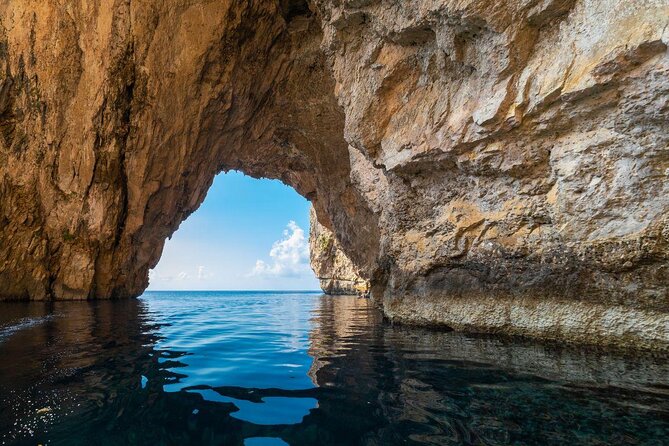
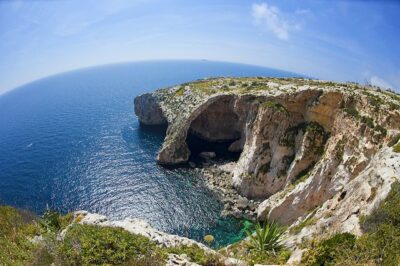
After the temples, the Blue Grotto provides a clear change of mood. The stop lasts about 45 minutes, and admission is listed as free. The coastal formation known as Il-Hnejja is the focus, with natural rock and sea views replacing archaeological remains.
This is the stop most strongly praised in the available feedback. One guest described the Blue Grotto as amazing and gave special credit to Stanley for his explanation of Maltese culture and history. That tells you two useful things: the setting makes a strong impression, and the guide can add more than directions and timing.
The weather matters here. The tour requires good weather, and poor conditions can lead to a different date or a full refund. That policy is sensible for an outing built around coastal views, but it also means you should keep your schedule flexible if the forecast is poor.
Forty-five minutes gives you a scenic look without turning the tour into a full coastal excursion. The supplied information does not say that a boat ride is included, so you should not count on one. The safe expectation is time at the Blue Grotto area with your guide, not a separate boating experience.
I like this stop as a bridge between the temples and Marsaxlokk. It keeps the morning from feeling like a string of indoor explanations. You get a chance to look outward, enjoy Malta’s coast, and reset before the final, longer visit.
More prehistoric temple visits:
- From Malta: Gozo Day Trip Including Ggantija Temples
★ 4.2 · 2,399 reviews - From Malta: Gozo Full-Day Tour with Guide, Temples, & Train
★ 4.1 · 567 reviews - Prehistoric Temples of Malta Tour
★ 4.2 · 517 reviews - Gozo Guided Day Trip Incl. Ggantija Temples and Lunch
★ 4.0 · 368 reviews
Marsaxlokk Harbour: the tour’s most relaxed stop
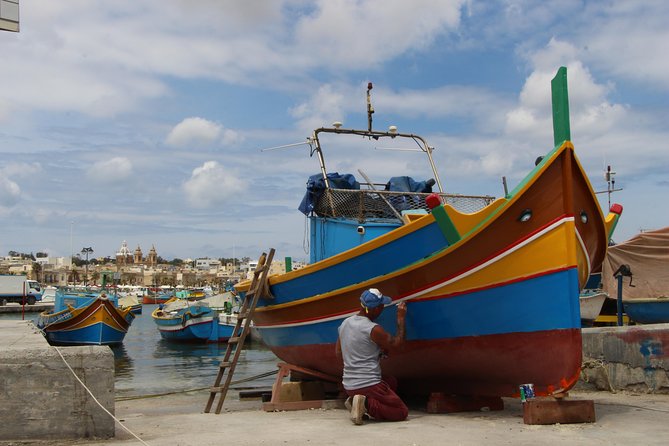
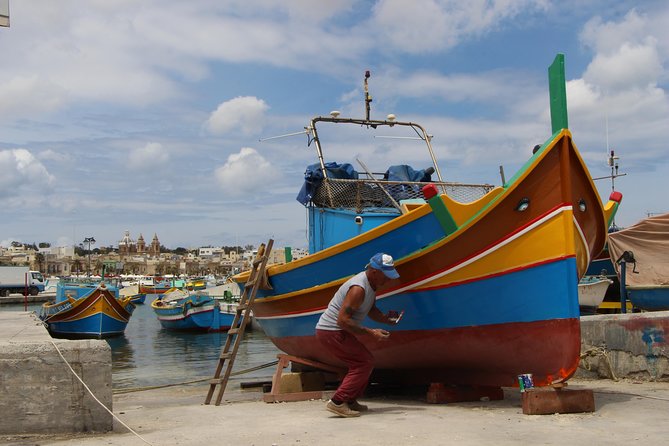
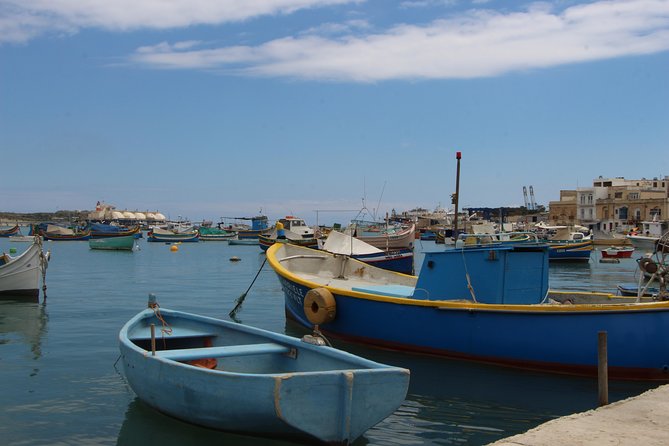
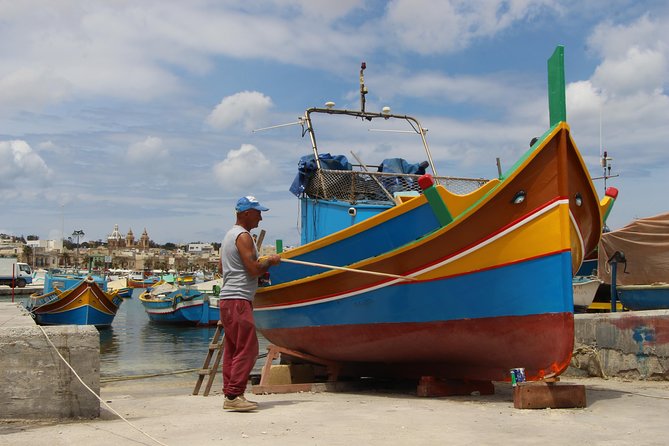
Marsaxlokk receives about two hours, making it the longest stop by a wide margin. That timing is important. While the temples and Blue Grotto are compact visits, Marsaxlokk gives you room to slow down and learn about the village’s fishing culture.
The harbour adds a lived-in side of Malta that ancient sites cannot provide. Here, the subject is not only what Malta was, but how people have used the sea and built communities around it. The tour information does not promise a meal or specific market visit, so I would treat the two hours as guided time in and around the harbour rather than assume a particular activity.
Snacks are not included. Since Marsaxlokk is the longest stop, this is the natural place to consider buying something on your own, although the supplied details do not confirm which food options are part of the tour. Bring that extra expense into your planning, especially if you are booking for a group.
Two hours can feel generous on a four-hour outing, and that is probably intentional. Marsaxlokk is not just a quick viewpoint. You have time to take in the harbour, follow the guide’s explanation of fishing culture, and enjoy a less compressed part of the morning. If your group likes local character more than a rapid list of monuments, this may be the most satisfying section.
At the same time, the full schedule is still approximate. Transfers between stops use part of the four-hour window, so do not assume every minute of the two-hour allocation will feel completely open. Your guide will manage the timing, and the private format may help keep the visit efficient.
What the private guide adds
A licensed tour guide is included, and only your group participates. That is the central reason to consider this experience instead of simply arranging visits on your own.
You get a person who can connect the temples, coast, and harbour into one story. At Hagar Qim and Mnajdra, the guide can explain the Ggantija period. At the Blue Grotto, the focus shifts to natural beauty and the sea. At Marsaxlokk, the subject becomes fishing culture. Those links give the morning a clear shape.
The strongest specific praise goes to Stanley, who was described as phenomenal for his cultural and historical knowledge. I would not assume he is assigned to every departure, but his name is worth noting when you book or confirm the tour. A private guide is most useful when you ask questions, so think ahead about what you want to understand, whether that is prehistoric Malta, local traditions, or the relationship between the island and the sea.
This format also suits families and small groups that want flexibility in conversation. Still, private does not mean unlimited time. The tour remains a four-hour experience, and the listed schedule is fairly tight.
Is the $538.29 group price good value?
The listed price is $538.29 per group, not per person, which changes the calculation. For a small group sharing the cost, the price can make sense because it includes a licensed private guide and combines four major stops in one morning. You are paying for private attention and efficient sightseeing, not simply admission to one attraction.
The value is strongest if you have limited time in Malta or want one person to handle the historical thread. It is also more appealing when three people share the fee. If only one or two people book, the cost per person rises quickly.
You should add the cost of admission to Hagar Qim and Mnajdra, plus any food or snacks you buy. The Blue Grotto and Marsaxlokk have no admission charge listed. The information also conflicts on group size, with the main price described for up to three people and another detail saying groups of up to twelve can book. Confirm the exact capacity and price before purchase, since that directly affects value.
I would compare the total against what you would pay for separate transport, entry, and a guide. The supplied details do not specify the vehicle or transfer arrangements, only that pickup is offered and the experience begins at Grand Harbour. Because of that, ask for the precise pickup details if you need collection beyond the meeting point.
Timing, fitness, and weather
The outing starts at 9:00 a.m. and ends back at the meeting point in Grand Harbour. That return arrangement is convenient if you have another activity later, but you should leave some breathing room after the scheduled four hours in case the morning runs late.
A moderate level of physical fitness is required. The information does not give a precise distance, number of steps, or surface conditions, so you should be prepared for a site visit that involves walking. If anyone in your group has mobility concerns, ask the provider for more specific details before booking.
Service animals are allowed. Pickup is offered, but the stated start location is Grand Harbour, so confirm whether pickup applies to your exact location or whether you should meet at the harbour.
The experience also depends on good weather. If poor weather forces cancellation, you are offered another date or a full refund. For a coast-focused morning, that is a useful protection, particularly if your Malta schedule is flexible.
Who should book this Malta experience?
I would recommend this tour to you if you want a private introduction to southern Malta and prefer a guide to explain what you are seeing. It suits couples, families, and small groups who value a personal format and want to cover several major sights without arranging each visit separately.
It is a good fit for history-minded visitors who want Hagar Qim and Mnajdra, but it also works for anyone who wants a scenic coastal stop and time in a fishing village. The variety is the main attraction.
I would hesitate if you want a slow archaeological study, a long meal in Marsaxlokk, or a full day at the Blue Grotto. The four-hour limit keeps the experience useful and efficient, but it also keeps it brisk. You should also confirm the maximum group size, entry costs, and pickup details before you commit.
Should you book it?
Book this tour if you want Malta’s ancient temples, coast, and fishing culture in one private morning. The best reasons are the well-chosen route, the licensed guide, and the personal format. Stanley’s praised cultural and historical explanations suggest that the guiding can make the difference between simply seeing old stones and understanding why they matter.
Skip it if you already plan to spend a full day at the archaeological park or prefer to explore Marsaxlokk slowly on your own. For everyone else, this is a smart, tightly timed introduction, provided you budget for temple admissions and snacks and confirm the group-size details before booking.
FAQ
How long does the tour last?
The experience lasts approximately four hours.
Where does the tour start and end?
It starts at Grand Harbour in Malta and ends back at the meeting point.
What time does the tour start?
The scheduled start time is 9:00 a.m.
Is this a private tour?
Yes. Only your group participates in the activity.
Are admission tickets and snacks included?
Admission tickets for Hagar Qim and Mnajdra are not included. Snacks are also not included. The Blue Grotto and Marsaxlokk stops have no admission charge listed.
What happens if the weather is poor?
The experience requires good weather. If it is canceled because of poor weather, you can choose a different date or receive a full refund.
More Marsaxlokk Market Mornings
- Valletta: Sunday Vintage Bus to Marsaxlokk
★ 4.1 · 117 reviews - Blue Grotto and Sunday Market at Marsaxlokk Fishing Village Tour
★ 3.0 · 65 reviews - Blue Grotto and Marsaxlokk Half-Day Tour from Valletta
★ 3.5 · 53 reviews - Southern Malta: Blue Grotto, Hagar Qim, and Marsaxlokk Tour
★ 4.7 · 35 reviews
Just added around Malta
- Gozo Unveiled: Guided Hiking in Gozo – The West★ 5.0 · 3 reviews
- Valletta City of Gentlemen guided walking tour★ 3.5 · 3 reviews
- Half Day Tour in Marsaxlokk Village, Market, Blue Grotto & Qrendi★ 4.5 · 3 reviews
- Tour of Malta (Private Driver) Including Lunch Platter & Wine in the countryside★ 4.5 · 3 reviews
- Sunday: Ghajn Tuffieha (Riviera) Beach Yoga Class★ 5.0 · 3 reviews
- Pastizzi Making Experience in Malta★ 5.0 · 3 reviews
- Malta: Around Comino Cruise With Blue Lagoon stop★ 5.0 · 3 reviews
- Half Day Private Tour around the Island in Malta★ 4.7 · 3 reviews
Blue Grotto Tours, compared.
Blue Grotto & Sunday Market at Marsaxlokk Fishing Village
Read our review →
Marsaxlokk, Blue Grotto, and Qrendi Guided Tour
Read our review →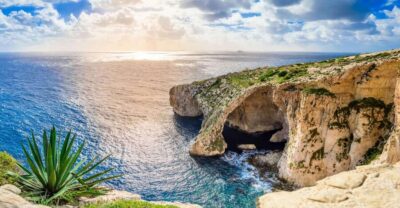
Prehistoric Temples, Limestone Heritage & Blue Grotto
Read our review →
Blue Grotto and Sunday Market at Marsaxlokk Fishing Village Tour
Read our review →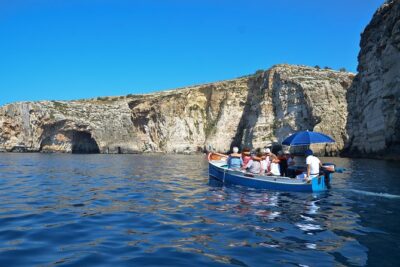
Blue Grotto and Marsaxlokk Half-Day Tour from Valletta
Read our review →
Malta Private tour: 5hr Mosta Dome, Mdina, Dingli Cliff’s & Blue Grotto
Read our review →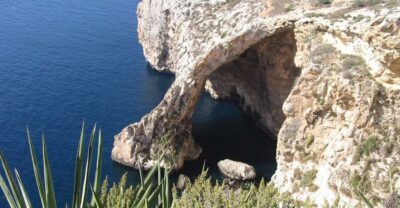
Southern Malta: Blue Grotto, Hagar Qim, and Marsaxlokk Tour
Read our review →Browse the lists this tour appears in