
Reviewed · CITY TOURS
Mdina at Sunset: Small Group Tour of the Ancient city
Mdina gets better as the light fades. This two-hour walk through Malta’s former capital pairs small-group access with stories about knights, royalty, architecture, and daily life. I like the personal scale, with no more than eight people, and the way guide Ani brings humor and local insight to the city’s old stones. The main consideration is the footing: Mdina’s cobblestones call for sturdy shoes, and the tour runs in all weather.
I also like the timing. Sunset brings cooler air, longer shadows, and a more atmospheric Mdina as lamps come on. You will walk quite a bit, and Ani is known for covering plenty in two hours, so anyone wanting a slow, unhurried wander may find the pace brisk.
In This Review
- Key details before you book
- Why Mdina works so well at sunset
- Starting at Mdina Gate and the Lion pillars
- Piazza del Bastione and Mdina’s broad views
- Mdina Cathedral and the value of a guided explanation
- Palazz Vilhena and the city’s grander side
- Carmelite Priory and the quieter lanes
- Greek’s Gate and Mdina’s film-set appeal
- Returning to Mdina Gate after the lamps come on
- What $49 buys you in practical terms
- Who will get the most from this walk
- How Ani shapes the experience
- Practical tips for a better evening
- Should you book Mdina at Sunset?
- FAQ
- How long is the Mdina at Sunset tour?
- Where does the tour meet?
- Where does the tour finish?
- What language is the tour conducted in?
- How large is the group?
- What places are included on the route?
- Does the tour include Game of Thrones filming locations?
- Are food and drinks included?
- Can I cancel for a full refund?
Key details before you book
- Small group of eight or fewer: You should be able to hear the English-speaking guide clearly and ask questions without calling across a crowd.
- Sunset setting: The city shifts from warm evening light to lamp-lit stone streets during the walk.
- Meeting point at the Lion pillars: Find your guide by the pillars at Mdina’s Main Gate.
- Seven notable stops: The route includes Piazza del Bastione, Mdina Cathedral, Palazz Vilhena, Carmelite Priory, Greek’s Gate, and the return to Mdina Gate.
- Game of Thrones locations: The walk adds a pop-culture angle to Mdina’s medieval streets and courtyards.
- $49 for two hours: The price is fair if you value a licensed guide and a focused introduction to the city.
Why Mdina works so well at sunset
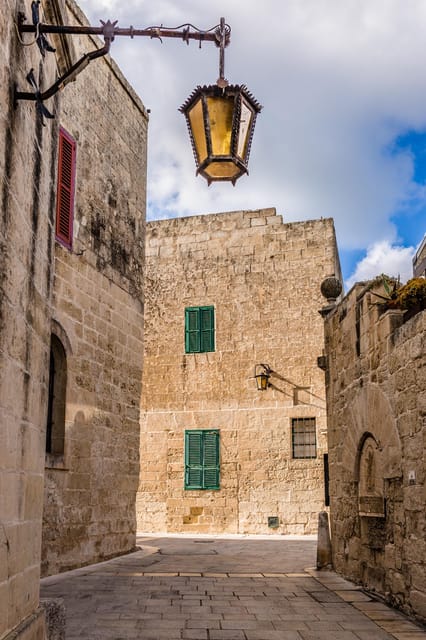
Mdina is the kind of place that rewards context. Its narrow lanes, high walls, and stone buildings can look beautiful at any hour, but sunset adds a useful change of mood. The pale limestone catches the last light, then the old streets take on a quieter feel as lamps switch on.
That timing also helps with Malta’s heat. You still need to check the exact start time when booking, since sunset shifts through the year, but an early evening walk is generally a sensible choice for a city tour with plenty of pavement underfoot.
The city’s nickname, the Silent City, is part of its appeal. You are not simply crossing from one monument to another. The route leads through small alleys where the scale changes from grand walls to intimate doorways and corners. That makes Mdina feel less like an open-air museum and more like a place with layers of use.
I especially like the mix of subjects. You hear about Malta’s rulers and military past, but the guide also brings in anthropology, popular culture, architecture, and everyday island life. That broader approach helps you understand Mdina as more than a pretty medieval backdrop.
More of Mdina and Rabat on foot:
- Malta: Mdina and Rabat Walking Tour with Catacombs
★ 4.8 · 1,126 reviews - Mdina and Rabat: Guided City Walking Tour
★ 4.8 · 549 reviews - Malta: Mdina and Rabat Tour with Local Guide
★ 5.0 · 408 reviews
Starting at Mdina Gate and the Lion pillars
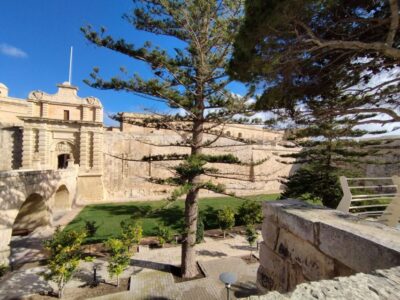
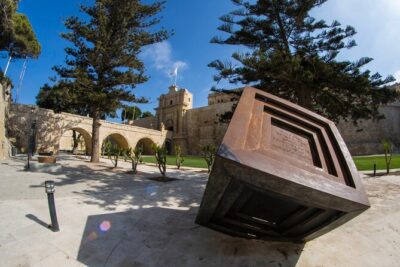
The meeting point is by the Lion pillars at the entrance to the Main Gate. This is a practical place to begin because the gate immediately gives you a strong sense of arrival. You pass from the modern surroundings into a walled city with a very different scale and rhythm.
Give yourself enough time to find the pillars. The instructions are clear, but meeting points at historic gates can become confusing if you arrive at the last minute or are looking for a tour flag that has not been specified.
Your guide leads the group from the gate rather than sending you off with a list of facts. That matters in Mdina, where it is easy to turn down the wrong lane or miss the meaning of a building because the street itself is so visually dominant.
The group limit of eight is one of the strongest features here. A small party makes it easier to hear Ani, ask about a detail, or pause for a photograph without blocking a large crowd. Several people who took the tour with Ani praised her clear explanations, energy, humor, and ability to answer questions.
Piazza del Bastione and Mdina’s broad views
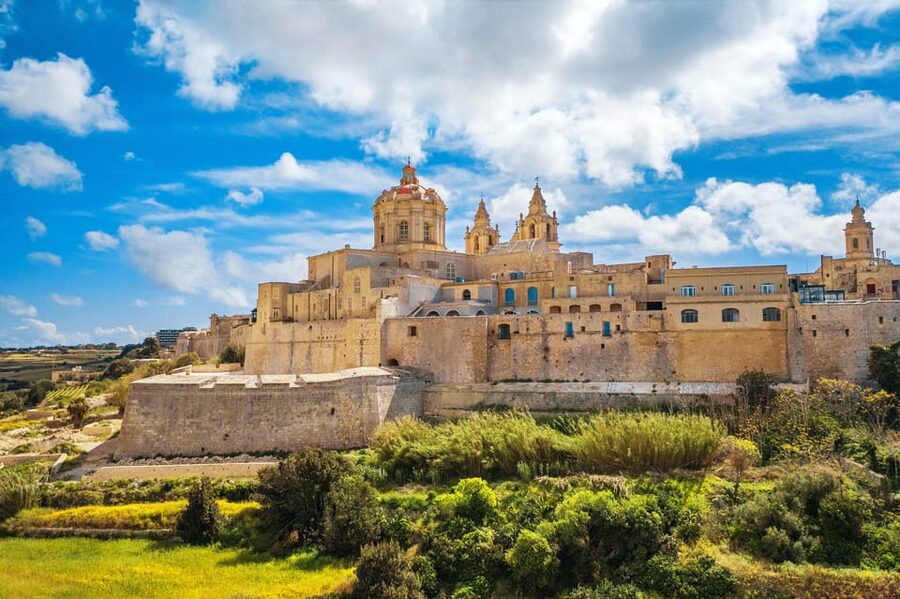
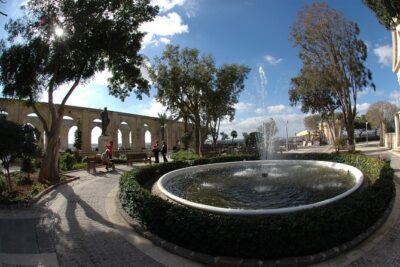
Piazza del Bastione gives the tour room to breathe after the entrance lanes. The bastion area is also where you can appreciate Mdina’s defensive position and take in wide views beyond the walls.
This is a good point for your guide to explain how Mdina shaped Malta’s story as its former capital. From here, the city’s thick walls make practical sense. You are not looking at decoration alone. The stone, height, and position all reflect the need to protect a seat of power.
The views are especially appealing near sunset, when the light softens the island below. The experience information does not promise a particular panorama or visibility on every evening, so keep expectations sensible. Clouds, haze, and weather will affect what you see.
Piazza del Bastione is also one of the stronger photo opportunities on the route. Still, do not spend the entire stop staring through your phone. The useful part is understanding why the city was built as it was, then taking a few pictures once you have your bearings.
Mdina Cathedral and the value of a guided explanation
The stop at Mdina Cathedral adds a more formal architectural focus. Here, the guide can help you read details that might otherwise blur together after a day of sightseeing. Mdina has plenty of grand facades, but a good explanation gives each one a purpose and a place in the city’s story.
Flash photography is not permitted inside certain areas, so follow the guide’s instructions and any posted rules. Photography is allowed generally, but this is not the place to assume that every camera setting is acceptable.
The cathedral stop is also a useful reminder that Mdina is not only about fortifications and film sets. Religious buildings, civic spaces, and private homes all contribute to the city’s character. You get a fuller picture when those parts are considered together.
This is where Ani’s reported style seems particularly useful. She is praised for explaining complicated subjects in an entertaining, light-hearted way without burying the group in tiny details. One person noted that she speaks and moves quickly because she fits a great deal into two hours. If you prefer a slow lecture with long pauses, that pace may take adjustment.
A few more Malta trips worth weighing up
- Guided Night Tour of Valletta Waterfront, Mdina and Rabat
★ 4.5 · 22 reviews - From Bugibba: Blue Lagoon Afternoon Swim with Sunset Cruise
★ 4.3 · 725 reviews - Malta: Sunset Cruise to the Blue Lagoon
★ 4.7 · 687 reviews - Mdina: Valletta Waterfront Area, Mdina, and Rabat Night Tour
★ 4.3 · 302 reviews
Palazz Vilhena and the city’s grander side
Palazz Vilhena brings attention to Mdina’s formal, aristocratic side. The name and architecture provide a natural opening for stories about status, leadership, and the people who shaped the city.
You will not simply be shown an impressive building and left to admire it. The value of this stop lies in the connection between architecture and power. The route uses Mdina’s buildings to explain how the city functioned, rather than treating each site as an isolated photo stop.
The palace also adds variety. After narrow lanes and defensive walls, a more imposing structure changes the visual rhythm. It helps prevent the walk from becoming a string of similar stone facades.
Keep your eyes on the surrounding details too. Doorways, street angles, and the way buildings meet the lane can be as memorable as the principal monument. The tour’s small size should make it easier to pause for these details without losing the guide.
Carmelite Priory and the quieter lanes
The Carmelite Priory is one of the stops where Mdina’s religious and residential character comes forward. It also fits the tour’s promise to show more than the city’s most obvious sights.
This part of the route should appeal to you if you enjoy the texture of old places: narrow passages, worn stone, small turns, and the feeling that the city was shaped over time rather than planned for modern sightseeing. The guide’s local perspective is important here, since the atmosphere alone cannot explain how people used these spaces.
The route is not a museum visit with every interior guaranteed. It is a guided walk through Mdina, and some areas may be viewed from outside or subject to local rules. The supplied details specify guided stops at the priory and cathedral, but they do not promise entry into every building.
That distinction is worth knowing before you book. If you want a broad introduction to Mdina’s buildings, streets, and stories, this works well. If your main goal is extended indoor access, ask for the precise arrangements before paying.
Greek’s Gate and Mdina’s film-set appeal
Greek’s Gate gives the walk another architectural landmark and a chance to explore a less obvious part of Mdina’s identity. Gates are practical passageways, but in a city like this they also frame the transition between spaces.
The tour includes locations connected with Game of Thrones and other major film productions. This is a nice extra for fans, but it should not be the sole reason you book. The filming connection works best as one layer of the walk, alongside Malta’s history, architecture, and ordinary life.
Film locations can be fun because they show how directors use Mdina’s lanes and stone walls to create a setting. At the same time, the real place is more interesting than its screen version. You get to see the streets as part of an actual historic city rather than as a temporary backdrop.
Greek’s Gate also brings you toward the end of the circuit. By then, the combination of fading light, old masonry, and the guide’s stories should make the city feel different from when you first entered.
Returning to Mdina Gate after the lamps come on
The route ends back at Mdina Gate, which keeps the logistics simple. You do not need to arrange a pickup from another part of the city or guess where the walk finishes.
The return is especially atmospheric after sunset. One person specifically praised the feeling of the lamps coming on once the sun had gone down. That is the moment when the tour’s title earns its place: Mdina changes from a sunlit historic site into a quieter evening setting.
You should still remember that a sunset tour is not a guarantee of perfect conditions. The experience operates in all weather, so bring suitable clothing. The stone streets can feel very different under rain, wind, or cloud, and the operator does not present weather as a reason for routine cancellation.
What $49 buys you in practical terms
At $49 per person, this is not the cheapest way to walk through Mdina. You can enter the city independently and see its streets without paying for a guide. The question is what you want from the visit.
For the price, you receive two hours with a licensed English-speaking guide, a small party capped at eight, a planned route, and background on history, culture, architecture, daily life, and screen locations. That is solid value if you want to understand what you are seeing instead of collecting photographs without context.
The price is also easier to justify if this is your first visit to Mdina or if you have limited time in Malta. A good introduction can help you notice details later when you return on your own.
Repeat visitors should not dismiss it. One person took the tour on a fourth visit to Mdina and found it more informative and interesting than earlier visits. That makes sense: a local guide can connect familiar streets with stories you missed the first time.
Food and drinks are not included. You may have chances to buy refreshments during the tour, but do not treat this as a meal stop. Eat beforehand or plan something afterward, especially if you are booking an early evening departure.
Who will get the most from this walk
I would recommend it most strongly to:
- First-time visitors who want a clear introduction to Mdina
- Couples looking for an atmospheric evening activity
- Families with older children who can manage two hours on cobblestones
- Film fans who want to connect screen locations with the real city
- Repeat visitors who want local stories rather than another self-guided stroll
- Anyone who prefers a small group and plenty of chances to ask questions
It may be less suitable if you have difficulty walking on uneven streets, dislike evening weather changes, or want a completely private tour. The experience is intimate, but it is still a shared group walk.
Teenagers may enjoy it more than you expect, especially if the guide keeps the stories lively. A teenager was reported to have enjoyed the full two-hour walk, which supports the idea that the pace and mix of subjects can work for families.
How Ani shapes the experience
Ani receives the strongest praise in the available feedback. The compliments are consistent: friendly, punctual, funny, energetic, clear, and highly informed about both Mdina and Malta.
That combination matters. A guide can recite dates and names, but you need someone who can make the information stick. Ani is described as mixing history with personal stories, present-day Malta, restaurant suggestions, and general conversation. That gives the walk a more local feel.
Her manner also seems to suit people who do not want a stiff academic tour. The information is presented in a light-hearted way, but the subject matter is not treated casually. You get stories about knights, royalty, intrigue, architecture, and everyday life without being buried under detail.
The rating is 4.8 from 78 reviews, and the praise is notably focused on the guide rather than only on Mdina’s beauty. That is an important distinction. Mdina is worth seeing on its own, but the guide appears to be the main reason this particular experience delivers value.
Practical tips for a better evening
Wear comfortable walking shoes. This is not optional advice dressed up as a suggestion. The route uses cobblestone streets, and two hours of uneven footing can be tiring in thin soles or slick fashion shoes.
Dress for changing weather because the tour operates in all conditions. Sunset temperatures and wind can differ from the conditions earlier in the day, and rain will change how confidently you move across the stones.
Bring a camera, but respect restrictions on flash photography inside certain areas. The strongest images may come from the city’s changing light rather than from aggressive camera settings.
Arrive at the Lion pillars by the Main Gate with enough time to orient yourself. Since the activity begins and ends at Mdina Gate, the route is easy to understand once you are there.
Use the flexible booking terms if your schedule is uncertain. You can cancel up to 24 hours before the tour for a full refund, and the reserve-now, pay-later option means you do not need to pay at the time of booking.
Should you book Mdina at Sunset?
Yes, if you want more than a pretty walk. The $49 price is reasonable for a two-hour guided introduction with a maximum of eight people, especially when the guide adds context to Mdina’s architecture, culture, filming sites, and daily life.
Book it if you like local storytelling, evening light, and a tour that keeps moving. Think twice if you want a slow, private wander or if cobblestones are a serious concern.
For most first visits, I would choose this over exploring Mdina without guidance. The sunset setting, compact route, and Ani’s warm teaching style give you both atmosphere and substance, which is a good deal in a city that can otherwise be admired without fully understood.
FAQ
How long is the Mdina at Sunset tour?
The tour lasts two hours.
Where does the tour meet?
Meet by the Lion pillars at the entrance to Mdina’s Main Gate.
Where does the tour finish?
The walk returns to Mdina Gate.
What language is the tour conducted in?
The live tour guide speaks English.
How large is the group?
The group is limited to eight participants.
What places are included on the route?
The route includes Mdina Gate, Piazza del Bastione, Mdina Cathedral, Palazz Vilhena, Carmelite Priory, and Greek’s Gate before returning to Mdina Gate.
Does the tour include Game of Thrones filming locations?
Yes. The experience includes Game of Thrones and other filming locations in Mdina.
Are food and drinks included?
No. Food and drinks are not included, although there are opportunities to purchase refreshments during the tour.
Can I cancel for a full refund?
Yes. You can cancel up to 24 hours in advance for a full refund.
Just added around Mdina
- 30-Minute Mdina Experience Audio-Visual Show Ticket (Open Ticket)★ 4.5 · 4 reviews
- Mdina and Rabat Private Walking Tour with local pastizzi★ 5.0 · 6 reviews
- Mdina, Dingli cliffs and San Anton Gardens guided tour★ 3.5 · 14 reviews
- Proposal Photoshoot with Professional Photographer in Malta★ 5.0 · 15 reviews
- Guided Night Tour of Valletta Waterfront, Mdina and Rabat★ 4.5 · 22 reviews
- Mdina: The Mdina Experience Audio-Visual Show (Open Ticket)★ 4.3 · 22 reviews
- Palazzo Falson Historic House Museum entrance ticket★ 4.7 · 22 reviews
- Mdina and Rabat Private Walking Tour★ 5.0 · 25 reviews
City Tours, compared.

Gozo: City Sightseeing Hop-On Hop-Off Bus Tour
Read our review →
City Sightseeing HOHO Bus Tour & Optional Boat Tour
Read our review →

Browse the lists this tour appears in