
Reviewed · WALKING TOURS
World War II Malta Full-Day Walking Tour
Malta remembers the war in stone. This seven-hour tour makes the island’s wartime story easier to follow, taking you through Valletta and Vittoriosa with stops at air shelters, Fort St Elmo, memorials, and the Lascaris War Rooms. I especially like the included shelter and war museum tickets, plus the chance to connect Malta’s wartime suffering with its role in the wider Mediterranean campaign. I also like the views from Upper Barracca Garden and the Siege Bell, where military history meets a broad sweep of Valletta Harbor.
The main caution is pace. You cover a lot of ground in one day, and some stops may feel brief, particularly the underground areas and fort. The guide may also be harder to hear in open streets or around transport, so this suits you best if you value a clear overview more than a slow, museum-by-museum visit.
In This Review
- Key points at a glance
- Why Malta mattered so much in World War II
- Starting in Vittoriosa and Malta’s defensive story
- Entering the air raid shelters
- Valletta’s land front and the RAF Monument
- The Royal Opera House and St. George’s Square
- Victory Kitchens and life during shortages
- Victoria Gate and the Santa Marija Memorial
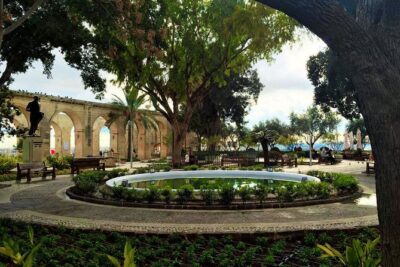
- Upper Barracca Garden and the Siege Bell
- Lascaris War Rooms and the road to Sicily
- Fort St. Elmo and the Malta War Museum
- Is $71 a fair price?
- Who should book this Malta war tour?
- Should you book it?
- FAQ
- How long does the World War II Malta tour last?
- What locations are visited?
- Are entrance tickets included?
- Is hotel pickup provided?
- What language is the tour conducted in?
- Is lunch included?
- What should I bring?
- Is the tour suitable for people with mobility impairments?
- When will I learn my pickup time?
- Can I cancel for a full refund?
Key points at a glance
- Malta’s 1940 to 1942 siege takes center stage: You learn why this small island mattered so much to both the Axis powers and Britain.
- The air shelters give the day its strongest sense of place: You go below ground and see where civilians sought protection during bombing raids.
- Fort St Elmo and the Malta War Museum add military context: The fort connects Malta’s older defenses with its World War II role.
- The Lascaris War Rooms link Malta to major Allied operations: This underground command center was used during the planning of the 1943 invasion of Sicily.
- Valletta’s memorials make the history personal: The RAF Monument, Santa Marija Memorial, and Siege Bell honor aircrew, sailors, and civilians.
- The $71 price is fair for a guided introduction: It includes hotel or nearby pickup, a local guide, and admission to the air shelters and war museum, but not lunch.
Why Malta mattered so much in World War II
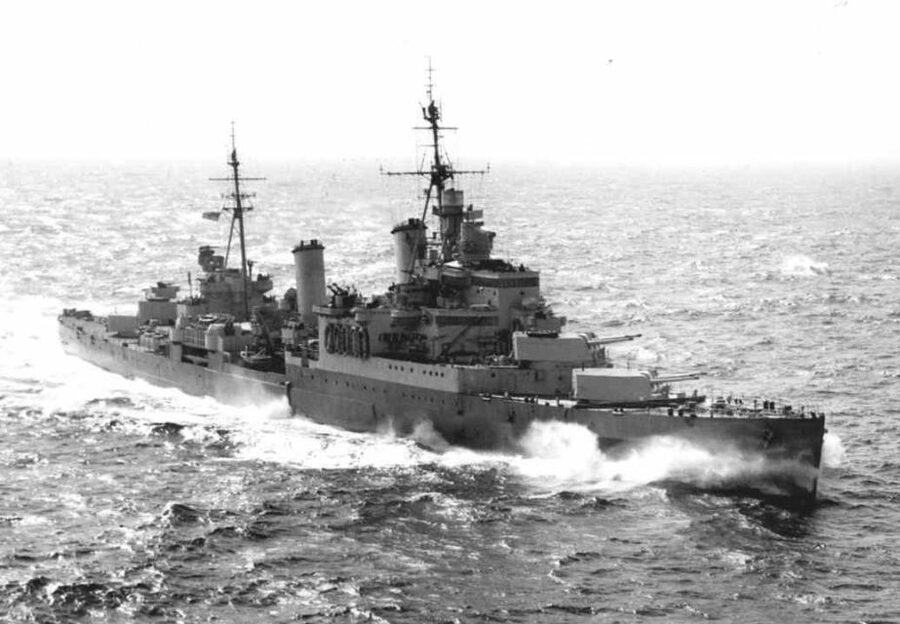
To understand this tour, it helps to know why Malta became such a target. The island sits in the central Mediterranean, between Europe and North Africa. When fighting opened in North Africa in 1940, Malta became a useful base for British aircraft and naval forces attacking Axis supply ships.
Those ships carried fuel, weapons, food, and reinforcements from Europe toward Italian and German forces in North Africa. Malta’s location allowed British forces to threaten that route. The Axis powers responded with sustained attacks by Italian and German aircraft and naval forces.
The pressure reached its worst point between 1940 and 1942, during what is commonly called the Siege of Malta. General Erwin Rommel understood the island’s military value and warned that the Axis would lose control of North Africa without it.
Your guide uses these facts to give meaning to the streets and fortifications. That is important because Valletta can otherwise feel like a beautiful city full of grand buildings without an obvious connection between them. On this tour, gates, walls, harbors, and underground rooms become pieces of one wartime story.
More Walking Tours in Valletta
- The Original Valletta Walking Tour
★ 5.0 · 2,719 reviews - Valletta: 3-Hour Walking Tour
★ 4.7 · 1,605 reviews - Valletta: Guided City Walking Tour
★ 4.8 · 1,256 reviews
Starting in Vittoriosa and Malta’s defensive story
The day includes time in Vittoriosa, one of the historic Three Cities across the harbor from Valletta. The information provided for the tour does not set out every stop in Vittoriosa, so you should expect the guide to use the area as part of the wider story of Malta’s harbor defenses and British military past.
This part of the tour is useful because Malta’s wartime history did not happen only inside Valletta. The harbor area was central to military movement, naval operations, and defense. Walking here helps you see the island as a working fortress rather than only a sightseeing destination.
The tour is not limited to World War II dates. Malta’s British history also comes into view, particularly through military sites and memorials. That wider setting helps explain why Britain could operate aircraft, ships, and command centers from the island during the war.
Entering the air raid shelters
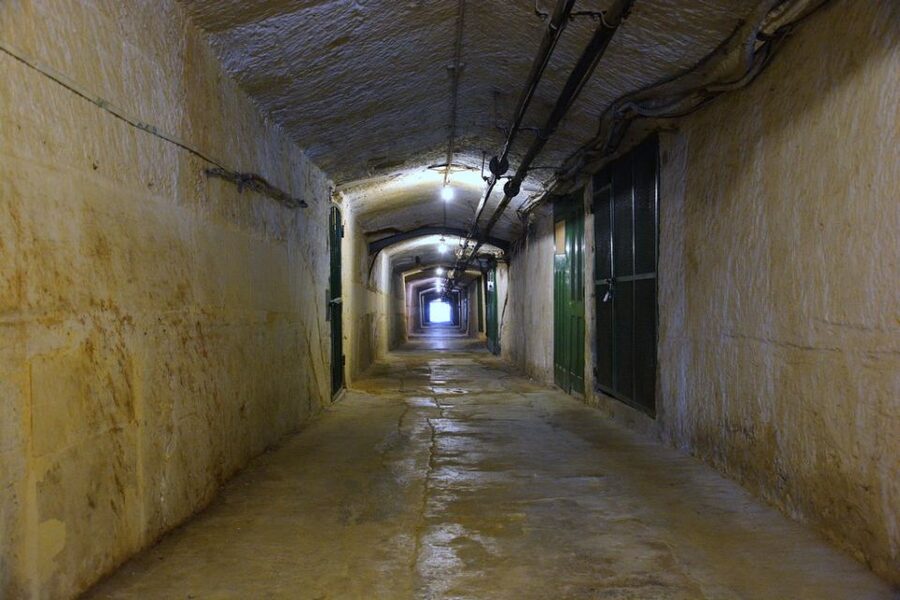
The air raid shelters are likely to be the most immediate part of the day. You leave the open streets and enter the underground spaces built for protection during bombing raids. The ticket is included, and the shelter visit is one of the clearest reasons to choose a guided tour rather than simply wandering around Valletta.
An air shelter tells a different story from a monument. A memorial names the dead. A shelter shows how ordinary people tried to survive day after day, often in cramped and uncertain conditions. It gives the bombing campaign a human scale.
Allow yourself time to look closely at the tunnel walls and layout. The exact route through the shelter may depend on the day’s schedule, and one customer specifically found that only two areas were visited before the group had to move on. That is worth noting. The underground complex seems to offer more than the tour can cover in the allotted time.
The guide for the tunnels has been praised for explaining the site well, but the guided portion may feel short if underground history is your main interest. If shelters are your priority, ask at the start how much time is planned there. That will help you set expectations.
Valletta’s land front and the RAF Monument
In Valletta, the walking route brings the war into the city center. At Porta Reale, you see a curtain wall at the heart of the Valletta Land Front. This is a good place to think about Malta’s defensive design and the way the city was protected from attack.
The RAF Monument commemorates 2,298 Commonwealth aircrew who died in World War II air battles. It is one of the tour’s more solemn stops. You are not simply hearing about aircraft and campaigns here. You are being asked to remember the people who did not return.
This memorial also widens the story beyond Malta itself. Commonwealth forces came from across the British Empire, and the fighting around Malta involved aircrews, sailors, soldiers, and civilians from many places. Your guide can place the island’s ordeal within that larger British war effort.
The walking format helps because you encounter the memorial among the city’s regular streets rather than in isolation. Valletta continues around you, while the monument asks for a pause. That contrast is part of the experience.
More walking tours on foot:
- Valletta: Street Food and Culture Walking Tour
★ 4.8 · 1,251 reviews - Valletta: City Walking Tour in a Small Group
★ 4.9 · 957 reviews - Valletta: Maltese Food and Drink Guided Walking Tour
★ 4.7 · 601 reviews - Valletta City Walking Tour
★ 5.0 · 395 reviews
The Royal Opera House and St. George’s Square
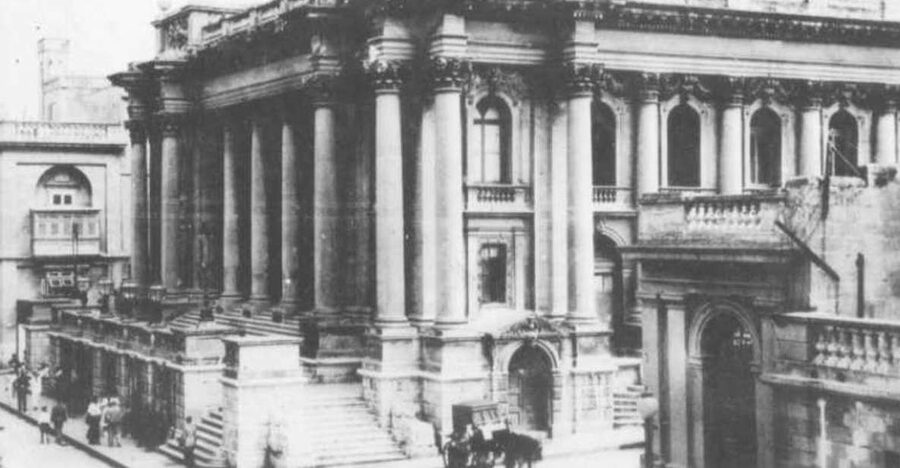
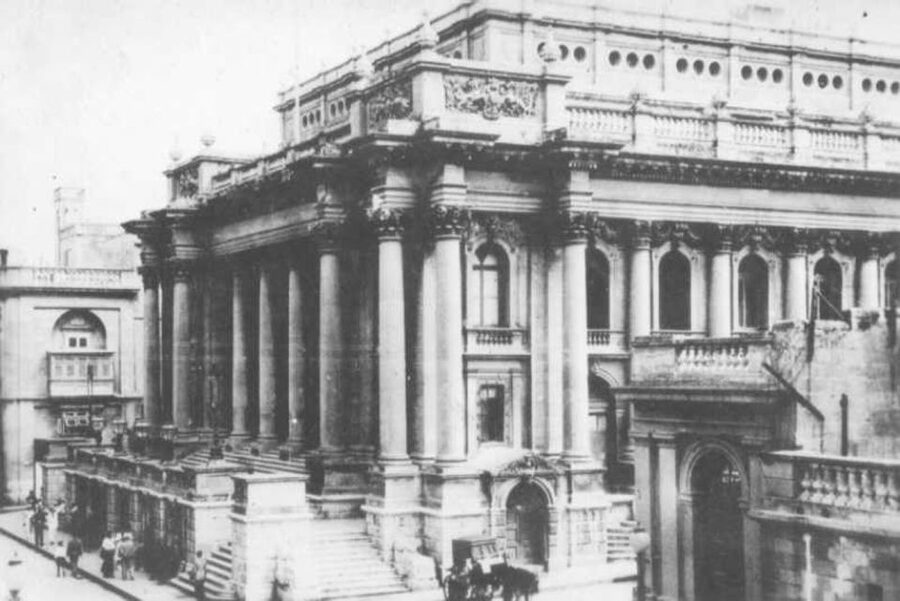
The route continues to Pjazza Teatru Irjal, the site of the former Royal Opera House. It was extensively bombed in 1942. Today, the site reflects both damage and later change, making it a useful stop for understanding how the war altered Valletta’s civic life.
From there, the walk reaches Strada Stretta and Misrah San Gorg, or St. George’s Square. The square is tied to the George Cross awarded to Malta in 1942. King George VI presented the award to recognize the island’s courage under attack.
The George Cross is more than a decoration in this story. It reflects how Malta’s civilian population endured air raids, shortages, and disruption while the island remained a key military base. Your guide can connect the award with the larger experience of the siege.
You also see the Queen Victoria Statue in Republic Square. This stop is less about a single wartime event and more about Malta’s British period. It helps explain the political and imperial setting in which the island entered World War II.
Victory Kitchens and life during shortages
One of the more unusual details on the route is the story of the Victory Kitchens. These community kitchens were created to reduce food waste at a time when supplies were short.
This is exactly the kind of detail that can get lost in a military history tour. Malta’s war was not only about aircraft, ships, and command rooms. It also changed what people ate, how food was distributed, and how communities dealt with scarcity.
I like this stop because it adds daily life to the itinerary. You get a better sense of what the siege meant away from the battle maps. Food shortages are easier to understand when they are connected with practical efforts to prevent waste and feed communities.
Victoria Gate and the Santa Marija Memorial
At Victoria Gate, built on the site of the older Del Monte Gate, the tour returns to Malta’s defensive walls and harbor access. The gate gives you another chance to see how Valletta’s entrances were controlled and how the city connected with the water below.
Nearby, the anchor-shaped Santa Marija Memorial honors the sailors lost during Operation Pedestal. This 1942 convoy was a major effort to bring desperately needed supplies to Malta. The operation came at great cost, and the memorial gives the naval side of the siege a clear place in the route.
This is a worthwhile stop if you want to understand that Malta survived through supply convoys as well as defensive fighting. The island needed food, fuel, and equipment. Getting those supplies through the Axis blockade was dangerous, and the sailors who made the attempt faced heavy losses.
The memorial also works well with the harbor views later in the day. You begin to see the water not as a backdrop, but as the route along which help had to arrive.
Upper Barracca Garden and the Siege Bell
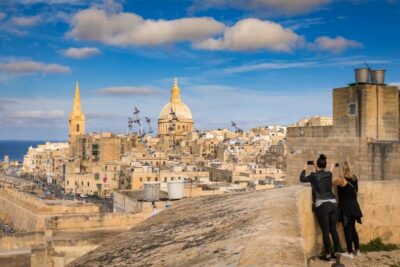
Upper Barracca Garden provides one of the day’s best viewpoints. From here, you look over the Great Harbor and toward Valletta’s surrounding waterfront. The setting offers a needed pause after several memorials, gates, and military sites.
The garden also contains statues of Winston Churchill and other prominent men. These figures point to the leadership behind the Allied war effort, though the tour’s broader value comes from showing how political decisions, military commands, and civilian survival overlapped in Malta.
The nearby Siege Bell Memorial was built in 1992 to honor the 7,000 people who died during the Siege of Malta. Its position overlooking the harbor makes it especially affecting. You can look across the same strategic water that shaped the island’s wartime role while remembering the human cost.
You should not expect a long quiet break here if the schedule is tight. Still, this is a place where I would take a moment to stop listening and simply look. The view gives the day a strong sense of geography.
Lascaris War Rooms and the road to Sicily
The Lascaris War Rooms are the most important command center on the route. This underground complex housed Malta’s air defense operations and directed major Mediterranean sea battles.
It was also used by General Eisenhower and senior commanders including Admiral Cunningham, Field Marshal Montgomery, and Air Marshal Tedder while they directed the 1943 invasion of Sicily. That detail shows how Malta’s role changed. The island was first fighting to survive and disrupt Axis supply lines. Later, it became a base for Allied offensive planning.
The rooms are valuable because they show war as an organized process. Above ground, you see monuments and damaged buildings. Below ground, you see the planning side: air defense, naval action, and command decisions.
The main weakness is time. One customer felt the tunnel visit covered only two areas before the group moved on, even though more seemed available. If underground command centers are your special interest, you may leave wanting a longer visit. The tour gives you an introduction, not an exhaustive study.
Fort St. Elmo and the Malta War Museum
The tour includes a visit to Fort St. Elmo and the Malta War Museum. The fort sits at the tip of the Valletta peninsula, where it helped control the harbor approaches. Its earlier military history reaches beyond World War II, but that is useful context. Malta’s wartime defenses rested on centuries of fortification.
The museum brings together the military story in a more structured way. You can expect displays that help fill in details from the walking route, including Malta’s British connection and the island’s role in the Mediterranean war.
The museum visit is self-guided rather than a fully guided walk with the group. That gives you some freedom, but it also means the available time matters. Several people have found the museum well worth visiting, while one person felt the tour focused more on general sights than on detailed World War II explanation.
I would treat this stop as a chance to follow your own interests. If aircraft, naval operations, or Malta’s defense system catch your attention, use the museum time carefully. If the group is moving on soon, focus on the sections most closely tied to the siege.
Is $71 a fair price?
At $71 per person, the price is reasonable for a seven-hour guided day, especially because hotel or nearby pickup and drop-off are included. You also get a licensed local guide, admission to the air raid shelters, and a ticket to the Malta War Museum.
The value depends on how you like to travel. If you are staying at a resort and do not feel comfortable navigating Valletta and Vittoriosa alone, pickup and a full-day route can save effort. You get historical explanation while moving between places that might otherwise feel disconnected.
If you are confident using Malta’s transport and prefer long visits at each site, you may find the tour less economical. The schedule covers many locations, and the time at the shelters, fort, and war rooms may be shorter than you would choose on your own.
Lunch is not included. Plan for that cost, and be aware that free time in Valletta may be limited. One customer felt there was enough time to stop at a cafe only if the meal was rushed. Comfortable shoes are essential, since this is a walking tour with several historic areas and underground visits.
The overall rating is 4.3 from 18 reviews, which fits the experience as described: strong guides and a worthwhile overview, balanced by a fast pace and occasional difficulty hearing the guide.
Who should book this Malta war tour?
I would recommend it to you if you want a clear introduction to Malta’s World War II story in one day. It is also a good choice if you are staying outside Valletta, want pickup included, or feel uneasy arranging several historic sites on your own.
Solo visitors may find the organized route especially helpful. The tour also suits anyone who wants a guide to explain the British period, the siege, the supply convoys, and the Allied command structure in one connected story.
You may want a different plan if you are a serious military-history enthusiast who prefers long museum visits. The tour gives you many stops, but that breadth comes with limited time at some locations. You might leave with a strong outline and a list of places to explore later.
The English-speaking guide is central to the experience. One guide was described as a former mayor and a real character, with strong historical knowledge and enough time at each stop. At other times, people have had trouble hearing the guide away from the bus, so staying near the guide is sensible.
Free cancellation is available up to 24 hours before the tour, and you can reserve now and pay later. Your exact pickup time is confirmed by the local supplier one day before departure.
Should you book it?
Book this tour if you want Malta’s wartime sights explained in one well-filled day, with transport, air shelters, Fort St. Elmo, the war museum, and major memorials included. The air raid shelters, Lascaris War Rooms, and harbor viewpoints give the tour real substance.
Skip it if you want to explore each fort and underground complex at leisure. In that case, independent visits may give you more time for the same sites, though you will need to build the route yourself.
For most first-time visitors interested in Malta’s World War II past, $71 is a fair price for a guided introduction. Wear good shoes, stay close enough to hear the guide, and save your appetite for a quick lunch stop or plan ahead. This is a broad, efficient history day, not a slow specialist tour.
FAQ
How long does the World War II Malta tour last?
The tour lasts seven hours.
What locations are visited?
The route includes Vittoriosa and Valletta, with visits to air raid shelters, Fort St. Elmo, the Malta War Museum, the Lascaris War Rooms, war memorials, Upper Barracca Garden, and the Siege Bell.
Are entrance tickets included?
Admission to the air raid shelters and the Malta War Museum is included. The tour information also specifies a visit to Fort St. Elmo.
Is hotel pickup provided?
Yes. Pickup and drop-off are provided at your hotel or at the nearest designated point.
What language is the tour conducted in?
The live tour guide speaks English.
Is lunch included?
No. Lunch is not included in the price.
What should I bring?
Bring comfortable shoes because the experience includes substantial walking and visits to historic sites.
Is the tour suitable for people with mobility impairments?
No. The tour is listed as unsuitable for people with mobility impairments.
When will I learn my pickup time?
The local supplier confirms your pickup time one day before the tour.
Can I cancel for a full refund?
Yes. You can cancel up to 24 hours in advance for a full refund. You can also reserve now and pay later.
More Full-Day
- From Malta: Full-Day Gozo UTV Tour with Lunch and Boat Ride
★ 4.6 · 4,408 reviews - From Malta: Full-Day Gozo Quad Tour with Lunch and Boat Ride
★ 4.8 · 1,419 reviews - Gozo Full-Day Jeep Tour with Private Boat to Gozo & return
★ 4.5 · 1,048 reviews - Malta: Full-Day Gozo Buggy Tour with Lunch & Boat Ride
★ 4.7 · 610 reviews
Just added around Valletta
- Tour of Malta (Private Driver) Including Lunch Platter & Wine in the countryside★ 4.5 · 3 reviews
- Valletta Private Historical and Cultural Walking Tour★ 5.0 · 4 reviews
- Shore Excursion: Private Full-Day Tour of Valletta & Mdina★ 5.0 · 4 reviews
- Private Tour in Malta Prehistoric Temples & Mdina★ 5.0 · 4 reviews
- Private Tour of the Maltese Island (Private Driver)★ 5.0 · 4 reviews
- Leisure Pass in Malta★ 4.0 · 4 reviews
- Valletta: Express Walk with a Local in 60 minutes★ 4.9 · 4 reviews
- Malta tour 3Cities , Marsaxlok ,Blue grotto Hagar qim★ 4.9 · 4 reviews
Walking Tours, compared.


Guided Walking Tour with Optional Cathedral Tour
Read our review →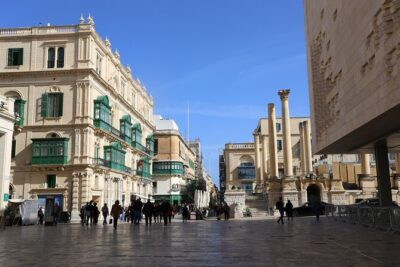
The Valletta Street Food and Culture Walking Tour
Read our review →Browse the lists this tour appears in