
Reviewed · WORKSHOPS
Workshop: Maltese Souvenir Tile Design Experience
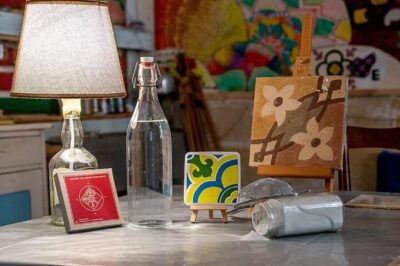
Small studio, lasting souvenir. This two-hour tile workshop in Marsa offers a hands-on way to connect with Maltese art and daily life, rather than simply buying another factory-made keepsake. I like the personal guidance from local artist Clive, and I like that you leave with a useful 10-by-10-centimeter tile you made yourself. The main thing to note is that the tile is air-dried cement or plaster, not kiln-fired ceramic, so it needs a little care.
You work inside Clive’s small studio, set in a traditional house, and learn the process from first idea to finished painting. This suits beginners, families, couples, and anyone who wants a quiet indoor break from Malta’s strong sun. The studio is in Marsa, not in one of the main sightseeing centers, so you should allow time to find 23 Gizwiti and check the street carefully. Google Maps has sent some people to the wrong side of the road.
In This Review
- Key points at a glance
- Why this Marsa workshop feels different
- Arriving at 23 Gizwiti in Marsa
- First, learn how Maltese tiles are made
- Designing your 10-centimeter tile
- From plaster mold to painted pattern
- Painting at your own pace
- What you take home from Malta
- Is $35.95 a fair price?
- Who will enjoy it most?
- Practical points before you book
- Should you book the Maltese tile workshop?
- FAQ
- Where does the tile workshop take place?
- How long does the experience last?
- What language is the activity offered in?
- What will I make during the workshop?
- Can I choose my own tile design?
- Is the tile fired in an oven?
- Can beginners take part?
- Can I make an additional tile?
- Is the activity refundable if I cancel?
Key points at a glance
- A genuine hands-on Maltese activity: Learn about local tile traditions, then make your own piece instead of only looking at old examples.
- A useful 10-by-10-centimeter souvenir: Your finished tile can serve as a coaster for a coffee cup.
- Guidance from local artist Clive: He helps with designs, technique, painting, and questions about Maltese art and culture.
- Good for all skill levels: You can use a traditional pattern supplied in the studio or create your own design.
- A private indoor session: Only your group takes part, making the pace more personal and relaxed.
- Extra tile option: If time allows, you can make another tile for an additional €3.
Why this Marsa workshop feels different
Malta offers no shortage of boat trips, churches, museums, and historic streets. Those are essential parts of a visit, but they can also leave you with a camera full of pictures and very little that you made yourself.
This workshop changes the rhythm. You sit down, focus on a pattern, handle the materials, and spend time doing one thing well. I like that the activity connects culture with a practical skill. The finished tile is not just decorative. It can become a coaster at home, giving the memory a small job to do.
The setting also matters. Clive’s studio occupies the ground floor of a traditional house that he is gradually refurbishing. It has an artistic, slightly quirky character rather than the feel of a polished classroom. That gives the session a more personal quality, although anyone expecting a large, purpose-built craft center should adjust their expectations.
The activity is private, so you do not share the session with a large group of strangers. That makes it easier to ask questions, work at your own speed, and get help when you need it. It also means the experience depends quite a bit on your own group dynamic. A quiet couple may find it calm and focused, while a family can make it more social and playful.
More hands-on workshops:
- Malta: First Experience Scuba Diving Lesson
★ 4.6 · 415 reviews - Malta: Chocolate Making Workshop
★ 4.8 · 80 reviews - Malta: Truffle Making Master Class
★ 4.9 · 53 reviews
Arriving at 23 Gizwiti in Marsa
The meeting point is 23 Gizwiti, Il-Marsa MRS 1562, Malta. The activity begins and ends at the same address.
Marsa is not usually the first place people choose for a holiday activity, which is part of the appeal. You are stepping away from the most obvious tourist routes and entering a working Maltese neighborhood. At the same time, do not treat the address as something you can find casually at the last minute. The Google Maps issue is worth taking seriously: the number can be confusing, and the wrong side of the street may appear on your screen.
The workshop is near public transportation, but the supplied information does not specify a particular bus route or travel time. Plan your route before leaving, and arrive with enough margin to deal with a minor navigation problem. You do not want to spend the first part of a two-hour session feeling rushed.
Wear comfortable clothes. You will be working with plaster or white cement and acrylic paint, so practical clothing makes more sense than anything delicate or formal. No special art background is needed. The session is designed for beginners as well as people who already paint or draw.
First, learn how Maltese tiles are made
Clive begins with a short explanation of Maltese tiles and their place in local culture. This introduction gives the painting a purpose. You are not simply choosing a pretty shape from a folder. You first learn why these patterns matter, then decide how you want to use them.
The historical information is brief, which suits the format. This is an art workshop, not a long lecture. You get enough context to understand what you are making, then move quickly into the practical work.
Clive also talks about Malta’s art scene and wider culture. That personal conversation is one of the strongest parts of the experience. You can ask questions as they arise, rather than waiting for a formal question period. His role is part art teacher, part local host, and part guide to the ideas behind the craft.
If you have a particular interest in Maltese design, ask about the patterns available in the studio. You can select a traditional design, or use the provided patterns as a starting point for something of your own.
Designing your 10-centimeter tile
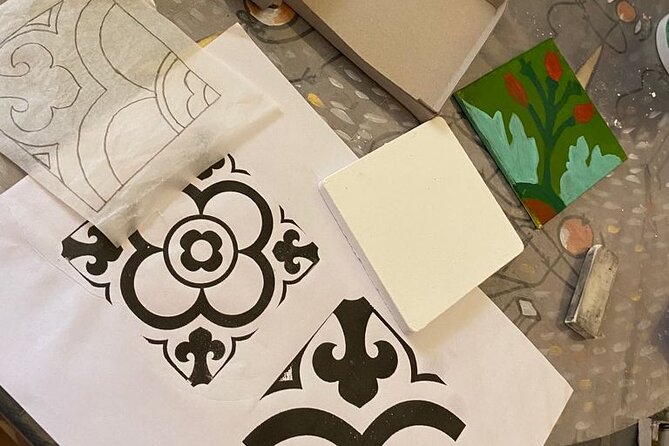
The design stage starts with research and pattern selection. You may create your own pattern, or choose from designs already available in the studio. This is a useful choice because it keeps the activity open to different comfort levels.
If you enjoy sketching, you can take more control and develop a personal design. If drawing is not your strength, a traditional pattern gives you a clear route forward. You are not left staring at a blank square and wondering where to begin.
The tile measures 10 by 10 centimeters. That is large enough for a pattern to feel satisfying, but small enough to finish within the session. It also fits its intended use as a coaster. The scale keeps the project manageable, especially for children or adults who have not painted before.
I would not rush through this stage. A simple design usually works better than an overambitious one when you have only two hours. Think about strong shapes and clear color areas. You want a finished tile that looks intentional, not a tiny canvas crowded with every idea you had.
A completely different sort of day out from Malta:
- Malta: Gozo & Comino Islands, Blue Lagoon & Seacaves Tour
★ 4.5 · 15,672 reviews - Comino: Blue Lagoon, Crystal Lagoon, and Seacaves Tour
★ 4.6 · 5,673 reviews - Malta: Blue Lagoon, Beaches & Bays Trip by Catamaran
★ 4.7 · 5,496 reviews - Malta: Gozo, Comino, Blue & Crystal Lagoon, & Caves Cruise
★ 4.6 · 5,092 reviews
From plaster mold to painted pattern
Clive shows you the full process, starting with the mold. You work with plaster or white cement to create the tile, then transfer your selected design onto the surface before painting.
That step-by-step approach makes the workshop accessible. You are not expected to arrive with technical knowledge. Clive helps you move from concept to realization, explaining what to do as the tile takes shape.
The final stage uses acrylic paint. Acrylics dry quickly, which is important in a short workshop. You can see the colors develop without waiting for a lengthy drying period, and you should be able to take the finished piece home at the end.
The process is more involved than simply painting a premade souvenir tile. You make the object, transfer the pattern, and add the color yourself. That extra work is why the souvenir feels personal. It also means the finish may not look factory-perfect. I see that as part of the charm, but perfectionists should know they are making a handmade item, not buying a manufactured ceramic tile.
The tile is not fired in an oven. It is air-dried and made with cement, as described for the activity. Do not place it in water or treat it like a glazed bathroom tile. It is best handled as a decorative coaster and packed with care for the journey home.
Painting at your own pace
Painting is the most relaxing part of the session. Once the pattern is in place, the work becomes quiet and focused. You can take your time with the colors while Clive offers help and opinions when you ask for them.
This is where the private format pays off. You do not have to keep pace with a large class. Families can work together, couples can compare ideas, and solo participants can concentrate without feeling watched.
Clive’s teaching style, based on the available feedback, is warm and patient. He helps with each stage without taking over. That balance matters. You want instruction when a technique is unfamiliar, but you also want the final piece to feel like your work.
The workshop has worked well for teenagers and adults, including people who describe themselves as inexperienced painters. It can also suit an advanced participant who wants to adapt a pattern or try a more personal design. The basic project is fixed, but your creative choices are not.
Photos are included in the price. That is a nice extra for families and couples, since the person taking pictures does not have to sit out of the activity.
What you take home from Malta
At the end, you keep your tile. The piece comes in a box, which makes it easier to transport than a loose, wet, or fragile craft project. Still, pack it thoughtfully in your luggage, with soft clothing around the box.
The best part of this souvenir is the memory attached to it. You will remember the pattern you chose, the colors you mixed, and the small decisions that made the tile yours. A shop-bought magnet can remind you where you went. A handmade coaster can remind you what you did.
The tile’s practical use is simple but effective. Put your coffee cup on it at home and you have a small daily reminder of Malta. Because it is cement and air-dried rather than kiln-fired, keep it indoors and handle it sensibly.
If you finish your first tile early, an extra tile may be possible, depending on the time available. The additional cost is €3. This could be worthwhile for a couple who wants to make matching pieces, or for a parent and child who want to create more than one design. It is not guaranteed, so treat it as an option rather than part of the main plan.
Is $35.95 a fair price?
At $35.95 per person, the workshop costs more than buying a small tile in a souvenir shop. That comparison is not quite fair, because the fee covers an experience, instruction, materials, the tile itself, photos, and a private session.
I consider the price reasonable if you value time spent doing something rather than only collecting objects. You receive a local cultural introduction and a craft lesson, then leave with a handmade item. The activity also fills about two hours, which is useful during the hottest part of the day or on an afternoon when you want a break from sightseeing.
The value is strongest for couples, families, and small private groups. A solo visitor may still enjoy it, but the cost feels easier to justify when two or more people share the experience.
The extra tile price of €3 is modest. If you have enough time and want a second piece, it adds good value. Just remember that the main fee covers one tile per person.
Who will enjoy it most?
I would recommend this activity to:
- Couples looking for a shared souvenir
- Families with children or teenagers interested in crafts
- First-time painters who want clear instruction
- Art students and experienced painters seeking a local subject
- People who need an indoor activity during strong midday sun
- Anyone who prefers a small private session to a large group tour
It is especially good for people who enjoy the process as much as the result. If your ideal souvenir is something you can finish in a shop in five minutes, this may feel slow. If you like making things with your hands, the two hours should pass pleasantly.
The activity is offered in English. Service animals are allowed, and most people can participate, although the supplied information does not provide detailed accessibility measurements for the traditional house or studio. Contact the host before booking if you need specific access arrangements.
Practical points before you book
Confirmation normally arrives when you book. If you book within two days of travel, confirmation can take up to 48 hours and depends on availability. Since the session is offered for one private group, reserve ahead if your dates are fixed. The average booking time is about 20 days before the activity.
The experience is described as requiring good weather. If poor weather causes cancellation, you are offered another date or a full refund. If the minimum number of participants is not met, you are offered a different date or experience, or a full refund.
Your own cancellation terms are strict. The experience is non-refundable and cannot be changed for any reason after booking. Read that condition carefully before paying, especially if your Malta plans may shift.
Dress comfortably and check the location from the correct side of the street. Those two small steps will make the start much easier.
Should you book the Maltese tile workshop?
Yes, if you want a personal souvenir and a short lesson in Maltese art rather than another passive sightseeing stop. Clive’s friendly teaching, the traditional-house studio, and the chance to make a coaster from start to finish give the experience real character.
I would skip it only if you dislike crafts, need a fully flexible booking, or want a kiln-fired ceramic tile. For everyone else, the $35.95 price buys a calm, creative afternoon and a keepsake with a story behind it. Book it for a quieter day in Malta, and leave enough time to find 23 Gizwiti without rushing.
FAQ
Where does the tile workshop take place?
It takes place at 23 Gizwiti, Il-Marsa MRS 1562, Malta, in a small art studio located in a traditional house in Marsa.
How long does the experience last?
The workshop lasts approximately two hours.
What language is the activity offered in?
The activity is offered in English.
What will I make during the workshop?
You will make one 10-by-10-centimeter replica tile using plaster or white cement, then transfer a pattern and paint it with acrylics.
Can I choose my own tile design?
Yes. You can design your own pattern or select one of the patterns available in the studio.
Is the tile fired in an oven?
No. The tile is air-dried and made with cement, rather than baked in an oven.
Can beginners take part?
Yes. The workshop is suitable for beginners and advanced participants.
Can I make an additional tile?
An extra tile may be possible if time allows. It costs €3, but availability depends on the time remaining during your session.
Is the activity refundable if I cancel?
No. The experience is non-refundable and cannot be changed for any reason. If the host cancels because of poor weather or because the minimum number of participants is not met, you will be offered another date or experience, or a full refund.
Just added around Malta
- Gozo Unveiled: Guided Hiking in Gozo – The West★ 5.0 · 3 reviews
- Valletta City of Gentlemen guided walking tour★ 3.5 · 3 reviews
- Half Day Tour in Marsaxlokk Village, Market, Blue Grotto & Qrendi★ 4.5 · 3 reviews
- Tour of Malta (Private Driver) Including Lunch Platter & Wine in the countryside★ 4.5 · 3 reviews
- Sunday: Ghajn Tuffieha (Riviera) Beach Yoga Class★ 5.0 · 3 reviews
- Pastizzi Making Experience in Malta★ 5.0 · 3 reviews
- Malta: Around Comino Cruise With Blue Lagoon stop★ 5.0 · 3 reviews
- From Sliema: Comino & Blue Lagoon Trip – Including Boat Ride★ 4.0 · 3 reviews
Workshops, compared.


Maltese Tile – Souvenir painting workshop with local
Read our review →
Browse the lists this tour appears in