
Reviewed · WALKING TOURS
The Grand Tour of Valletta: A walking tour of Valletta.
History gets a good stage here. This two-hour walking tour gives you a brisk introduction to Valletta, from the Great Siege of 1565 to the damage caused by the Second World War, with stories about the Knights of Malta woven through the city streets. I like the small-group feel and the theatrical storytelling, which keeps the tour from becoming a dry list of dates.
I also like the route’s mix of grand landmarks and useful orientation points, including the Royal Opera House, Auberge de Castille, and Upper Barrakka Gardens. The main consideration is pace: the tour includes several guided stops, and one past participant preferred more walking with shorter explanations.
In This Review
- Key points to know before booking
- Why Valletta works so well on foot
- Starting at Triton Fountain
- Royal Opera House: seeing Valletta’s modern scars
- Auberge de Castille and the Knights’ political world
- Upper Barrakka Gardens: the tour’s best photo stop
- St. John’s Co-Cathedral and the major sights
- The final stop at Misraħ San Ġwann
- How the guides shape the experience
- Is $24 good value for two hours?
- Who should take this walking tour?
- Who might prefer a different experience?
- Practical tips for getting more from the tour
- Should you book The Grand Tour of Valletta?
- FAQ
- How long is The Grand Tour of Valletta?
- How much does the tour cost?
- Where does the tour begin?
- How do I find the guide?
- What language is the tour conducted in?
- Which locations are included on the route?
- Is Upper Barrakka Gardens included?
- Are museum entrance tickets included?
- Is the tour wheelchair accessible?
- Can I cancel for a refund?
Key points to know before booking
- The tour costs $24 per person: That is a fair price for two hours with a live English-speaking guide.
- The meeting point is Triton Fountain: Look for the guide holding a House of Tours board.
- The storytelling is a major strength: Guides with backgrounds in acting and the arts have made the Knights’ story lively and easy to follow.
- Upper Barrakka Gardens provides the main photo stop: You get 15 minutes for views and explanation.
- The route covers major Valletta landmarks: The Royal Opera House, Auberge de Castille, and the area around St. John’s Co-Cathedral are part of the historical setting.
- Museum entry is not included: This is an exterior-focused walking tour, so plan separately if you want to enter attractions.
Why Valletta works so well on foot
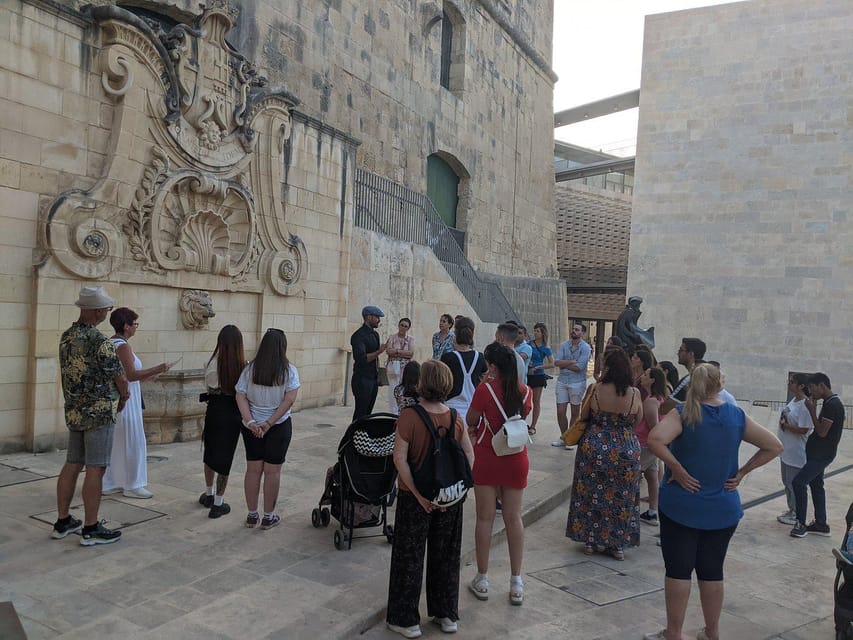
Valletta is compact, fortified, and packed with history. That makes it a natural city for a guided walk. You are not simply moving between unrelated sights. The streets, buildings, gardens, and fortifications all connect to the story of the Knights of St. John and Malta’s military past.
The tour focuses on the city’s dramatic turning points. You hear about the Great Siege of 1565, described as one of the bloodiest battles of the 16th century, then move toward the later story of Valletta and its near destruction during the Second World War.
That wide time frame is useful. If you only look at the ornate facades, Valletta can seem like a beautiful old European capital without much explanation. A guide helps you understand why the city was built as a fortified stronghold, why the Knights mattered, and how their legacy continued into modern institutions.
I especially like the human angle promised by this walk. Along with battles and buildings, you hear about a knight’s daily life, lavish habits, and unusual vow of chastity. Those details help turn an institutional story into something personal. The gossip and anecdotes also give the tour a lighter side, which is welcome when the subject includes sieges, war, and religious power.
More Walking Tours in Valletta
- The Original Valletta Walking Tour
★ 5.0 · 2,719 reviews - Valletta: 3-Hour Walking Tour
★ 4.7 · 1,605 reviews - Valletta: Guided City Walking Tour
★ 4.8 · 1,256 reviews
Starting at Triton Fountain
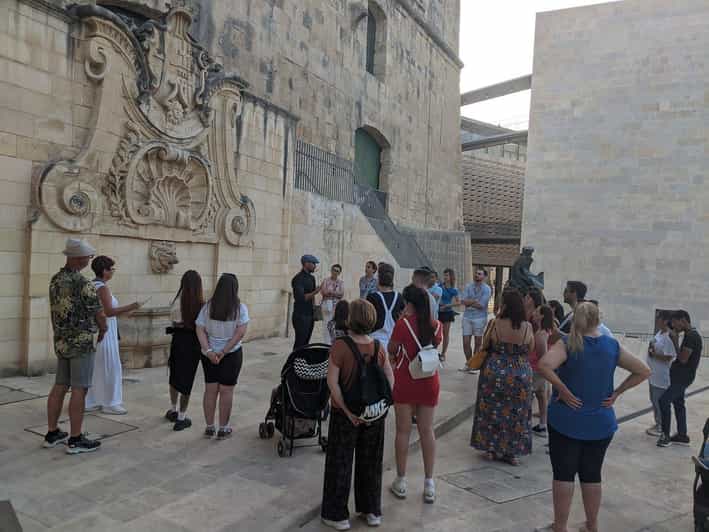
The tour begins at Triton Fountain, outside the main entrance area of Valletta. This is a sensible meeting point because it is easy to identify and gives the group a clear place to gather before entering the historic city.
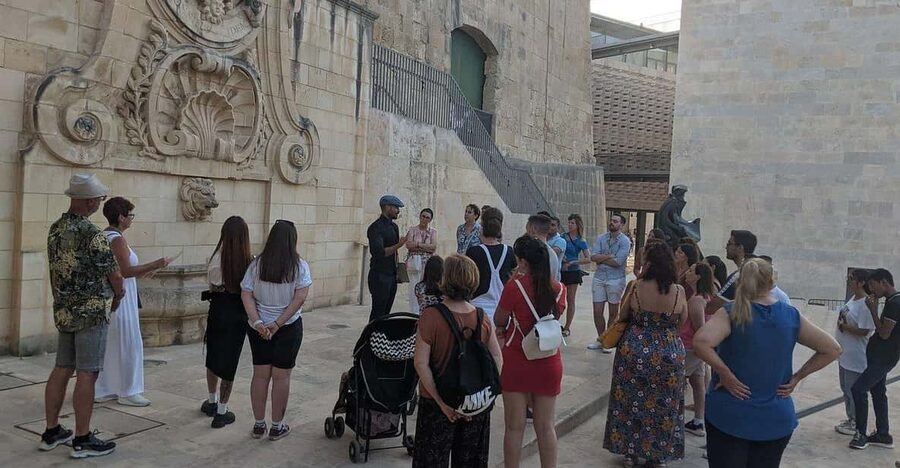
Look for a guide holding a House of Tours board. The meeting instructions are simple, but you should still allow enough time to find the fountain and locate the right guide. The tour is in English, and a professional live guide leads the walk.
Starting here also gives you a helpful first impression of Valletta’s setting. From the fountain, the city’s fortified character becomes part of the experience almost immediately. You are heading into a place shaped by defense, religion, and the power of the Knights of St. John.
The tour is designed to avoid large groups, which matters in Valletta’s narrow streets and busy public spaces. An intimate group makes it easier to hear the guide, ask questions, and stay connected during the walk. Group size is not specified, so do not assume you will have a private tour, but the format aims for a more personal experience than a large coach excursion.
Royal Opera House: seeing Valletta’s modern scars
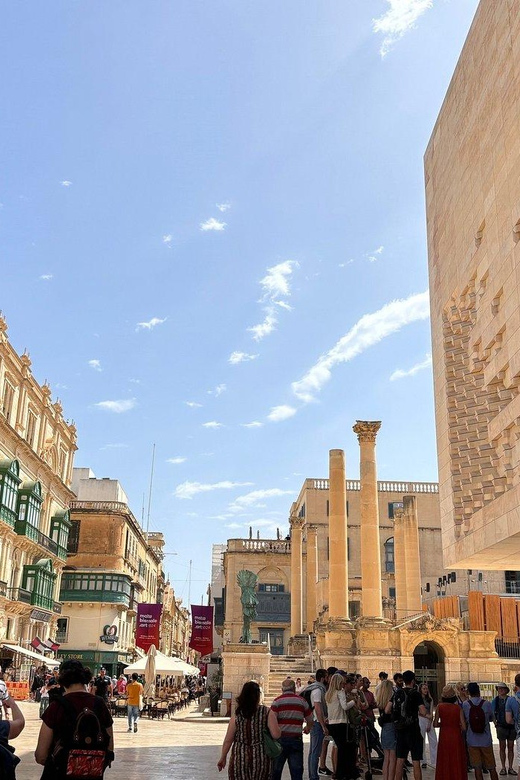
The first listed stop is the Royal Opera House, where the guide gives an eight-minute explanation. The short stop keeps the route moving while introducing an important part of Valletta’s more recent story.
The Royal Opera House is especially relevant to the tour’s account of wartime destruction. Valletta was badly damaged during the Second World War, and the opera house became part of that story. Here, the city is not presented as an untouched museum piece. You get a reminder that Malta’s capital has survived severe conflict and had to adapt.
Eight minutes is enough for a clear introduction, though not enough for an extended architectural study. That is a fair trade for a two-hour orientation walk. You can listen for the broad historical point, take a few pictures if appropriate, and save detailed exploration for another visit.
I would not choose this tour if you want long interior visits at every major building. Museum tickets are not included, and the supplied route describes guided stops rather than admission into museums or monuments. The strength is the connection between places, not lengthy time inside each one.
Auberge de Castille and the Knights’ political world
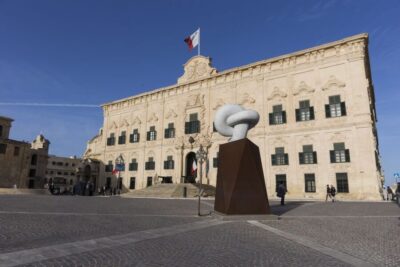
The walk continues to Auberge de Castille, with another eight-minute guided stop. This building is a good setting for understanding the organization and influence of the Knights of Malta.
The Knights were not simply soldiers. Their story includes religion, government, military planning, social rank, and considerable wealth. The tour’s focus on their lavish lifestyle and vows of chastity gives you a more rounded picture than a basic account of battles would provide.
This is where the guide’s delivery can make a real difference. The strongest feedback about this tour centers on guides who make history entertaining and clear. Kathryn specifically praised a guide with an arts and acting background, while Ciara said Rafa made the subject interesting and brought his love for Valletta to the walk. Those comments point to a tour that relies heavily on personality and presentation.
Named guides praised in the feedback include Rafa, Leila or Leyla, and Lailla. The spelling varies in the supplied comments, but the consistent message is clear: the guides are praised for answering questions, explaining Malta’s past, and making the subject approachable.
You will also hear about the Knights’ story from their crusading origins through to their present-day legacy. One useful connection is the link between the Knights of St. John in Valletta and St. John Ambulance in the United Kingdom. That sort of detail is valuable because it ties Malta’s history to something many visitors may already recognize.
More walking tours on foot:
- Valletta: Street Food and Culture Walking Tour
★ 4.8 · 1,251 reviews - Valletta: City Walking Tour in a Small Group
★ 4.9 · 957 reviews - Valletta: Maltese Food and Drink Guided Walking Tour
★ 4.7 · 601 reviews - Valletta City Walking Tour
★ 5.0 · 395 reviews
Upper Barrakka Gardens: the tour’s best photo stop
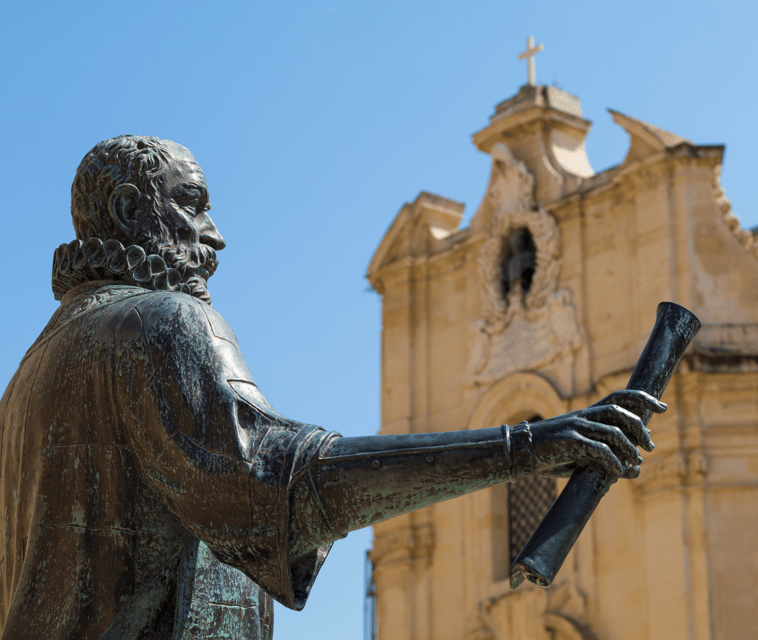
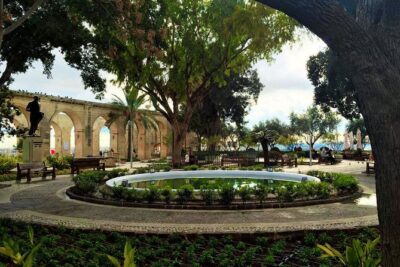
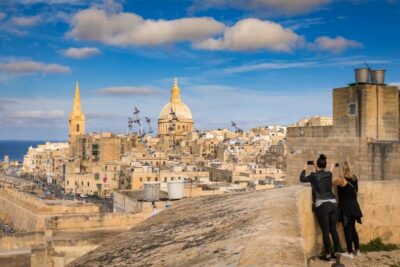
Upper Barrakka Gardens receives the longest listed stop, 15 minutes, combining guided explanation with time for photographs. This is likely the visual high point of the route.
The gardens offer an excellent pause in the middle of the tour. After hearing about fortifications, rulers, and military conflict, you get time to look outward and take pictures. The stop is long enough to enjoy the setting without turning the tour into a garden visit.
I like the balance here. Valletta’s history can feel dense, especially when the guide moves from the Crusades to the Great Siege, the Knights’ government, and the Second World War. A scenic stop gives you time to reset while still adding another layer to the city’s geography.
The 15-minute limit also tells you what to expect. This is a guided photo stop, not a leisurely garden experience. If you want to linger, sit quietly, or take many photographs, you may need to return later on your own.
The gardens are also useful for understanding Valletta as a fortified city. The tour promises more than a viewpoint and photo opportunity. The guide explains why this part of Valletta matters, helping you connect the views with the city’s defensive position and maritime setting.
St. John’s Co-Cathedral and the major sights
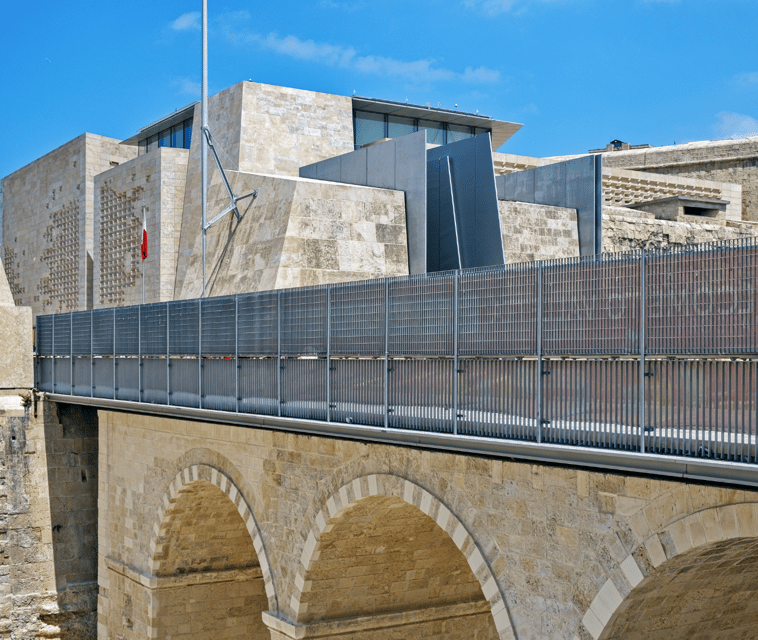
St. John’s Co-Cathedral is named among the famous Valletta attractions covered in the tour’s wider story, along with the Grandmaster’s Palace and Upper Barrakka Gardens. The route details do not list a timed interior visit to the cathedral or palace, so you should treat these as landmarks discussed during the walk rather than included admissions.
That distinction matters. St. John’s Co-Cathedral is one of Valletta’s major sights, and many visitors will want to enter it separately. Since museum entrance tickets are not included, check the admission arrangements on your own if you plan to visit inside.
The advantage of hearing about these places with a guide is context. You can look at a grand facade and understand how it fits into the Knights’ religious and political world. The tour helps you decide which interiors deserve more of your time later.
This is also a good reason to take the walk early in your stay. You get a city overview first, then can return to the places that caught your interest. The tour does not try to replace every museum visit. It gives you a framework for making better choices with the rest of your day.
The final stop at Misraħ San Ġwann
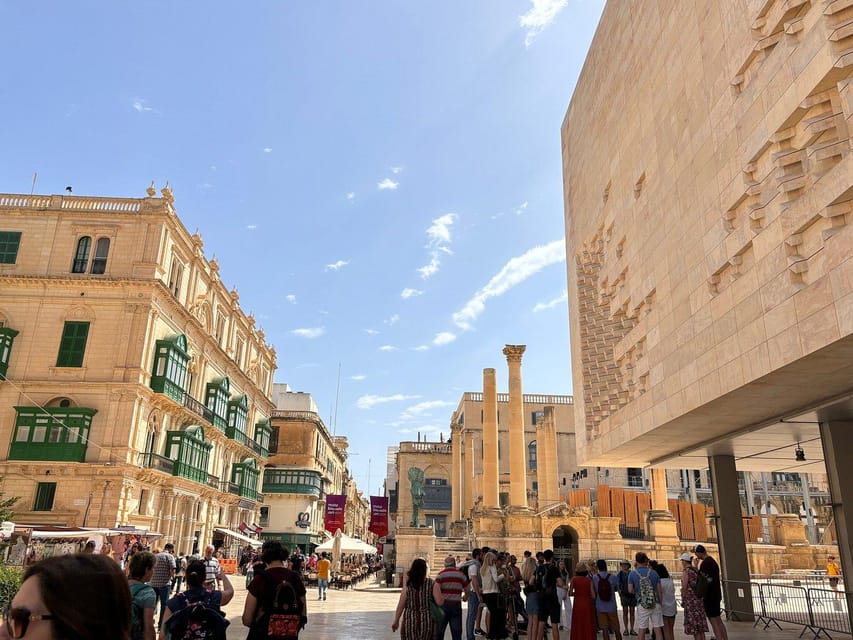
The walk finishes at Misraħ San Ġwann. Ending in this area gives the tour a clear conclusion near the center of Valletta rather than returning you to the original meeting point.
That matters for planning. You should not assume the guide will escort you back to Triton Fountain. The tour begins there and ends elsewhere, so check your next destination before setting out.
The finish also makes the experience useful as an orientation walk. After two hours, you will have a better sense of Valletta’s main sights and historical themes. You can continue exploring from the final stop, return to an attraction, or use the information to plan the rest of your visit.
Because the route is only two hours, it should fit neatly into a morning or afternoon. Check the available starting times when booking. The schedule is not fixed in the information provided, so choose a start that leaves room for any cathedral or museum visit you may want to make afterward.
How the guides shape the experience
The guide is the heart of this tour. The strongest praise is directed at the way the guides tell the story, answer questions, and make Malta’s past accessible.
Several guides receive specific praise. Rafa is described as making the tour fun and interesting, with clear answers to questions. Leila and Leyla are praised for their explanations of Valletta and Malta, while Lailla is credited with taking time to explain the origins of Malta. One guide’s background in acting and the arts added a theatrical quality to the presentation.
That style suits the subject. Knights, sieges, religious vows, political power, and wartime destruction all benefit from a little drama. You are more likely to remember a story about a knight’s lifestyle or vow of chastity than a string of dates recited without color.
The approach may not suit everyone. One four-star assessment found the guide friendly and well informed but wanted more walking, shorter fact stops, and additional stories. If you prefer a fast-paced route with constant movement, the timed explanations may feel a little long. If you enjoy stopping to listen and ask questions, the format should work better.
Is $24 good value for two hours?
At $24 per person, this is a reasonable price for a live, guided introduction to Valletta. You are paying for a professional English-speaking guide, a structured route, historical interpretation, and the chance to ask questions in real time.
The value is strongest if you are new to Malta or want help sorting out the story of the Knights. Valletta has plenty of plaques and impressive buildings, but written information rarely explains how the pieces fit together. A good guide can save you time and give meaning to sights you might otherwise pass without noticing.
The price is less compelling if you want museum access included. Entrance tickets are extra, and the route does not promise extended interior visits. You should budget separately for St. John’s Co-Cathedral or other attractions you want to enter.
I see this as an orientation tour rather than a complete Valletta sightseeing package. It gives you the background and landmarks, then leaves you free to explore further. That makes $24 feel fair, especially for visitors who value explanation more than simply following a map.
The tour also offers free cancellation up to 24 hours before the start for a full refund, and you can reserve now while paying later. Those terms make it easier to place the walk into a changing Malta itinerary.
Who should take this walking tour?
I would recommend it most strongly to first-time visitors, history fans, and anyone who wants a clear introduction before exploring Valletta independently.
It is also a good fit for visitors who enjoy storytelling. The theatrical approach, anecdotes, and occasional gossip make the Knights’ world more memorable than a standard fact-based walk.
You may also appreciate it if you have limited time. Two hours is long enough to cover several key locations without consuming an entire day. The route gives you an overview of Valletta’s history, then lets you choose which places deserve a closer look.
Families and mixed-age groups may find the storytelling easier to follow than a dense lecture, though the tour’s suitability for children is not specifically stated. The subject includes battles, religious rules, and political history, so your decision should depend on the interests of the people in your group.
The activity is wheelchair accessible, which is an important practical advantage. Still, the information does not provide details about exact street surfaces, slopes, or restroom access, so ask the provider if those points matter to you.
Who might prefer a different experience?
You may want another option if your main goal is to spend time inside Valletta’s museums and churches. This tour does not include museum entrance tickets, and the listed stops are short guided visits rather than long interior tours.
You may also prefer a self-guided walk if you dislike scheduled explanations. The Royal Opera House and Auberge de Castille each receive eight-minute guided stops, while Upper Barrakka Gardens receives 15 minutes. That structure keeps the tour organized, but it leaves limited time for wandering at your own pace.
Finally, the route may not satisfy you if you want a long-distance walking workout. It is described as a walking tour, but one past assessment specifically wished for more walking and shorter stops. The experience puts equal weight on listening and moving.
Practical tips for getting more from the tour
Arrive at Triton Fountain with enough time to locate the House of Tours board. The meeting point is clear, but Valletta visits go more smoothly when you are not searching at the last minute.
Bring questions. The guides are repeatedly praised for answering them, and this is a subject with plenty of natural openings: the Knights’ vows, their wealth, their connection to modern organizations, the Great Siege, and the Second World War.
Use the tour as your first look at Valletta’s major sights. Pay attention to the buildings that interest you most, then return later for a slower visit. In particular, keep St. John’s Co-Cathedral and the Grandmaster’s Palace in mind if you want to explore interiors, since admission is not part of the walk.
Plan around the weather and your preferred starting time, but exact weather advice is not provided with the activity. The tour lasts two hours, and availability varies by start time, so check the schedule before booking.
Should you book The Grand Tour of Valletta?
Book it if you want a compact, story-led introduction to Valletta and the Knights of Malta. At $24, it offers good value for a live guide, key landmarks, photo time at Upper Barrakka Gardens, and plenty of historical explanation.
I would choose it early in a Malta visit, especially if you like to understand a city before exploring its museums. The main caution is simple: this is not an admission-inclusive sightseeing package, and the guided stops may feel a bit talk-heavy if you want constant walking.
For most first-time visitors, the balance works. The city’s walls and grand buildings catch your eye, but the guide’s stories explain why they matter. That combination makes this a useful and enjoyable way to get your bearings in Valletta.
FAQ
How long is The Grand Tour of Valletta?
The tour lasts two hours.
How much does the tour cost?
The listed price is $24 per person.
Where does the tour begin?
The meeting point is Triton Fountain in Valletta.
How do I find the guide?
Look for a guide near Triton Fountain holding a House of Tours board.
What language is the tour conducted in?
The tour is conducted in English with a live guide.
Which locations are included on the route?
The route includes the Royal Opera House, Auberge de Castille, and Upper Barrakka Gardens. The tour also discusses major Valletta sights such as St. John’s Co-Cathedral and the Grandmaster’s Palace.
Is Upper Barrakka Gardens included?
Yes. The tour includes a guided visit and photo stop at Upper Barrakka Gardens lasting 15 minutes.
Are museum entrance tickets included?
No. Museum entrance tickets are not included.
Is the tour wheelchair accessible?
Yes, the activity is listed as wheelchair accessible.
Can I cancel for a refund?
Yes. You can cancel up to 24 hours in advance for a full refund. The booking also allows you to reserve now and pay later.
Just added around Valletta
- Tour of Malta (Private Driver) Including Lunch Platter & Wine in the countryside★ 4.5 · 3 reviews
- Valletta Private Historical and Cultural Walking Tour★ 5.0 · 4 reviews
- Shore Excursion: Private Full-Day Tour of Valletta & Mdina★ 5.0 · 4 reviews
- Private Tour in Malta Prehistoric Temples & Mdina★ 5.0 · 4 reviews
- Private Tour of the Maltese Island (Private Driver)★ 5.0 · 4 reviews
- Leisure Pass in Malta★ 4.0 · 4 reviews
- Valletta: Express Walk with a Local in 60 minutes★ 4.9 · 4 reviews
- Malta tour 3Cities , Marsaxlok ,Blue grotto Hagar qim★ 4.9 · 4 reviews
Walking Tours, compared.

Guided Walking Tour with Optional Cathedral Tour
Read our review →
The Valletta Street Food and Culture Walking Tour
Read our review →Browse the lists this tour appears in