
Reviewed · WORKSHOPS
Malta Surf School, Beginner Surf Lessons
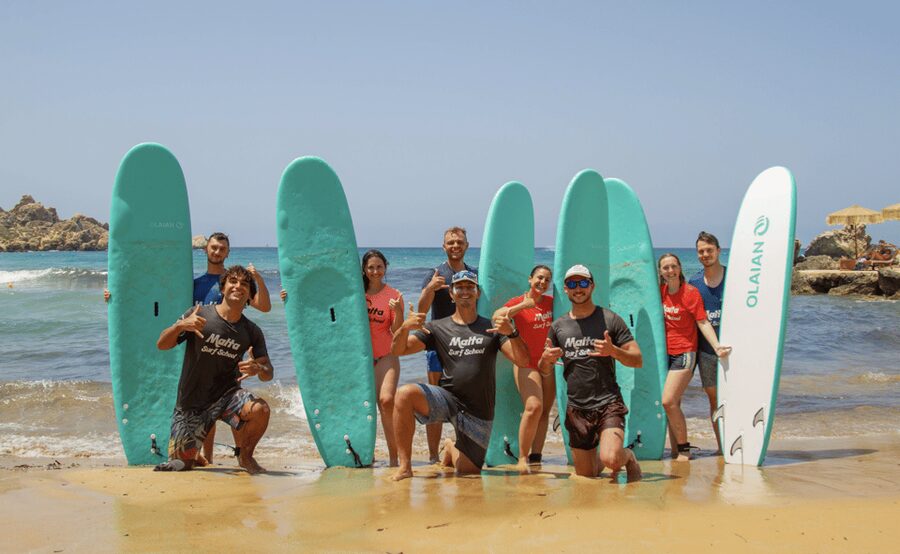
Catch your first wave in Malta. This one-hour lesson keeps things simple, with small groups capped at six and instructors who work beside you in chest-high water. I like the friendly, patient coaching, and I like that the session begins on the beach, where you can practice the hardest move, standing up, before facing the waves. The main catch is that surfing depends on weather and wave conditions, so your lesson may change or be cancelled.
You will meet at the beach beside the Singita kiosk, at the end of the steps under Malta Surf School’s blue flag. The school supplies the surfboard and wetsuit, and instructors speak English, Italian, and Spanish. Bring sunscreen, swimwear, a towel, water, and a change of clothes. Arriving 15 minutes early matters, since you need time to change and attend the first briefing.
In This Review
- Key points to know before you book
- Starting beside the Singita kiosk
- The beach briefing makes the first lesson less intimidating
- Practicing the take-off on the sand
- Moving into chest-high water
- Catching a first wave along Malta’s coast
- How the teaching comes across
- Is €60 good value for one hour?
- Who should book this Malta surf lesson?
- Practical tips for a smoother hour
- Should you book Malta Surf School?
- FAQ
- How long is the beginner surf lesson?
- How many people are in each group?
- Is surf equipment included?
- Where is the meeting point?
- What should I bring?
- How early should I arrive?
- What happens if there are no waves?
- Can non-swimmers join the lesson?
- What languages do the instructors speak?
Key points to know before you book
- Only six people per group: The low participant limit gives the instructor time to correct your stance, paddle technique, and take-off.
- One hour from sand lesson to sea: You first learn board handling and standing technique on the beach, then move into chest-high water.
- Equipment is included: The €60 price covers the group lesson, surfboard, and wetsuit. The advertised summary also shows a price of $71, so check the currency shown when you book.
- Wave conditions control the day: If there are no suitable waves, the school may offer stand-up paddleboarding, wakeboarding, or a boat tour instead.
- Friendly instruction earns strong praise: Sofija found the coaches helpful and attentive, while Gabriela praised the clear teaching and hands-on assistance.
- Some people should skip it: The lesson is not suitable for non-swimmers, people with mobility impairments, pregnant women, or children under 16.
Starting beside the Singita kiosk
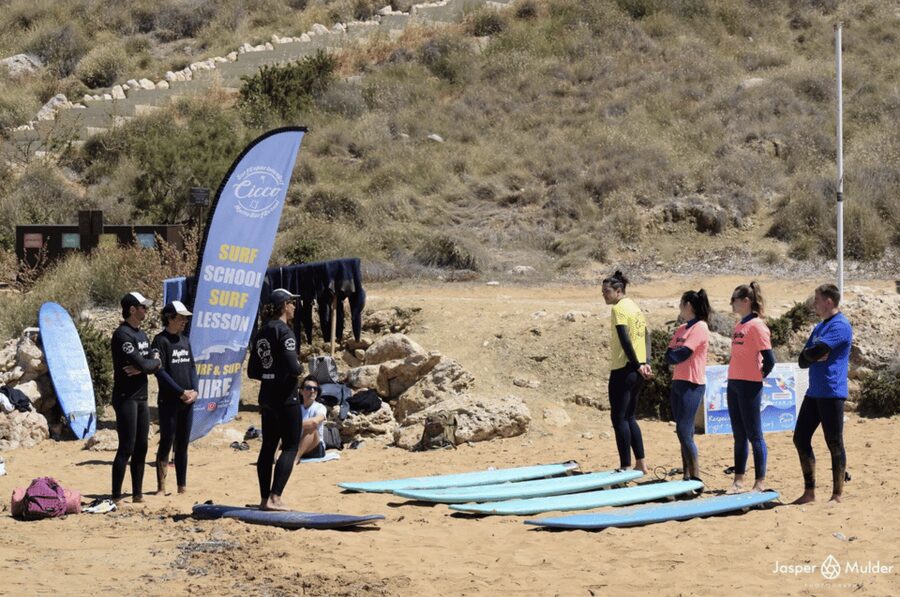
Finding the meeting point should be fairly easy. Walk down the beach steps near the Singita kiosk and look for the school’s blue flag. That landmark matters because beaches can feel confusing when several operators are working nearby.
You should arrive 15 minutes before your booked start time. Use those minutes to change, collect your equipment, and listen to the opening briefing. Turning up at the last moment would cut into the useful part of a one-hour lesson, especially if you need to get suited up.
Public buses make the beach reachable from several popular bases. Bus 225 connects the area with Sliema and St. Julian’s, Bus 44 runs from Valletta, and Bus 223 serves Bugibba and St. Paul’s Bay. The information provided does not give journey times, so check the current schedule before setting out.
Bring swimwear under the wetsuit in winter. In summer, the school says you can wear swimwear under its branded T-shirt instead. A towel and dry clothes are not glamorous packing items, but you will be glad to have them after an hour in salt water. Sunscreen and a bottle of water are also essential.
More hands-on workshops:
- Sunday: Ghajn Tuffieha (Riviera) Beach Yoga Class
★ 5.0 · 3 reviews - Malta: First Experience Scuba Diving Lesson
★ 4.6 · 415 reviews - Malta: Chocolate Making Workshop
★ 4.8 · 80 reviews
The beach briefing makes the first lesson less intimidating
The session begins on land with an introduction to the surfboard, safety rules, and the conditions at the surf spot. This is more useful than it may sound. A first-time surfer has plenty to think about, and knowing where to sit, how to handle the board, and what to do around other people helps keep the water time calm.
The instructor also explains the basic aim of the lesson: paddle properly, catch a manageable wave, and stand at the right moment. You are not expected to master every part of surfing in 60 minutes. The practical goal is to understand the movement and, with some luck and good conditions, get upright on a wave.
The school’s instructors speak English, Italian, and Spanish. That gives you a better chance of receiving clear safety instructions and useful corrections in a language you understand. The reviews give special credit to the teaching style: Gabriela found the instructor clear and friendly, while Sofija appreciated that the coaches took time to help.
Practicing the take-off on the sand
The most important skill for a beginner is the take-off, the quick move from lying on the board to standing. Here you practice it on the beach first. The instructor shows you where to place your hands, how to bring your feet underneath you, and how to find a steady stance.
Practicing on sand removes much of the pressure. You can repeat the motion without a wave pushing the board around, and the instructor can correct you before you try it in the sea. This is also the part where you discover that surfing takes more coordination than it looks like from shore.
Expect a few laughs and some awkward attempts. That is normal. The small group helps because you can watch the others, try the movement again, and receive individual tips instead of being lost in a crowd. With a maximum of six people, the instructor has a reasonable chance to notice if your feet are too close together or your balance is off.
Do not rush this section. A minute spent fixing your stance on land can save several frustrating attempts in the water. The best result is not simply getting up once. It is understanding why you got up, so you can repeat it.
Moving into chest-high water
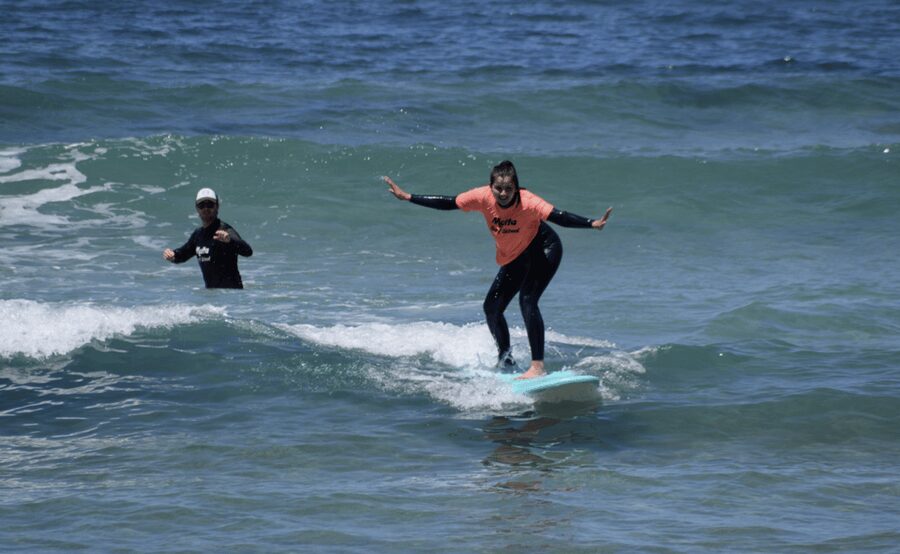
After the land practice, the group heads into chest-high water with the instructors. The school describes this as a guided session, with staff helping each participant paddle, catch waves, and stay safe.
The chest-high depth is important for first-timers. You are close enough to the bottom to feel less exposed than in deep water, but you still need to manage the board and respond to the push of a wave. Non-swimmers should not book this lesson, and you need to be comfortable in the sea before signing up.
This is where the small group size pays off most. The instructor can give you advice as you try, rather than leaving you to guess what went wrong. Helpers are also on hand, and Gabriela particularly valued the assistance and advice throughout the session.
The school’s stated aim is a safe, supportive introduction, not a hard-driving sports workout. You should expect active participation, repeated attempts, and plenty of time on the board. You should not expect a long open-water session, since the full appointment lasts only one hour and includes both the beach briefing and land practice.
A completely different sort of day out from Mgarr:
- Malta: Comino, Gozo, Blue & Crystal Lagoon, and Caves Cruise
★ 4.7 · 1,408 reviews - Malta: Blue Lagoon, Comino, Gozo & Crystal Lagoon Sea Caves
★ 4.7 · 453 reviews - Malta: Comino, Blue lagoon Private Speed Boat Tour
★ 5.0 · 214 reviews - Cirkewwa/Mgarr: Blue and Crystal Lagoon Private Boat Charter
★ 4.8 · 65 reviews
Catching a first wave along Malta’s coast
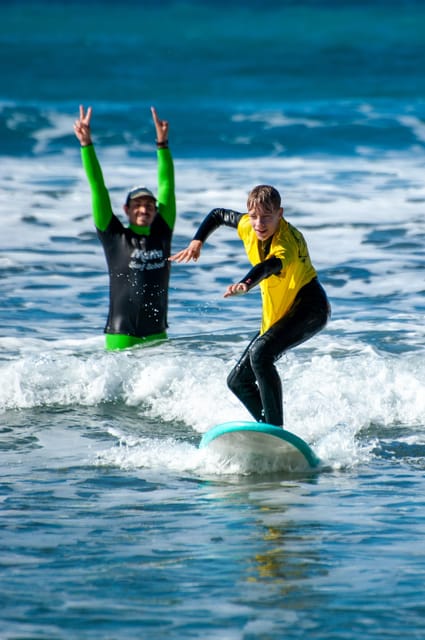
The reward comes when the timing works and the board begins to move with a wave. Even a short ride can make the rest of the lesson click. You feel how the board carries speed, why balance matters, and when to move from paddling into the standing position.
Good wave conditions make a large difference. In May, Andrea and a companion managed to ride several waves during their first lesson, helped step by step by instructor Valerio. That is an encouraging sign for beginners, though it should not be treated as a promise. Surfing is controlled by the sea, and conditions can change.
The coastline and clear water add plenty to the setting. You are learning a new skill beside Malta’s striking shore rather than in an indoor pool or artificial wave facility. Still, the scenic setting does not guarantee surfable waves. A calm sea may be beautiful and completely wrong for a surf lesson.
The school handles this risk by offering alternative activities if there are no waves. Stand-up paddleboarding, wakeboarding, or a boat tour may be offered instead. These options are useful, but they are not identical to surfing. If standing on a surfboard is the main reason you are booking, you should treat the alternative as a backup rather than an equal substitute.
How the teaching comes across
The strongest theme in the feedback is the instructors’ attitude. Sofija praised the coaches for being helpful and for taking time with the group. Gabriela described the lead instruction as clear and friendly, with helpers ready to offer advice or assistance.
That combination suits a first lesson. You need direct instructions, but you also need someone willing to repeat them without making you feel clumsy. The beach practice and close support in the water suggest a teaching style built around small corrections rather than a long lecture.
Valerio receives specific praise for guiding beginners step by step. If he is leading your session, you may appreciate that extra personal attention. Instructor assignments can vary, so do not assume he will be present on every date.
One booking also ran into a weather communication problem. The person received notice that the lesson might not happen because of conditions, but did not receive a clear update before the scheduled time. The booking was later cancelled with a full refund, and customer service handled the refund well. This is worth keeping in mind: the school appears willing to cancel when conditions are unsuitable, but you may want to check the status yourself if the forecast looks poor.
Is €60 good value for one hour?
The stated price is €60 per person, including the board and wetsuit. The summary price is shown as $71 per person, which is likely a currency display difference, but you should confirm the final amount and currency before paying.
At first glance, €60 for one hour may feel high. The value becomes easier to judge when you include the equipment, the small group limit, beach instruction, and in-water help. Renting equipment alone would not give you the safety briefing or the coaching that helps you make use of the board.
The short duration is the main limit. This is a first taste, not a full morning course. If you need several hours to feel comfortable in the water, one session may leave you wanting more. On the other hand, the one-hour format fits neatly into a Malta sightseeing day and lets you test surfing without committing to a longer program.
The small group is the best part of the price calculation. A cheaper lesson with a large crowd could mean less time with an instructor. Here, a maximum of six gives the session a more personal feel, and the positive feedback focuses on exactly that hands-on help.
Free cancellation up to 24 hours before the session and the option to reserve now and pay later also reduce some booking risk. Weather remains the bigger concern, since the school controls the final decision based on conditions.
Who should book this Malta surf lesson?
This session is a good fit for a first-time surfer who can swim, enjoys active outings, and wants a friendly introduction rather than an intensive course. It also suits couples or small groups who like learning together and do not mind looking a little silly during the first attempts.
You will probably appreciate it most if you arrive with modest expectations. Aim to learn the basic movement, enjoy the sea, and take a few good attempts at catching a wave. Standing up several times would be a terrific result, but the sea does not follow a lesson plan.
The experience is not suitable for children under 16, pregnant women, people with mobility impairments, or non-swimmers. Alcohol and drugs are not allowed. These rules are sensible for an activity that involves a board, moving water, and close attention to safety instructions.
If you are choosing between this and a passive beach outing, the surf lesson offers more involvement and a stronger sense of achievement. If you dislike uncertain weather or need a guaranteed activity at a fixed time, it may frustrate you.
Practical tips for a smoother hour
Wear your swimsuit before you arrive. That makes changing faster and gives you more time for the briefing. Bring a towel, water, sunscreen, dry clothes, and a change of clothes for after the session.
Check the forecast on the day, but do not assume a sunny day means good surfing. The school needs suitable waves, not just pleasant weather. If conditions are poor, contact the provider or watch for an update rather than travelling to the beach without checking.
Use the bus routes as a starting point, but confirm current departure times. From Valletta, Bus 44 is the suggested route. From Sliema or St. Julian’s, use Bus 225, and from Bugibba or St. Paul’s Bay, use Bus 223.
Plan a little breathing room around the lesson. Changing, finding the blue flag, and getting to the steps near the Singita kiosk all take time. You may also want a quiet few minutes afterward to dry off and change before catching a bus or heading to your next stop.
Should you book Malta Surf School?
I would book this lesson if you want a compact, well-supported first try at surfing in Malta. The patient instructors, six-person limit, and included equipment give it real value, and the feedback is especially strong on clear explanations and personal help.
I would hold off if you cannot swim, need guaranteed waves, or want a longer session with more time to build skill. Before booking, check the final price currency, confirm the meeting point, and look at the weather forecast. If the sea refuses to cooperate, the school’s paddleboarding, wakeboarding, or boat-tour alternatives offer a practical fallback, but only book if you are comfortable with that possibility.
FAQ
How long is the beginner surf lesson?
The session lasts one hour, including the beach briefing, sand practice, and guided time in chest-high water.
How many people are in each group?
The group is limited to a maximum of six participants, allowing for more personal help from the instructors.
Is surf equipment included?
Yes. The €60 group lesson includes the surfboard and wetsuit.
Where is the meeting point?
Meet at the beach near the Singita kiosk, at the end of the steps. Look for Malta Surf School’s blue flag.
What should I bring?
Bring sunscreen, water, swimwear, a towel, and a change of clothes. In winter, wear a swimsuit or board shorts under the wetsuit. In summer, the school says you can wear swimwear under its branded T-shirt.
How early should I arrive?
Arrive 15 minutes before the lesson for the initial briefing and time to change.
What happens if there are no waves?
The school may offer stand-up paddleboarding, wakeboarding, or a boat tour instead. All activities depend on weather and sea conditions.
Can non-swimmers join the lesson?
No. The lesson is not suitable for non-swimmers.
What languages do the instructors speak?
Instruction is available in English, Italian, and Spanish.
Just added around Mgarr
- Half Day Tour in Marsaxlokk Village, Market, Blue Grotto & Qrendi★ 4.5 · 3 reviews
- Sunday: Ghajn Tuffieha (Riviera) Beach Yoga Class★ 5.0 · 3 reviews
- Photo Shoots Adventure – Trips in Lovers Cave, Gozo & Comino★ 5.0 · 3 reviews
- Party Prowl: Crystal Lagoon, Gozo, Santa Maria Caves, Malta★ 4.6 · 4 reviews
- Fisher’s Trek: Cominotto Island, Prime Fishing Spots & Gozo★ 5.0 · 6 reviews
- Mgarr/Cirkewwa: Comino, Gozo & Blue Lagoon Private Boat Trip★ 4.9 · 18 reviews
- Prehistoric Temples and Highlights of the South Full-Day Tour★ 4.0 · 26 reviews
- Comino Blue Lagoon: Private Boat Charter (2 Hours)★ 4.6 · 27 reviews
Workshops, compared.




Maltese Tile – Souvenir painting workshop with local
Read our review →
Workshop: Maltese Souvenir Tile Design Experience
Read our review →
Browse the lists this tour appears in