
Reviewed · PREHISTORIC TEMPLES
Malta Prehistoric Temples Tour
Malta’s oldest stones still surprise. This half-day outing links Ghar Dalam Cave with the UNESCO-listed Hagar Qim and Mnajdra temples, giving you a compact look at Malta before the Roman, Arab, or medieval eras. I love the way the tour combines a cave museum with two open-air temple sites, and I like that admission, transport, and live commentary are included in the $59.91 price.
The guides can add real value. Mario, a former history teacher, and Mark received especially warm praise for clear explanations and friendly help. The main concern is organization: bus changes, unclear pickup arrangements, and long waits have caused problems for some passengers. You may spend more time in transit than expected, especially if you are collected far from the southern sites.
In This Review
- Key points to know before booking
- Why Malta’s prehistoric sites deserve a morning
- Ghar Dalam Cave: Malta’s earliest chapter
- Hagar Qim: massive stones on Malta’s southern edge
- Mnajdra: prehistoric architecture and the sun
- The guide can make or break the temples
- Pickup, bus transfers, and the real meaning of half-day
- Is $59.91 a fair price?
- Who should book this Malta temple tour?
- Booking and cancellation details
- FAQ
- How long does the Malta Prehistoric Temples Tour last?
- What sites are included?
- Is hotel pickup available?
- What time does the tour begin?
- Are food and drinks included?
- How many people can join the tour?
- Should you book it?
Key points to know before booking
- Three prehistoric stops in one morning: Ghar Dalam Cave, Hagar Qim, and Mnajdra cover archaeology, ancient animals, temple design, and astronomy.
- The temples predate the pyramids: Hagar Qim and Mnajdra were built roughly 5,500 years ago, before Giza and Stonehenge.
- Pickup is spread across Malta: Collection times begin at 8:30 a.m., with different stops in Cirkewwa, Mellieha, Valletta, Sliema, St. Julian’s, and the northern resort areas.
- The tour runs only on Saturdays: That makes advance planning important, particularly if your Malta stay is short.
- Expect a group as large as 40 people: A large group can make the guide harder to hear and the temple visits feel hurried.
- The cave is more modest than the temples: Ghar Dalam offers useful archaeological context, while Hagar Qim and Mnajdra provide the visual impact.
Why Malta’s prehistoric sites deserve a morning
Malta is often introduced through Valletta’s churches, harbor views, and fortifications. Those sights are important, but the islands also hold some of the oldest freestanding religious structures on earth. This tour takes you far beyond the usual historical starting point.
The story begins long before Malta became a strategic Mediterranean island. At Ghar Dalam, scientists have worked through layers of soil and sediment to trace animal life and early human activity. At Hagar Qim and Mnajdra, you see huge limestone blocks shaped and placed by people thousands of years ago.
I like this combination because the sites answer different questions. Ghar Dalam helps explain who came first and what the island was like. The temples ask how prehistoric communities organized labor, ritual, time, and belief.
The experience lasts about four to five hours, although the actual time at the attractions can feel closer to two or three hours once pickups, bus transfers, and the return journey are counted. That distinction matters. You are buying a convenient introduction, not a slow archaeological study day.
More prehistoric temple visits:
- Gozo Full Day visiting Ggantija Temples, Salt Pans, Dwejra
★ 3.0 · 53 reviews - Discovering Gozo Full Day incl. Guide, Train & Ggantija Temples
★ 3.0 · 45 reviews - Southern Malta: Blue Grotto, Hagar Qim, and Marsaxlokk Tour
★ 4.7 · 35 reviews
Ghar Dalam Cave: Malta’s earliest chapter
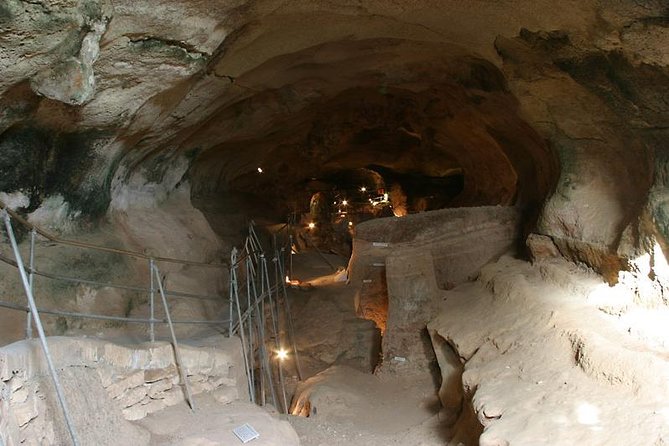
The first stop is Ghar Dalam, usually written as Għar Dalam, or Cave of Darkness. The cave and museum visit is scheduled for about one hour, with admission included.
The cave contains evidence of animal life and human activity from Malta’s distant past. The supplied description dates traces of human activity to about 7,400 years ago. Displayed and excavated animal remains provide an even older picture of the island, and one account refers to bones dating back around 10,000 years. The key point is simple: this is not merely a cave with a dramatic name. It is a record of changing life on Malta.
The archaeological work becomes easier to understand when you picture the cave floor as a stack of time. Researchers studied one layer after another, using the material inside to reconstruct earlier environments and the arrival of humans. The museum gives you the basic framework before you walk through the cave.
I find this stop valuable because it supplies context that the temples alone cannot. Without Ghar Dalam, the megalithic buildings can seem to appear from nowhere. The cave shows that Malta’s human story developed over many thousands of years.
There is also a nearby garden planted with indigenous species and trees. It is a small addition, but it gives you a break from the enclosed museum setting and connects the archaeological story with Malta’s natural environment.
The drawback is scale. Ghar Dalam is generally less dramatic than Hagar Qim and Mnajdra, and some people find the cave the least exciting of the three stops. If your main goal is spectacular stonework, keep your expectations in check. If you enjoy archaeology, animal remains, and evidence-based reconstruction of the past, the cave earns its place.
Hagar Qim: massive stones on Malta’s southern edge
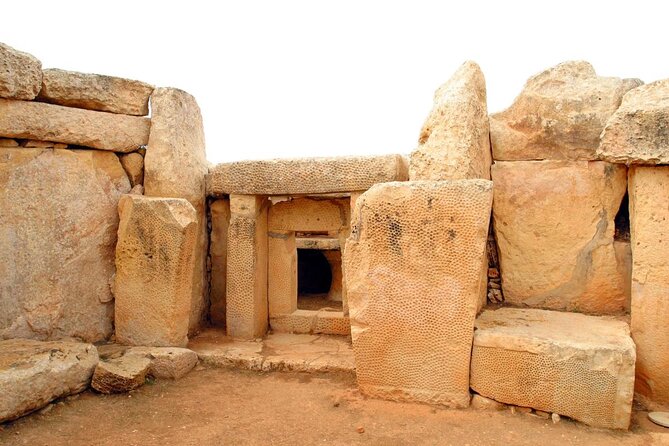
From Ghar Dalam, the tour continues to the Hagar Qim and Mnajdra Archaeological Park on Malta’s southern side. Hagar Qim receives about an hour of the scheduled time, with the entrance ticket included.
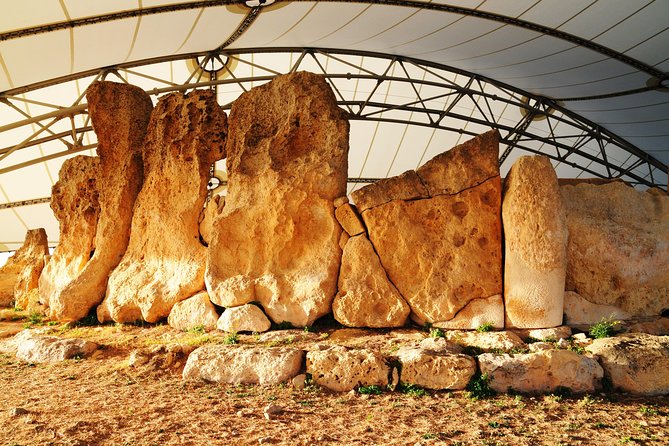
Hagar Qim is a megalithic temple complex built roughly 5,500 years ago. That places it before the Great Pyramid of Giza and before Stonehenge. The comparison is useful because it gives you a sense of the site’s age, but the temple should not be reduced to a competition about which monument is oldest. Its real interest lies in the scale of the limestone blocks and the evidence of careful planning.
The site is set high on a hill, and the open setting adds to the experience. You are not looking at a ruin tucked behind modern streets. The temples occupy an exposed position on Malta’s southern edge, where the setting helps you understand why the builders chose broad views and prominent ground.
You can expect the guide to provide background, then allow time to walk around and look for details. Mario and Mark were singled out for giving clear explanations without overwhelming the group. Miriam also received praise for her presentation. Guide quality may vary by departure, so treat those names as useful possibilities, not a guarantee.
The tour format has one strength here: you do not need to arrange separate tickets, transport, or directions. The site is easy to pair with Mnajdra, and a guide can point out features you might miss if you arrived without preparation.
The time limit is the weak point. One hour sounds generous until you account for entering, gathering the group, listening to the explanation, using the toilet, and possibly visiting the gift shop. If you enjoy sketching, photography, or reading every panel, you may feel pressed. One artistic passenger especially appreciated the temples as sketching subjects, but a fixed group schedule does not leave unlimited time for that.
Mnajdra: prehistoric architecture and the sun
Mnajdra is a short distance from Hagar Qim and receives another hour. The complex includes limestone temple structures with an important relationship to the sun.
The temple alignment corresponds with the equinoxes and solstices. That gives the site an astronomy angle, which is one of the most memorable reasons to visit. You are not simply looking at large stones. You are considering how prehistoric builders observed the year and incorporated seasonal sunlight into a sacred building.
That detail makes Mnajdra especially rewarding for anyone interested in ancient calendars, astronomy, or the practical skill behind ceremonial architecture. The guide’s explanation matters here, since the alignment is not always obvious from a quick walk around the stones.
The tour gives you time to see the principal structures, hear the explanation, and explore independently. Several passengers felt the pacing was about right, while others wanted another ten minutes at each site. Both reactions make sense. The schedule works for a first visit, but it is not designed for lingering.
There may also be an electric vehicle available at the archaeological park, and one passenger described it as a lifesaver. The tour information says you should have a moderate level of physical fitness, so do not assume every part will be effortless. There is walking between the temple areas, and the open site can feel demanding if you are managing a health condition.
A few more Malta trips worth weighing up
- Mellieha: Popeye Village Entry Ticket
★ 4.6 · 2,070 reviews - Mellieha: Popeye Village Malta Filmset Entry Ticket
★ 4.6 · 1,802 reviews - Comino & Gozo: Blue & Crystal Lagoons Cruise with Sea Caves
★ 4.8 · 1,536 reviews - Malta National Aquarium Entrance Ticket
★ 4.0 · 643 reviews
The guide can make or break the temples
Live commentary is included, and the best guides turn a pile of ancient stones into a story you can follow. Mario was described as a former history teacher who explained the subject with warmth and confidence. Mark was praised for pacing the morning well, explaining the sites, and then allowing time for independent exploration.
The quality may not be consistent. One guide was hard to follow in English, and another repeatedly used the phrase you know, which made the commentary tiring. At times, explanations were given in English and German, so bilingual delivery may also affect how long the group spends listening.
There has been some confusion about headphones and commentary. Do not count on a personal audio system. At least one passenger wished for headphone commentary, while others found the live guide sufficient.
My practical advice is to stay near the guide during each explanation, then move away from the group once the free time begins. At Hagar Qim and Mnajdra, the guide’s opening talk is the part you most want to hear. After that, you can use your own eyes and take a few minutes to focus on the details that interest you.
Pickup, bus transfers, and the real meaning of half-day
Hotel pickup is offered from selected areas, with return to the original departure point. The published collection schedule begins at 8:30 a.m. in Cirkewwa and Attard, followed by Mellieha at 8:40, Valletta at 8:40, Xemxija and Golden Bay at 8:50, Sliema at 8:55, St. Paul’s Bay and St. Julian’s at 9:00 or 9:10, Bugibba at 9:05, and Qawra at 9:10.
Those times are useful, but you should confirm the exact meeting instructions before the morning of the tour. Some passengers had smooth hotel pickups and even received an email the night before. Others waited beside a coach without clear signs or a visible representative.
The largest operational issue is bus switching. The group may be combined with passengers from another vehicle, sometimes after a wait in the Sliema area. This can add 30 minutes or more and may leave you wondering which bus or guide to follow.
The coach itself has generally been comfortable, and drivers have handled Malta’s narrow, winding roads well. Water may be available for purchase, but food and drinks are not included. There is no toilet on the bus, so use facilities at each stop when you can.
If you are collected in the north, the long pickup circuit can eat into the morning. A passenger from Qawra found it useful to be dropped in Valletta on the return instead of going back north, but you should only rely on the published return arrangement and confirm any change directly with the operator.
Is $59.91 a fair price?
At $59.91 per person, the tour offers solid convenience. Your admission to Ghar Dalam, Hagar Qim, and Mnajdra is included, along with local taxes, transport, hotel pickup from selected areas, and live commentary.
The value is strongest if you are staying outside the southern part of Malta or do not want to arrange buses and tickets yourself. You can see three important prehistoric sites in one morning without spending time figuring out connections.
The value is weaker if you are already near the temples, prefer to move slowly, or want specialist archaeological discussion. A self-arranged visit may give you more time, but this tour removes the planning work and adds transport between the sites.
I would think of the price as paying for access and structure rather than luxury. The maximum group size is 40, and the guide may need to speak to a crowd. The bus is comfortable, but this is not a private tour.
Who should book this Malta temple tour?
I would recommend it for a first visit to Malta, especially if you have only one free Saturday morning. It suits people who want a broad introduction to prehistoric Malta, enjoy guided explanation, and value included admission and transportation.
It is also a good choice for anyone interested in astronomy. Mnajdra’s connection with the solstices and equinoxes adds a useful layer beyond ordinary sightseeing.
Families and older passengers should consider the walking and the lack of a bus toilet. The tour requires moderate physical fitness, and the temple park is spread across an open site. If walking is difficult, ask about the electric vehicle before committing.
You may want another plan if you are a serious photographer, sketcher, or archaeology enthusiast. The one-hour allocations are enough for an overview, but not for a leisurely study of every stone, exhibit, and museum panel.
Booking and cancellation details
The experience is offered in English and runs every Saturday. Confirmation is provided at booking, and service animals are allowed. Public transportation is nearby, but hotel pickup is available only from selected areas or a designated nearby point.
You can cancel up to 24 hours before the start time for a full refund. Changes or cancellations made inside that 24-hour window are not accepted for a refund. The tour also requires a minimum number of participants, so a cancellation by the operator may result in another date, another experience, or a full refund.
FAQ
How long does the Malta Prehistoric Temples Tour last?
The tour lasts approximately four to five hours, including transportation, pickup, and return. The scheduled visits are about one hour at Ghar Dalam, one hour at Hagar Qim, and one hour at Mnajdra.
What sites are included?
The tour includes Ghar Dalam Cave and Museum, Hagar Qim Temples, and Mnajdra Temples. Admission tickets to all three sites are included.
Is hotel pickup available?
Yes. Pickup and drop-off are available from selected hotels or nearby meeting points in areas including Mellieha, Valletta, Sliema, St. Julian’s, St. Paul’s Bay, Bugibba, Qawra, Cirkewwa, Attard, Xemxija, and Golden Bay.
What time does the tour begin?
The earliest listed pickups begin at 8:30 a.m. Exact pickup time depends on your area. The tour is available every Saturday.
Are food and drinks included?
No. Food and drinks are not included. Water may be available for purchase on the bus, and you can use facilities at the archaeological sites.
How many people can join the tour?
The maximum group size is 40 people. A group of this size may make it harder to hear the guide or get a close view during the busiest moments.
Should you book it?
Book this tour if you want an easy, well-priced introduction to Malta’s oldest monuments. The combination of Ghar Dalam’s archaeological evidence and the impressive Hagar Qim and Mnajdra complexes gives you a useful story in one morning. The strongest guides, including Mario and Mark, can add plenty of meaning to the stonework.
I would skip it if you need precise organization, quiet study time, or a slow visit. Bus changes and unclear pickup communication have caused genuine frustration, and the timetable can feel tight. Confirm your pickup point, arrive early, and keep your expectations focused on a convenient overview rather than an unhurried archaeological day.
Just added around Mellieha
- Malta: Discover Scuba Diving in crystal clear waters★ 4.7 · 4 reviews
- Malta Shore Excursion: Private Tour of Historic Palaces and Noble Homes★ 4.5 · 5 reviews
- Private Tour Of Malta (Private Driver)★ 3.5 · 5 reviews
- comino and blue lagoon private boat★ 4.4 · 7 reviews
- Full Day to Blue Grotto, Marsaxlokk, Kalanka Bay, Tarxien Temples★ 3.5 · 7 reviews
- Comino Splash & Dash: Private Blue/Crystal Lagoon Boat Tour★ 5.0 · 7 reviews
- Full Day Tour in Gozo (Private Driver)★ 5.0 · 7 reviews
- Malta Shore Excursion: Private tour of Valletta and Mdina★ 4.5 · 8 reviews
Prehistoric Temples, compared.

Gozo Full-Day Tour with Guide, Temples, & Train
Read our review →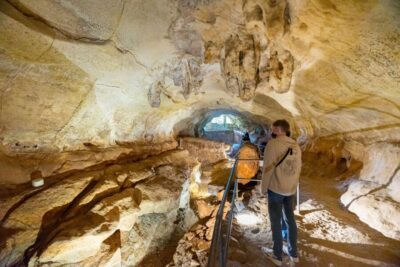

Prehistoric Temples, Limestone Heritage & Blue Grotto
Read our review →
Gozo Guided Day Trip Incl. Ggantija Temples and Lunch
Read our review →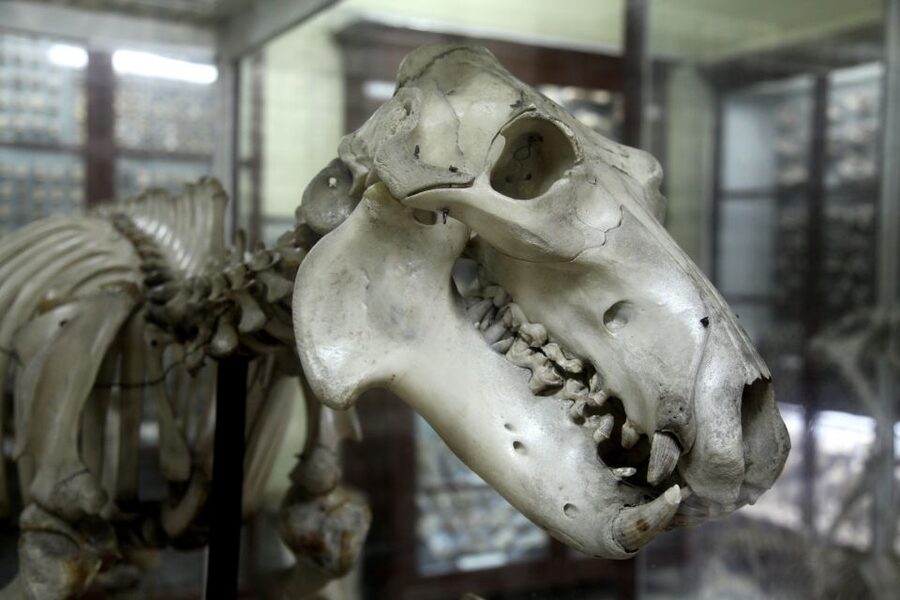
Prehistoric Temples and Highlights of the South
Read our review →
Gozo Full Day visiting Ggantija Temples, Salt Pans & Dwejra
Read our review →Gozo Full Day visiting Ggantija Temples, Salt Pans, Dwejra
Read our review →Browse the lists this tour appears in