
Reviewed · MALTA
Good Friday Easter Procession with Commentary and Transport
Good Friday in Malta is solemn theater. This four-hour outing takes you to a local village procession, where life-size statues, costumed villagers, brass musicians, and live commentary bring the Passion of Christ before you. I like the front-section seating and the included hotel transport, two useful perks for an event that can draw a large local crowd. The main caution is that reserved seating may not mean a guaranteed first-row view.
I also like the sense of place: this is a parish tradition carried through village streets, not a staged show built only for tourists. Still, the experience is religious and serious, so you should come ready for slow marches, solemn music, and Biblical scenes rather than a light sightseeing performance. The French guide received especially warm praise for clear language and strong subject knowledge.
In This Review
- Key points at a glance
- Why Malta’s Good Friday processions matter
- Arrival by air-conditioned vehicle
- Reaching the village and taking your seat
- Watching the statues leave the parish church
- Costumed villagers and the story in motion
- The brass band sets the pace
- What the live commentary adds
- Is $45 a fair price?
- Who should book this Good Friday outing?
- Final verdict: a thoughtful way to see Easter in Malta
- FAQ
- Where does the Good Friday procession take place?
- How long does the activity last?
- What languages are available for the live commentary?
- Is transportation included?
- What does the front-section seating include?
- Can I cancel or pay later?
Key points at a glance
- Life-size Passion statues: Carved figures, some hundreds of years old, are carried from the parish church through the village.
- Front-section seats: You get a better position than ordinary onlookers, though the seating area may not stay fully clear.
- Live commentary: English, French, or German commentary explains the Biblical scenes as the procession passes.
- Roman soldiers and Biblical characters: Local villagers dress for roles linked to the Passion story.
- Hotel pickup and drop-off: Transport in an air-conditioned vehicle is included from most listed hotels and ports.
- Four-hour Good Friday outing: The event takes place in the late afternoon and forms the main focus of the trip.
Why Malta’s Good Friday processions matter
Good Friday is one of the most serious days in the Christian calendar, and Malta marks it with public processions in several villages. The event combines worship, community participation, music, sculpture, and Biblical storytelling in one slow-moving ceremony.
For you, that means the procession is not simply a parade. The statues are religious objects carried on the shoulders of bearers, and the brass band plays solemn marches rather than festive tunes. The mood is quiet, formal, and devotional.
The local setting matters. Instead of watching a performance inside a theater, you sit along village streets as the procession moves from the parish church. The buildings and route form the backdrop, while residents take part as Roman soldiers, Jewish priests, and other Biblical figures.
I find this kind of event most rewarding when you allow it to move at its own pace. It is not designed around a rapid sequence of photo stops. The point is to watch the story unfold gradually, with music and commentary giving structure to each scene.
Other Malta trips people pair with this one:
- Malta: Gozo & Comino Islands, Blue Lagoon & Seacaves Tour
★ 4.5 · 15,672 reviews - Comino: Blue Lagoon, Crystal Lagoon, and Seacaves Tour
★ 4.6 · 5,673 reviews - Malta: Blue Lagoon, Beaches & Bays Trip by Catamaran
★ 4.7 · 5,496 reviews
Arrival by air-conditioned vehicle
The included transport removes one of the bigger headaches of attending a popular religious event. Pickup and drop-off are offered from most listed hotels and ports, with a scheduled meeting time at the main lobby or main entrance.
If your accommodation is not on the pickup list, you need to provide its exact name and address. The operator will then confirm the nearest pickup location and time on Malta. That step is worth handling early, since a vague hotel description could lead to confusion on a busy holiday afternoon.
The air-conditioned vehicle is a practical benefit rather than a sightseeing feature. You are being moved to and from the village without needing to arrange a taxi or work out local transport on Good Friday. One of the strongest points from the available feedback was the convenience of getting to and from the hotel.
The exact pickup time depends on your location and the procession schedule. You should check the confirmed time carefully and arrive at the meeting point ready to leave. Since the full activity lasts four hours, plan the outing as a substantial half-day commitment.
Reaching the village and taking your seat
The event takes place in a local Maltese village, with Zebbug identified as one of the places known for this type of Good Friday procession. The exact route and village arrangements can vary, so your confirmed details matter.
Once you arrive, the tour places you in the front section for the late-afternoon procession. This is a valuable inclusion. A public procession can attract people who line the streets well before the statues appear, and a good position lets you see the costumes, faces, carved figures, and band more clearly.
You should read front section carefully. It does not necessarily mean a private enclosure or a guaranteed first row. One booking was unhappy because the promised first-row position was not provided. Another person appreciated having a seat but found that people outside the group moved into the area and blocked the view.
That is the main practical weakness of the outing. A seat gives your legs a break and offers a planned viewing spot, but crowd control may not be perfect. If an unobstructed view is essential to you, ask the guide or local representative exactly how the seating works when you arrive.
Even with that limitation, reserved seating is better than having no assigned position at all. You are not left to search for a place along an unfamiliar street while the procession approaches. For many people, especially those who prefer less standing, that convenience alone helps justify the price.
Watching the statues leave the parish church
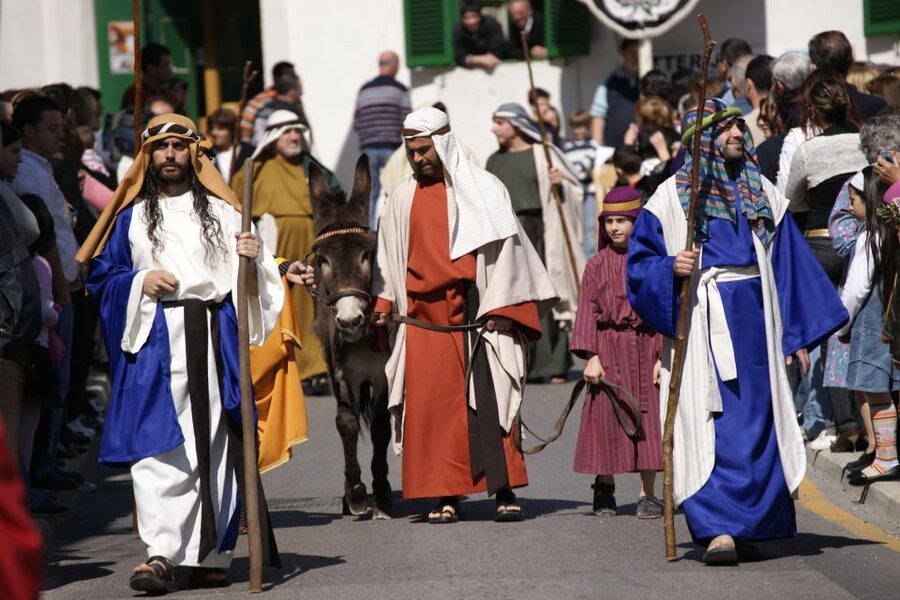
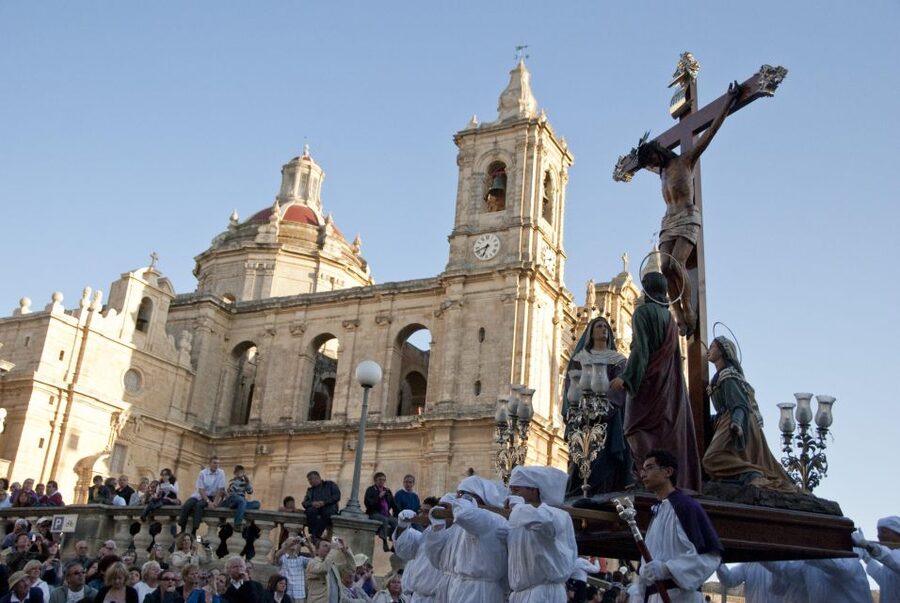
The procession begins with the religious statues being carried from the parish church into the village streets. These figures depict the Passion and death of Jesus Christ, and some are described as several hundred years old.
The statues are the visual heart of the event. They are life-size, carefully carved, and carried on shoulders rather than rolled or transported like parade floats. That method gives the procession a human rhythm. You can see the effort involved as the bearers move slowly behind the music.
The images are meant to be viewed with respect, not treated as decoration. Their age also gives them a connection to earlier generations of Maltese worshippers. You are seeing objects that have served the same religious purpose for a long time, in a ceremony that remains part of village life.
The commentary helps you follow the order of events. Without explanation, it can be difficult to identify each Biblical figure or understand how one statue relates to the next. With the guide speaking in English, French, or German, you have a clearer thread to follow as the scenes pass in front of you.
The supplied information describes the commentary as covering stories of the Old Testament as they play out before you, while the statues depict the Passion and death of Christ. The wording is broad, but the practical point is clear: the guide gives religious and Biblical context rather than leaving you to guess at the meaning of each scene.
A completely different sort of day out from Malta:
- Malta: Gozo, Comino, Blue & Crystal Lagoon, & Caves Cruise
★ 4.6 · 5,092 reviews - From Malta: Full-Day Gozo UTV Tour with Lunch and Boat Ride
★ 4.6 · 4,408 reviews - From Sliema: Comino, Crystal Lagoon, and Blue Lagoon Cruise
★ 4.5 · 3,792 reviews - From Sliema: Gozo, Comino and Blue Lagoon Cruise
★ 4.5 · 3,461 reviews
Costumed villagers and the story in motion
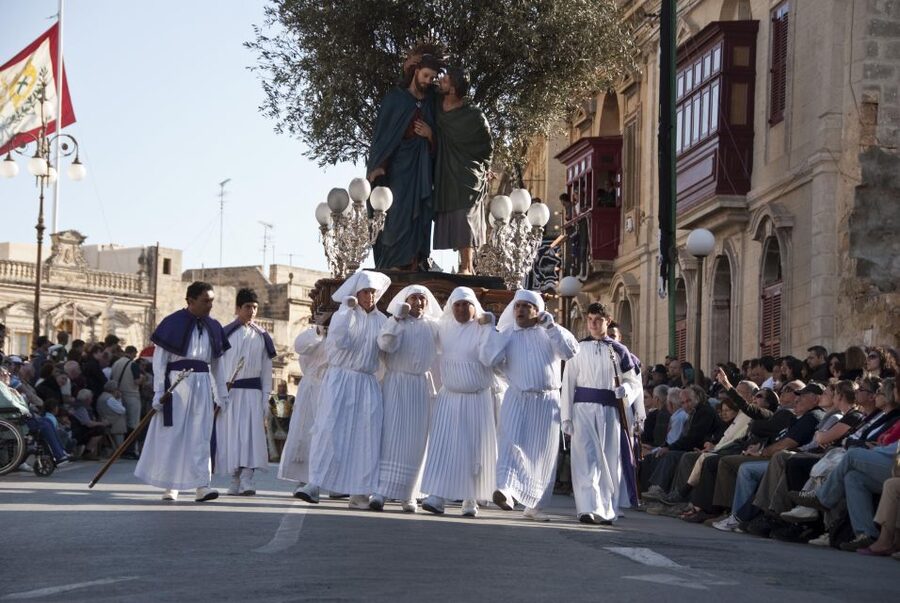
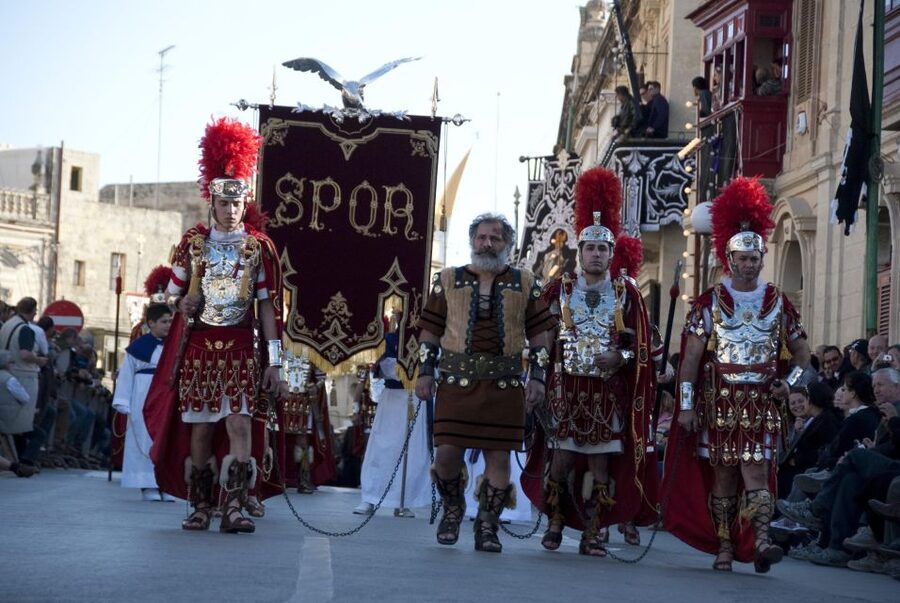
The procession includes local people dressed as Roman soldiers, Jewish priests, and important Biblical characters. These roles turn the statues into part of a larger story.
You might first notice the costumes, but the commentary gives them purpose. A soldier is not just a uniformed figure walking beside a statue. A priest or Biblical character helps explain the scene being represented and places it within the account of Christ’s final days.
This is where the experience differs from simply finding a roadside viewing point. The guide interprets what you are seeing in real time. You can watch, listen, and connect the figures with the religious story instead of taking isolated photographs.
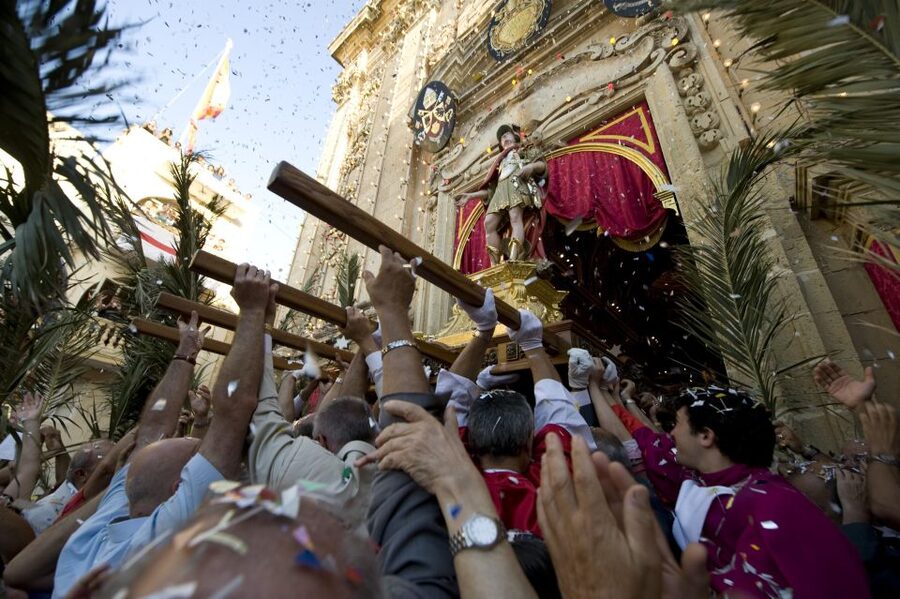
The local participation also gives the event its strongest sense of place. Residents are not merely watching from the curb. They are carrying statues, playing music, and taking on roles in a major annual observance. You get a glimpse of how a village marks Holy Week as a shared community duty.
Keep your expectations grounded. This is not described as an interactive performance, and you should not expect to join the procession or handle the costumes and statues. Your role is to observe from the designated seating area while the story passes along the route.
The brass band sets the pace
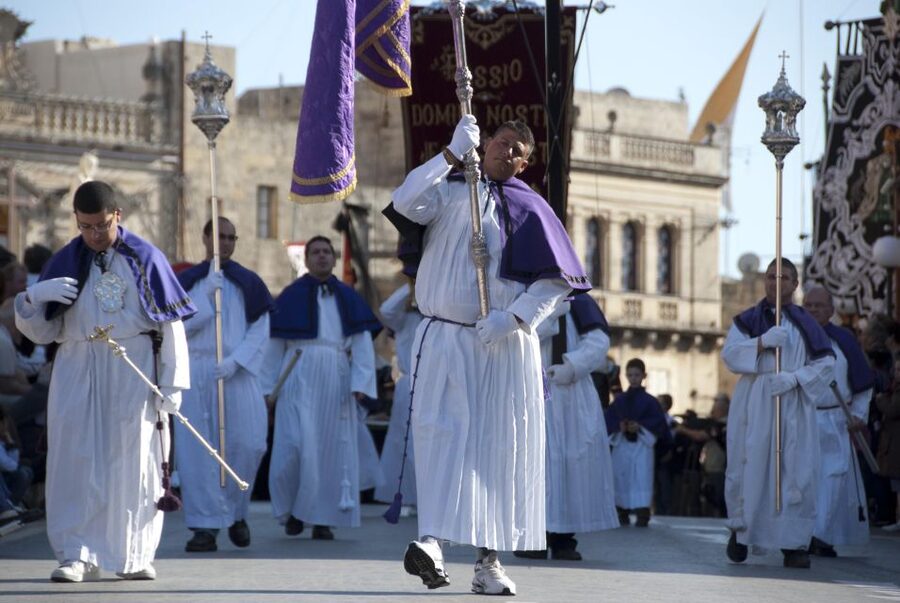
The brass band follows the statues and plays solemn marches. The music is not background decoration. It controls the mood and helps the procession feel ceremonial.
A brass band can make a street gathering feel formal very quickly. Here, the measured marches match the slow movement of the bearers and the serious subject of the day. The result is more reflective than entertaining.
I would pay attention to the contrast between the sound and the movement. The music carries across the village streets, while the statues advance at a deliberate pace. This gives you time to look at details in the carvings and costumes, then return your attention to the larger scene.
If you prefer fast tours packed with landmarks, this may feel slow. If you enjoy ceremony, live music, and local customs, the pace is part of the appeal. The four-hour schedule allows the procession to be treated as the main event rather than a quick stop squeezed between unrelated attractions.
What the live commentary adds
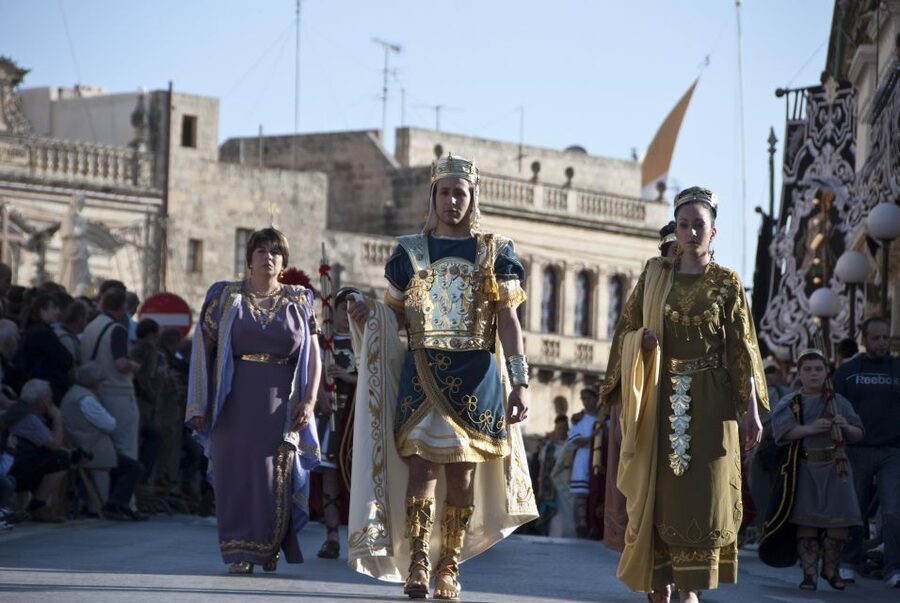
The guide’s commentary is one of the most important parts of the package. It is available in English, French, and German, and it explains the scenes as the procession moves.
For an English-speaking visitor, clear explanation can make the difference between a solemn parade and a story you can actually follow. The information supplied about the guides includes especially positive feedback for a French-speaking guide who spoke very well and knew the subject thoroughly.
You should select the language that lets you follow religious terms and Biblical references most comfortably. A guide may be excellent, but commentary is only useful if you can catch the meaning over the music and street noise.
The commentary also gives the event a proper frame. The costumes, statues, and marches can be visually striking, but their meaning comes from the Passion narrative. The guide helps you understand why each element appears and how the scenes relate to one another.
Because this is a live event, the sound may not be equally clear at every moment. Your seat position, the band, and the movement of the procession all affect what you hear. Still, having a guide present is much more useful than relying only on a printed description.
Is $45 a fair price?
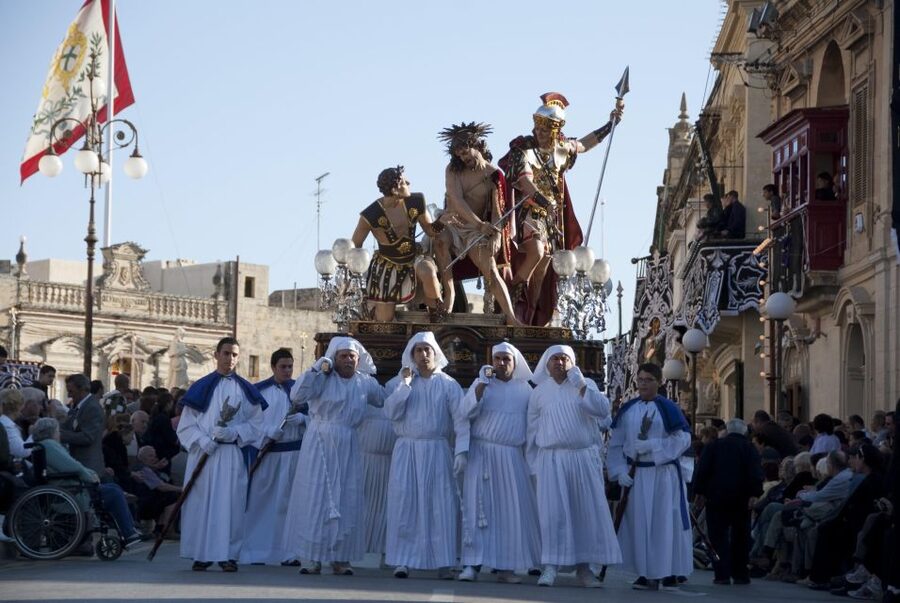
At $45 per person, the value depends on how much you would otherwise spend to reach the village and secure a decent viewing place. The package includes transport, a front-section seat, live commentary, and four hours devoted to the procession.
The transport is the easiest part to value. You avoid arranging separate rides to and from the event, and you do not need to work out where to stand once you arrive. On a holiday evening, that reduction in hassle is meaningful.
The seat is also useful, but you should not treat it as a firm guarantee of a completely open first row. The reported problems with outsiders entering the area and one person not receiving the expected first-row position reduce the value slightly.
The commentary adds value if you want context in English, French, or German. If you already understand the procession well and only want to watch the statues, you may care more about transport and seating than the guide’s explanation.
For a visitor who would otherwise need a taxi, local directions, and an early arrival to find a viewing place, $45 is reasonable. For someone staying close to the village and happy to stand in the street, the price may feel less essential. You are paying for convenience and interpretation, not just access to a public event.
Who should book this Good Friday outing?
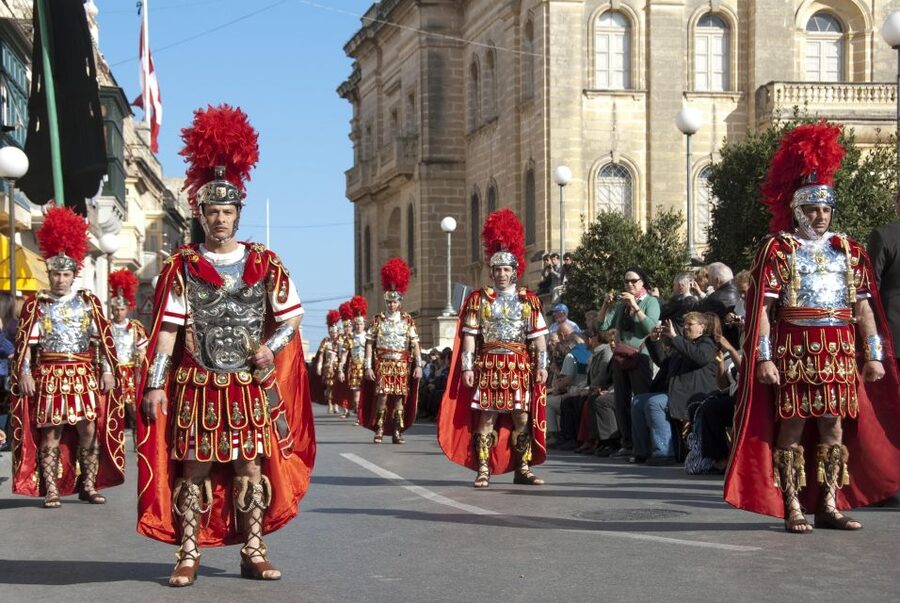
I would recommend it to you if you want a respectful introduction to Malta’s Easter customs without having to arrange the day independently. It suits people interested in religious art, village traditions, live brass music, and historical storytelling.
It is also a sensible choice if you prefer sitting to standing. The front section gives you an assigned place and a better chance of seeing the action than arriving without a plan.
Families with older children may appreciate the visual storytelling, especially if the children can follow the Biblical subject. The solemn tone and four-hour duration may be less suitable for very young children who need a short, active outing.
You should also consider it if language support matters. English, French, and German are offered, and the quality of the guide can shape how much you take from the event. The positive French-language feedback suggests that this option can work particularly well for French speakers.
I would hesitate if your priority is a guaranteed front-row seat, strict crowd management, or a quick sightseeing stop. The event is public, and the seating arrangements may not remain perfectly controlled. You need to accept some uncertainty in exchange for taking part in a genuine local ceremony.
Booking is flexible: you can cancel up to 24 hours before the activity for a full refund, and you can reserve now while paying later. Those terms are useful because Good Friday plans can depend on your wider Malta itinerary.
Final verdict: a thoughtful way to see Easter in Malta
Book this experience if you want more than a quick look at a procession. The statues, costumed villagers, brass band, and live explanation create a clear picture of how one Maltese village marks Good Friday.
The strongest reasons to choose it are the included transport, the planned front-section seating, and the guide’s interpretation. The biggest caution is seating control. You may have a chair in a good area, but not the perfect unobstructed first row promised by your ideal version of the event.
At $45, I see fair value for a four-hour outing that handles the transport and gives you context in your chosen language. Go for the religious tradition and local atmosphere, not for a polished theater production. If that sounds right to you, this is a practical and meaningful way to spend Good Friday in Malta.
FAQ
Where does the Good Friday procession take place?
The experience visits a local village in Malta for a traditional Good Friday procession. Zebbug is identified as one village that holds these processions, but you should check your confirmed tour details for the exact location.
How long does the activity last?
The activity lasts four hours and takes place around the late-afternoon procession.
What languages are available for the live commentary?
Live commentary is available in English, French, and German.
Is transportation included?
Yes. Pickup and drop-off from most listed hotels and ports are included in an air-conditioned vehicle. If your accommodation is not listed, provide its exact name and address to receive the nearest pickup point and confirmed time.
What does the front-section seating include?
The booking includes seats in the front section for the late-afternoon procession. A first-row position is not guaranteed, and the viewing area may not remain completely clear.
Can I cancel or pay later?
You can cancel up to 24 hours in advance for a full refund. The reserve-now, pay-later option lets you hold a place without paying immediately.
Just added around Malta
- Gozo Unveiled: Guided Hiking in Gozo – The West★ 5.0 · 3 reviews
- Valletta City of Gentlemen guided walking tour★ 3.5 · 3 reviews
- Half Day Tour in Marsaxlokk Village, Market, Blue Grotto & Qrendi★ 4.5 · 3 reviews
- Tour of Malta (Private Driver) Including Lunch Platter & Wine in the countryside★ 4.5 · 3 reviews
- Sunday: Ghajn Tuffieha (Riviera) Beach Yoga Class★ 5.0 · 3 reviews
- Pastizzi Making Experience in Malta★ 5.0 · 3 reviews
- Malta: Around Comino Cruise With Blue Lagoon stop★ 5.0 · 3 reviews
- From Sliema: Comino & Blue Lagoon Trip – Including Boat Ride★ 4.0 · 3 reviews